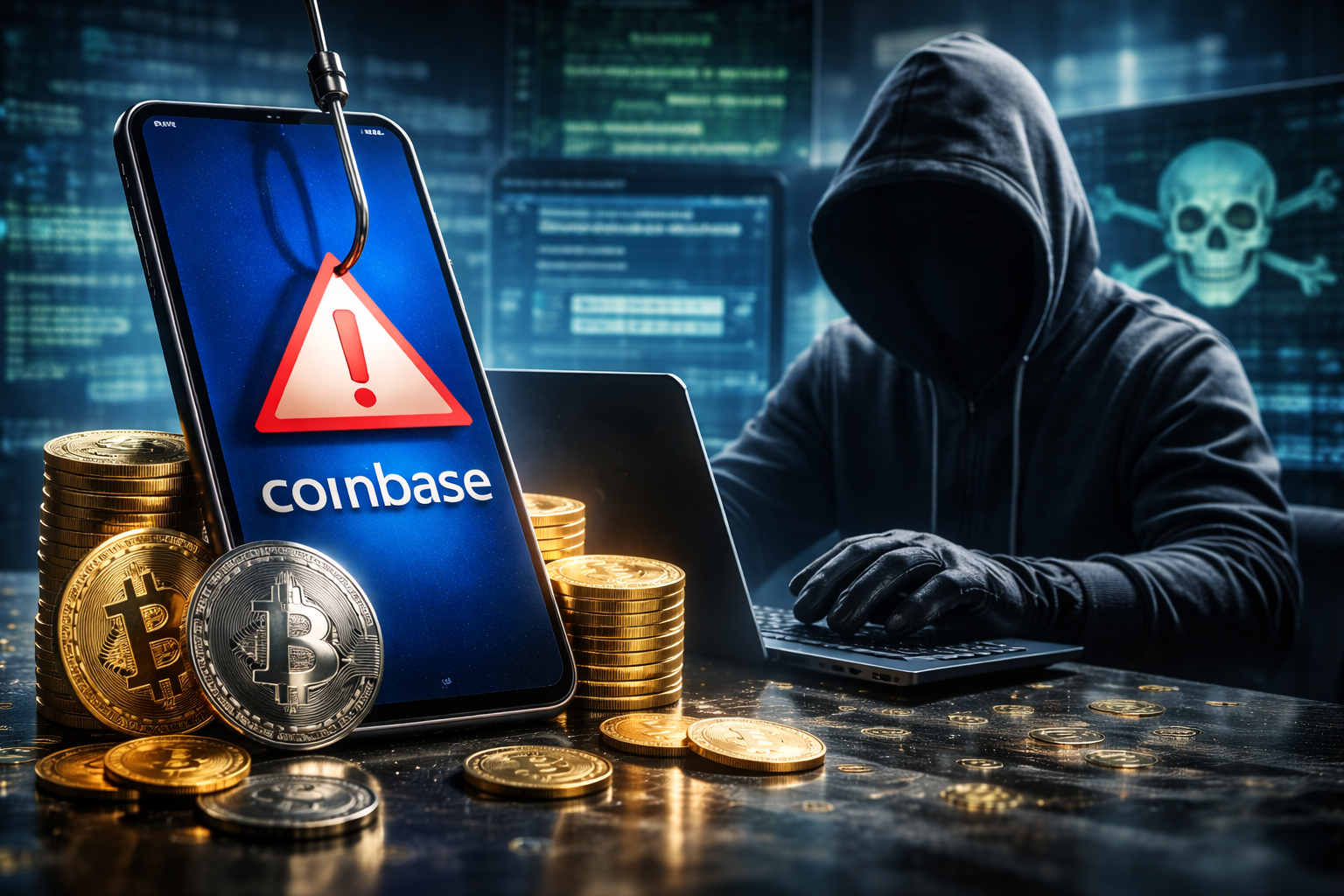
Crypto markets may be closing out 2025 on firmer regulatory footing and renewed institutional interest, but a recent fraud case out of Canada is a sharp reminder that security risks remain a central concern for investors. A reported $2 million support-impersonation scam, allegedly linked to a Canadian fraudster and involving Coinbase users, has reignited debate around exchange security, investor protections, and the next phase of crypto regulation.
The incident, reported by The Cryptonomist on December 30, comes at a time when digital assets are increasingly intersecting with traditional finance. Bitcoin ETFs, institutional custody solutions, and regulatory frameworks have all expanded in 2025 — yet retail and even sophisticated investors remain exposed to evolving forms of fraud.
For investors, the message is clear: crypto’s maturation is real, but so are its vulnerabilities.
Why This Matters for Investors Right Now
The alleged Coinbase-related scam did not stem from a direct platform breach. Instead, fraudsters reportedly impersonated customer support representatives, exploiting user trust and gaps in verification processes. This distinction is critical — and unsettling.
According to data cited by blockchain analytics firms in recent months, social engineering and impersonation scams now account for a significant share of crypto-related losses globally, often exceeding losses from protocol hacks. These attacks target human behavior rather than code, making them harder to eliminate through technology alone.
For investors, especially those with direct exposure through exchanges, this highlights a persistent risk layer that is not always reflected in asset prices. While Bitcoin and major tokens have benefited from growing institutional adoption, retail-facing infrastructure remains a soft target, attracting heightened regulatory scrutiny in both Canada and the U.S.
Regulatory Pressure Is Building Across North America
Canadian authorities have taken a more assertive stance toward crypto oversight in recent years, and incidents like this one are likely to accelerate that trend. Regulators globally are increasingly focused on consumer protection measures, including identity verification, custody segregation, and mandatory disclosures around fraud risks.
U.S. regulators have already moved in this direction. The Securities and Exchange Commission and other agencies have emphasized investor protection alongside market integrity, particularly as spot Bitcoin ETFs bring crypto exposure into mainstream portfolios. Analysts note that high-profile fraud cases strengthen the case for tighter rules, even as policymakers seek to balance innovation with oversight.
From an investment perspective, regulatory tightening is a double-edged sword. In the short term, it can introduce compliance costs and uncertainty. Over the long term, however, clearer rules often benefit established platforms, regulated products, and publicly listed crypto-adjacent companies.
Exchanges vs. Regulated Vehicles: A Growing Divide
One of the most significant implications of this case is its impact on how investors choose to gain crypto exposure. While centralized exchanges remain vital for liquidity and price discovery, many investors are reassessing the risks of holding assets directly on trading platforms.
The growth of regulated Bitcoin ETFs, particularly in the U.S., reflects this shift. These vehicles offer exposure to crypto price movements without requiring investors to manage private keys or interact directly with exchanges. For institutional investors, they also provide compliance-friendly structures aligned with traditional custody standards.
Market strategists cited in recent financial media commentary argue that security concerns may further accelerate capital flows into regulated products, custodial service providers, and blockchain analytics firms focused on fraud prevention.
Crypto Security Is Becoming an Investment Theme
Beyond individual asset allocation decisions, security itself is emerging as a standalone investment theme within the crypto ecosystem. Companies specializing in identity verification, on-chain monitoring, and cybersecurity are increasingly critical to the industry’s credibility.
As The Cryptonomist report underscores, fraud risks are not isolated incidents — they are systemic challenges. Investors should expect continued innovation, acquisitions, and venture funding in crypto security infrastructure as platforms seek to rebuild trust and meet regulatory expectations.
Key Investment Insight
Crypto’s long-term growth narrative remains intact, but security risks are shaping how capital enters the market. Investors may want to prioritize regulated exposure, institutional-grade custody solutions, and companies enabling fraud detection and compliance. As regulators respond to incidents like the Canadian Coinbase scam, the winners are likely to be firms that combine crypto innovation with robust investor protections.
Stay informed with MoneyNews.Today for daily insights into crypto markets, regulation, and the trends shaping the future of digital assets — helping investors navigate opportunity with clarity and confidence.