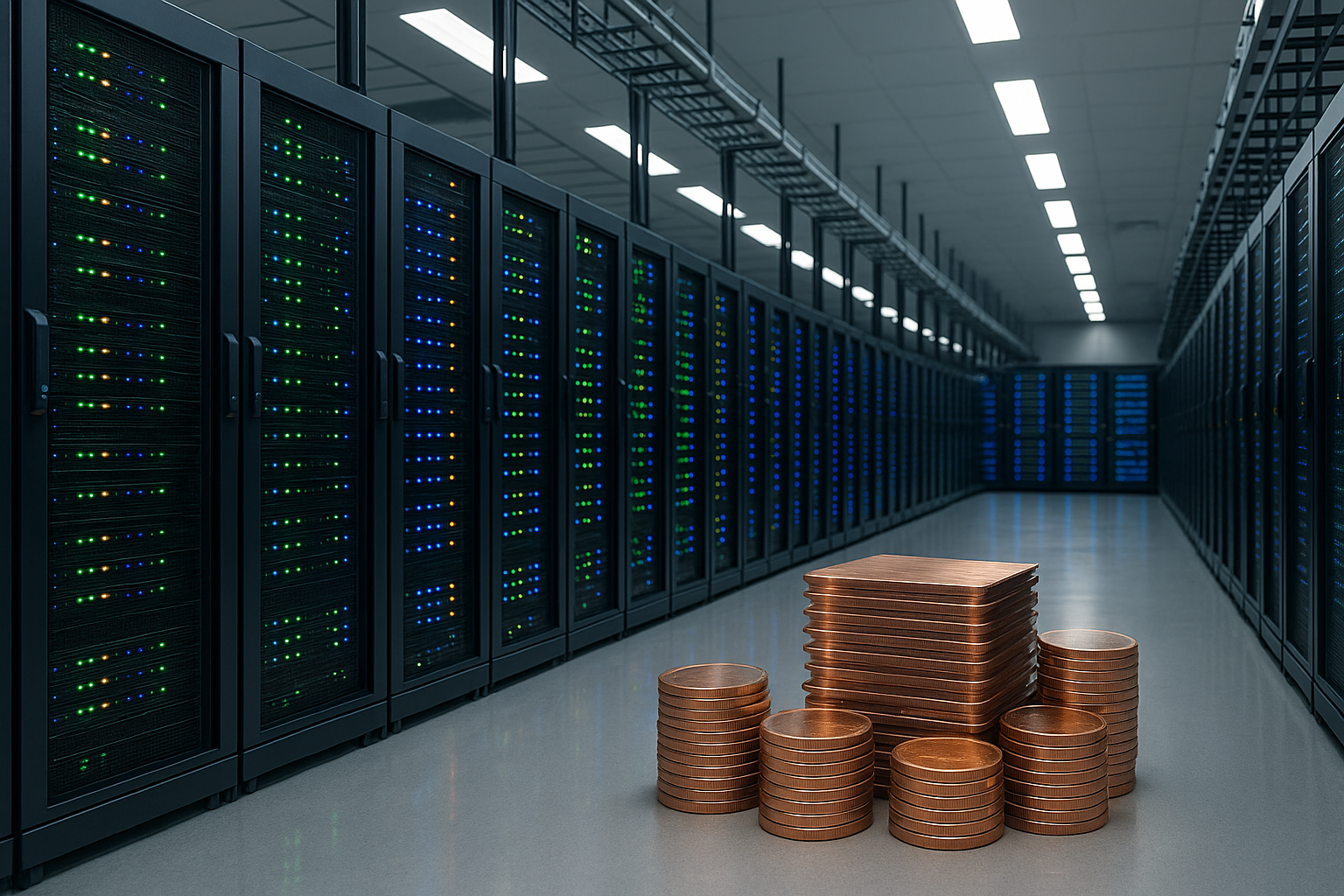
Surging demand for AI computing power is redrawing the global data-centre map, and the latest move underscores just how quickly capital is flooding into high-growth digital infrastructure markets. Vantage Data Centers’ US $1.6 billion equity investment to acquire a 300-megawatt hyperscale campus in Malaysia has immediately become one of the most talked-about developments across investor circles this week. With AI workloads doubling in complexity roughly every 12 months, according to industry trackers, hyperscale operators are accelerating expansion across lower-cost, energy-efficient markets—putting APAC squarely at the centre of the next wave of AI infrastructure growth.
The deal, first highlighted by World Business Outlook, reflects a broader shift in capital allocation as investors look beyond traditional tech hubs and toward regions capable of supporting power-intensive AI clusters. For investors, it signals both massive opportunity and the emerging possibility of sector overheating.
A Major Signal in the Global AI Infrastructure Race
Vantage’s acquisition is strategically timed. The industry is experiencing an unprecedented build-out, with Goldman Sachs estimating that AI-related data-centre spending could surpass US $1 trillion globally by 2030, driven by hyperscalers, sovereign cloud initiatives, and enterprise adoption of large-scale machine-learning systems. APAC markets—Malaysia, Singapore, Indonesia, and India—are increasingly attractive due to available land, improving power infrastructure, and supportive national policies aimed at becoming AI-ready economies.
Malaysia, where this new 300 MW campus is located, has been positioning itself as an AI-development hub through its Malaysia Digital (MD) initiative and incentives for cloud providers. The country’s grid stability and growing renewable-energy mix further boost its competitiveness compared to more saturated markets like Singapore, where land and energy constraints have tightened expansion.
For Vantage, the move boosts its capacity to serve global cloud providers, GPU clusters, and AI-training deployments. For investors, it may represent an inflection point—one where data-centre operators begin competing not only on capacity but also on access to renewable energy, power efficiency, and geopolitical stability.
Why This Matters for Investors
1. A New Frontier in AI Infrastructure Spending
The arms race for GPU power is spilling directly into data-centre real estate. Nvidia, AMD, and other chip manufacturers may be the most visible beneficiaries of the AI boom, but hyperscale infrastructure sits at the foundation of the entire value chain.
Companies supplying liquid-cooling systems, high-density racks, advanced power-distribution equipment, battery storage, and optical interconnects stand to gain.
Firms like Vertiv, Eaton, Schneider Electric, and Arista Networks are already seeing accelerating demand linked to AI deployments.
2. The Overcapacity Question
Though investor sentiment around AI infrastructure is overwhelmingly positive, analysts at Morgan Stanley and UBS have recently warned that “multi-trillion-dollar AI capex cycles tend to carry long-term overcapacity risks,” particularly if enterprise AI monetization continues to lag deployment.
A 300 MW campus represents one of the largest single additions to the APAC grid in 2025, and while demand remains strong, the rapid pace of construction could widen the supply-demand gap in markets experiencing slower-than-expected AI adoption.
3. Geographic Diversification Becoming Critical
Geopolitics is now an integral part of data-centre strategy. Restrictions on Chinese technology, shifting U.S. export controls, and energy-security concerns are driving companies to diversify away from single-market dependency.
Investors should pay close attention to regions offering:
- Stable long-term energy contracts
- Access to renewable power
- Pro-digital government policies
- Reliable fiber connectivity for global AI training clusters
Malaysia currently checks all four boxes, which explains why multiple hyperscalers—including Google, Microsoft, and AWS—have already announced AI-related expansions there this year.
Future Trends to Watch
Rising Sovereign AI Demand
Governments are now building “national AI clouds” to support domestic development. This will increase long-term demand for hyperscale capacity across emerging markets.
Shift to Liquid and Immersion Cooling
AI models require extreme density. Cooling-technology companies may be among the biggest indirect winners.
Green Data Centres as a Competitive Advantage
With ESG pressure rising, operators that can leverage hydro, solar, and advanced efficiency technologies will attract the most enterprise demand—Malaysia’s renewable-energy road map strengthens its long-term positioning.
AI-Driven Edge Infrastructure
As AI inference moves closer to end-users, edge-data-centre operators in APAC may see a significant growth uptick through 2026–2028.
Key Investment Insight
The Vantage APAC deal is a clear signal: AI infrastructure remains in a high-capex expansion cycle, with strong upside for companies tied to data-centre development, power systems, next-gen cooling, AI networking hardware, and renewable-energy partnerships. Investors should monitor supply-demand balance closely—rapid build-out increases both opportunity and risk. Positioning across the AI infrastructure supply chain rather than focusing solely on semiconductor names may provide diversified upside.
Investors looking to stay ahead of fast-moving AI infrastructure trends should continue tracking developments like this one. For daily coverage on critical market shifts, technology investments, and global financial signals, stay connected with MoneyNews.Today.