
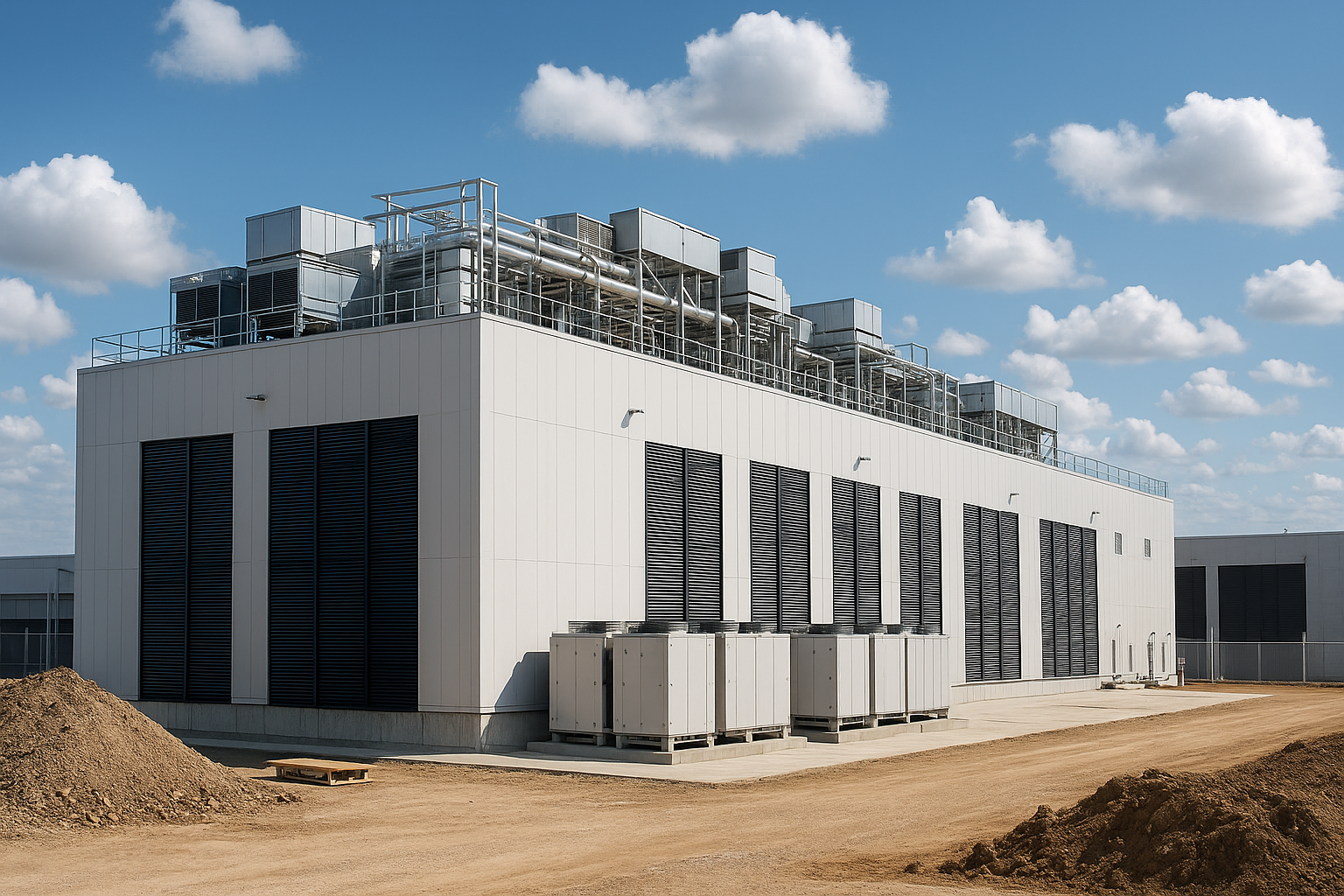
The United States is entering a once-in-a-generation infrastructure boom, fueled not by roads or bridges — but by the rapid expansion of data centers powering AI, cloud computing, and the next wave of digital transformation. New industry projections reported by Yahoo Finance show the U.S. data center construction market surging from US$17.01 billion in 2024 to US$28.95 billion by 2033, reflecting a powerful long-term growth trajectory that is already capturing investor attention across the real estate, utilities, and green-tech sectors.
With hyperscalers scaling infrastructure at unprecedented speed, enterprises modernizing legacy systems, and AI workloads requiring exponentially more compute power, demand for next-gen facilities is intensifying. Social media threads, analyst reports, and market chatter reflect an unmistakable trend: investors are viewing data center development as one of the most resilient and scalable growth sectors of the decade.
Data Centers Become the Backbone of the AI Economy
As cloud adoption accelerates and AI models become increasingly compute-heavy, data center capacity is emerging as a critical national resource. According to recent infrastructure assessments and market forecasts cited by Yahoo Finance, three forces are driving construction momentum:
1. Explosive Growth in Cloud Services
Enterprises continue migrating operations into hybrid and multi-cloud environments. Hyperscalers like Amazon Web Services, Microsoft Azure, and Google Cloud are significantly increasing capacity footprints across North America to support surging demand from AI and enterprise cloud migration.
2. AI and High-Performance Computing Demand
Generative AI, simulation workloads, autonomous systems, and machine learning training all require enormous processing power. This shift is pushing developers to build facilities capable of supporting dense GPU clusters, optimized liquid cooling, and specialized power distribution systems.
3. The Shift Toward Energy-Efficient, Scalable Infrastructure
Energy costs and emissions pressures are accelerating the transition toward green building, renewable energy partnerships, and sustainable power strategies. Investors are increasingly evaluating providers based on carbon intensity and energy efficiency — creating additional incentives for next-gen construction.
These trends are not short-lived. Industry analysts from CBRE, McKinsey, and global REIT research desks consistently identify data centers as one of the fastest-growing digital infrastructure segments through at least 2030.
Why This Matters for Investors
The projected doubling of industry value over the next decade presents multiple investment pathways spanning real estate, utilities, construction, renewable energy, and technology supply chains.
Real Estate & REITs Gain Structural Tailwinds
Data-center-focused REITs — including major U.S. operators — stand to benefit from long-term, high-quality leases driven by hyperscalers and enterprise clients. Stable demand, recurring revenue, and low vacancy rates make this a compelling defensive growth play in uncertain economic environments.
Construction & Engineering Firms See Multi-Year Pipelines
General contractors specializing in mission-critical facilities are poised for long-term expansion. Many firms are reporting multi-year project visibility — rare in broader commercial real estate markets.
Utilities & Renewable Energy Providers Become Key Partners
Data centers are among the most energy-intensive facilities in the country. Utility companies, grid modernizers, and renewable energy partners — especially solar, wind, and green hydrogen firms — are positioned to capture enormous demand as developers enhance power supply and sustainability commitments.
AI, Chipmakers, and Liquid Cooling Providers Benefit Indirectly
Growth in construction directly supports broader ecosystems, including:
- GPU suppliers
- Liquid cooling innovators
- Data center networking firms
- Battery and backup power manufacturers
As facilities grow more advanced, suppliers offering energy efficiency, high-density compute support, and thermal management systems are expected to gain share.
Future Trends to Watch
1. Power Shortages Could Become the New Bottleneck
Several states — including Virginia, Texas, and Georgia — are already facing grid constraints. Power availability will be one of the biggest factors shaping where data centers are built.
2. AI-Specific Facility Designs Will Dominate New Builds
Traditional data centers cannot efficiently host the new generation of GPU clusters. AI-optimized infrastructure, liquid immersion cooling, and modular expansion designs are becoming the new industry standard.
3. Growing Government Involvement
Federal and state agencies are increasingly offering incentives, tax credits, and streamlined permitting to support digital infrastructure expansion — similar to semiconductor and renewable energy initiatives.
4. Sustainable Data Centers Become a Competitive Advantage
Developers using green energy, smart-grid integration, and low-carbon materials are gaining investor preference amid rising ESG scrutiny.
Key Investment Insight
The rapid rise of the data center construction market signals one of the strongest multi-year growth opportunities in U.S. emerging industries. Investors should closely monitor:
- Data-center REITs with strong development pipelines
- Construction and engineering firms specializing in mission-critical projects
- Utility partners providing grid upgrades and renewable energy
- AI infrastructure suppliers poised to benefit from higher facility demand
With digital transformation continuing across every major sector of the economy, the data center construction boom offers exposure to structural, long-lived growth — not cyclical momentum. For investors seeking a durable theme through 2030 and beyond, this sector deserves a place on the radar.
Stay connected with MoneyNews.Today for the latest analysis on emerging markets, digital infrastructure, and long-term investment trends shaping the future of the global economy.




