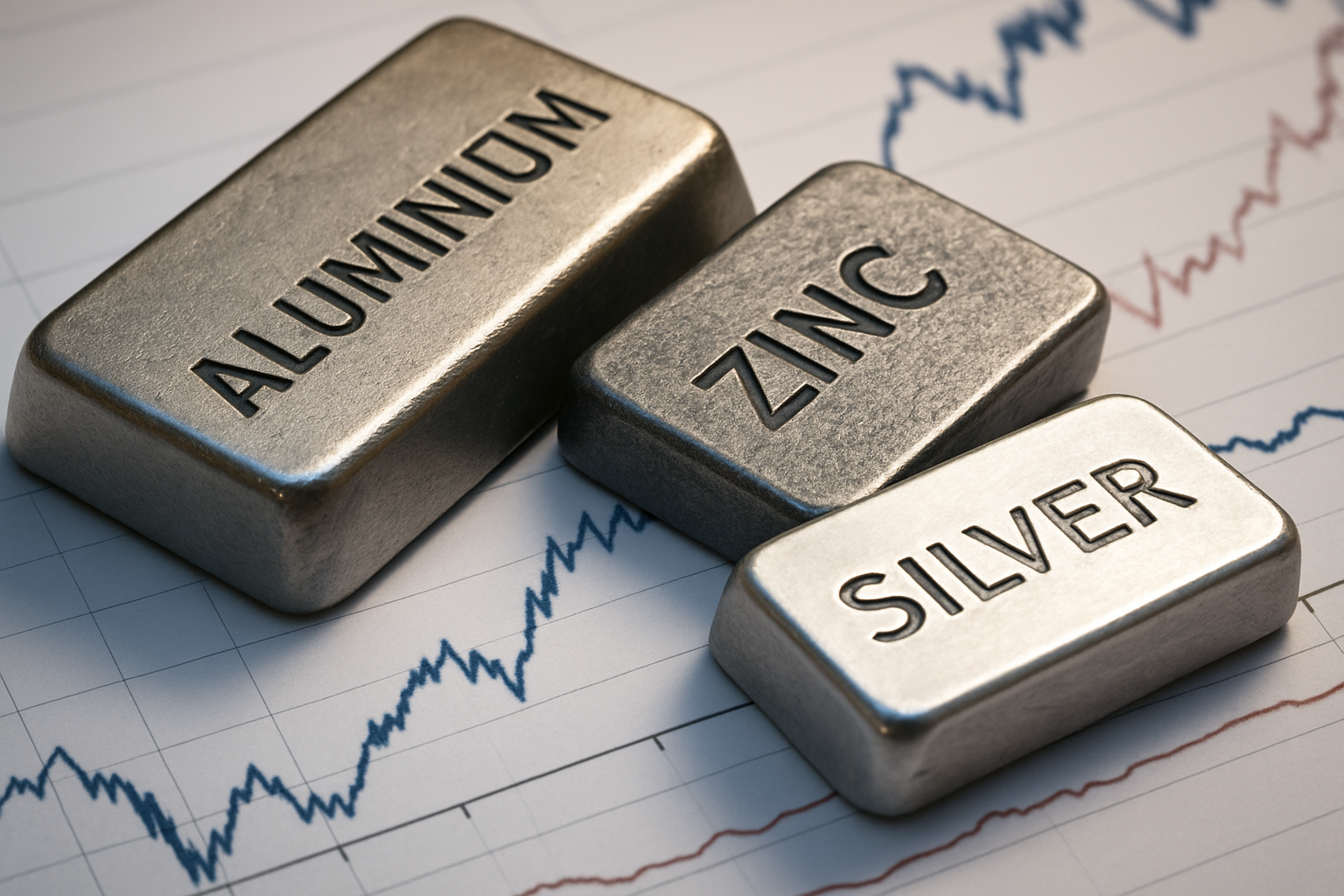
As global markets search for pockets of resilience outside the dominant tech and AI trade, the non-ferrous metals sector is emerging as an unexpected bright spot. Aluminium, zinc, and silver producers are increasingly drawing investor interest, fueled by improving price trends, tightening supply conditions, and stronger-than-expected industrial demand. Now, fresh analysis from Emkay Global Financial Services, reported by Business Standard, suggests that earnings upgrades may be on the horizon—potentially marking the beginning of a multi-year recovery cycle for the sector.
The timing is notable. With equity markets in the U.S. and Europe trading near record highs and investors broadly positioned in rate-sensitive or AI-linked growth sectors, the commodities space is attracting renewed attention as a value-driven hedge against market volatility. The non-ferrous segment, in particular, is benefiting from rising spot prices and broader macro themes, including clean energy infrastructure, electric vehicles, and industrial restocking across Asia.
Metals Poised for an Upside: What Analysts Are Seeing
Emkay Global’s latest sector note highlights a meaningful earnings tailwind if current spot prices for aluminium, zinc, and silver persist through FY27. Their analysts project:
- ~5.5% EBITDA upgrades for Vedanta Ltd.
- ~4.9% EBITDA upgrades for National Aluminium Company (NALCO)
These are significant adjustments for companies operating in a sector where margins are heavily influenced by fluctuating global prices, input costs, exchange rates, and global demand cycles.
The forecasts align with broader market data. According to recent pricing updates from the London Metal Exchange (LME), aluminium and zinc have been trading at multi-month highs, driven by supply constraints in China, increased energy costs impacting smelter operations, and strong consumption in sectors like auto manufacturing and grid development. Silver, traditionally viewed as both an industrial and precious metal, has also seen rising interest due to its expanding use in solar panels, electronics, and high-end industrial equipment.
Bloomberg and Reuters have both noted that the energy transition has pushed demand for metals beyond pre-pandemic levels, with infrastructure spending in India and Southeast Asia adding another layer of sustained consumption through 2027.
Why This Matters for Investors
With many AI-linked equities trading at stretched valuations, non-ferrous metals producers offer an alternative exposure rooted in hard assets and cyclical upside. Several factors make the sector particularly relevant right now:
1. Strong Demand from Emerging Industries
The clean energy transition—solar, EVs, advanced manufacturing—relies heavily on aluminium, zinc, and silver. Silver demand from photovoltaic manufacturing is projected to grow steadily through 2030, according to the Silver Institute.
2. Supply Tightness Could Support Higher Prices
China’s smelting curbs, power shortages in key mining regions, and geopolitical disruptions have constrained global supply. This could keep spot prices elevated if demand holds steady.
3. Attractive Valuations vs. Growth Sectors
While tech valuations continue to expand, non-ferrous metals producers trade at more modest multiples, offering relative value for long-term investors.
4. Government Infrastructure Spending
India, Indonesia, the U.S., and several EU nations are increasing metals-heavy public spending. Aluminium and zinc are essential inputs for transmission lines, construction, and transport systems.
5. Hedging Against Inflation and Rate Risks
In an uncertain rate environment, commodities can offer diversification benefits. Non-ferrous metals, unlike energy commodities, tend to be influenced by structural industrial demand rather than short-term geopolitical shocks.
Future Trends to Watch
Industrial Restocking Cycles
Manufacturers across Asia are rebuilding inventories after years of post-pandemic volatility. The pace and scale of restocking will play a major role in determining demand strength through FY26-FY27.
Renewable Energy Build-Out
COP28 implementation phases and national renewable-energy goals increase the likelihood of sustained silver and aluminium demand.
Energy Prices and Input Costs
Producers’ earnings can be sensitive to coal, natural gas, and electricity costs. Lower energy prices could further expand EBITDA margins.
Commodity Price Swings
Volatility remains an inherent risk. Macro shocks, unexpected supply surges, or a slowdown in Chinese demand could pressure spot prices.
Key Investment Insight
Investors looking for opportunities beyond highly crowded technology sectors may find select upside in non-ferrous metals producers, particularly companies with strong balance sheets and diversified production portfolios. Exposure to Vedanta Ltd., NALCO, and other miners with leverage to aluminium, zinc, and silver prices may offer attractive medium-term returns if the FY27 spot-price environment stays supportive.
However, commodity-price volatility remains a core risk. Monitoring LME price trends, China’s industrial output data, and global energy cost dynamics will be essential to navigating this space effectively.
As the rotation into value and cyclical assets gains momentum, the metals and mining sector is becoming a more prominent part of investor conversations. Stay connected with MoneyNews.Today for daily, data-backed insights on emerging opportunities across global markets.