
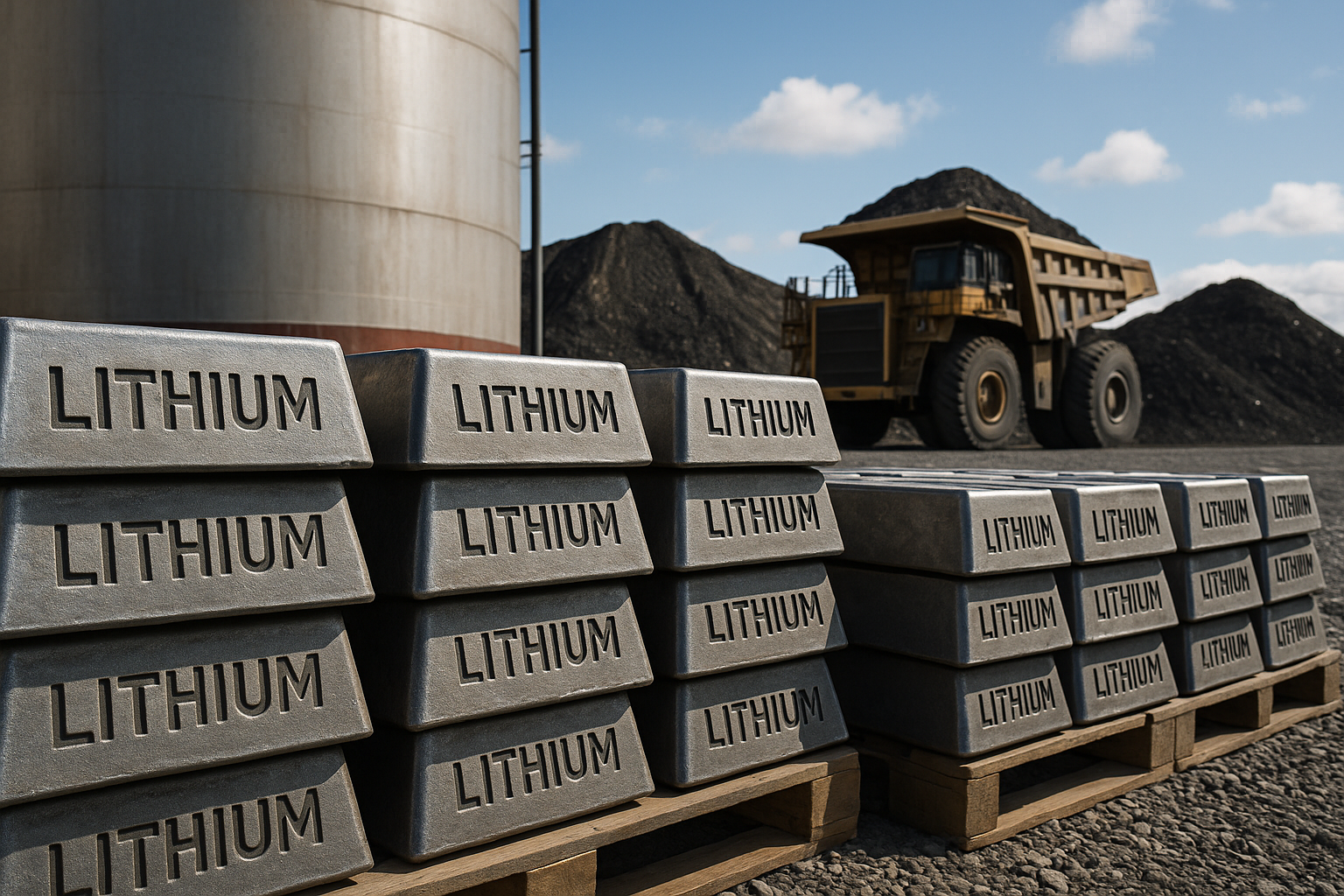
As global demand for the minerals powering electrification accelerates, mining giants are being forced to redefine what “core commodities” really mean in a decarbonizing world. On December 4, 2025, Rio Tinto — one of the world’s largest and most influential diversified miners — announced plans to divest $5–10 billion worth of non-core assets and redirect that capital toward future-facing industries such as copper, lithium, aluminum, and high-grade iron ore. According to Investing.com, the company aims to streamline its portfolio by exiting legacy segments like titanium dioxide, borates, and other lower-growth divisions.
This announcement arrives at a time when investors across commodities, clean energy, and infrastructure are re-evaluating exposure to the minerals most essential for powering EVs, grid expansion, AI data centers, and next-generation energy systems. The shift by Rio Tinto — historically known for its scale and broad diversification — signals a broader realignment in the global mining sector as companies race to secure relevance in an era defined by electrification.
A Pivotal Moment for the Mining Industry
The divestment strategy reflects a clear acknowledgment: the future of mining lies in materials with structural demand, not cyclical volatility. Copper demand is projected to nearly double by 2035, according to the International Energy Agency (IEA), driven by EVs, renewable grids, semiconductors, and industrial automation. Lithium demand is expected to surge more than fivefold over the same period, fueled by the rapid scale-up of battery manufacturing.
Rio Tinto’s renewed focus deliberately targets these high-growth metals. Lithium — once a niche product — is rapidly becoming a strategic commodity. Copper is emerging as the “new oil” for electrification. Aluminum is critical for lightweight vehicles, transmission lines, and renewable components. And iron ore remains the backbone of global industrial output.
By reallocating capital from slower-growth categories to these “future-proof” metals, Rio Tinto is making a long-term bet on the global energy and technology transition — and one that investors are closely watching.
Why This Matters for Investors
1. A Strong Signal of Institutional Alignment With Electrification
Mining executives rarely make multi-billion-dollar pivots without deep strategic consensus. Rio Tinto’s move reinforces what institutional analysts have been saying for months: demand for critical minerals is not just increasing — it is structurally tightening.
A Bloomberg Intelligence report released in late 2025 highlighted an expected 20–30% supply gap in copper by 2030, driven by underinvestment and declining ore grades. Lithium markets, despite periodic volatility, face persistent shortages due to limited refining capacity and slow permitting timelines.
Rio Tinto’s redirection of capital aligns perfectly with these macro realities.
2. Divestment Cash Could Accelerate M&A and Project Development
With $5–10 billion potentially freed up, Rio Tinto gains flexibility to:
- Expand its pipeline of copper projects
- Accelerate lithium exploration and refining capacity
- Pursue bolt-on acquisitions in strategic geographies
- Fund infrastructure required for next-generation metals processing
Analysts at JPMorgan have already suggested that major miners will likely use 2026–2028 to secure long-term control over the most desirable deposits — especially in Canada, the U.S., and Australia.
3. A Positive Signal for Critical Mineral ETFs
Investor interest in ETFs focused on critical minerals — such as copper miners, lithium producers, and diversified battery-supply-chain funds — has surged in 2025. Rio Tinto’s strategic repositioning may serve as a catalyst for sector rotation within broader commodity portfolios.
Funds emphasizing copper (COPX), lithium (LIT), battery technology (BATT), and North American mining companies may see renewed inflows as investors position ahead of future supply constraints.
Future Trends to Watch
Electrification Spending Continues to Rise
The U.S. Energy Information Administration (EIA) notes that grid modernization, EV adoption, and renewable deployment continue to push mineral demand to new highs. Copper intensity in grid upgrades alone has increased nearly 60% since 2020.
Higher Commodity Prices From Structural Imbalances
Long permitting timelines, geopolitical tensions, and declining ore quality create supply-side bottlenecks — often supportive of higher prices in the medium term.
North America’s Push for Mineral Independence
The U.S. Inflation Reduction Act and Canada’s Critical Minerals Strategy both aim to domesticate supply chains. Rio Tinto’s future investments may increasingly concentrate in these politically supportive jurisdictions.
Technological Shifts Driving Mineral Consumption
AI infrastructure, data centers, electrified manufacturing, decentralized energy systems, and EV fast-charging networks all require copper-heavy inputs. Lithium continues to dominate battery chemistry demand even as alternatives emerge.
Key Investment Insight
Rio Tinto’s multi-billion-dollar strategic pivot underscores a defining theme for investors: the commodities with the strongest long-term fundamentals are those integral to electrification, energy storage, and industrial modernization. Copper, lithium, and aluminum producers — particularly those with low-cost assets and politically stable footprints — may offer superior risk-adjusted returns versus legacy commodity exposures.
Investors seeking durable positioning in the energy transition may want to consider miners, ETFs, and integrated supply-chain companies closely aligned with these critical minerals.
Stay informed with MoneyNews.Today for daily market insights, strategic analysis, and coverage of the evolving opportunities shaping the global investment landscape.




