
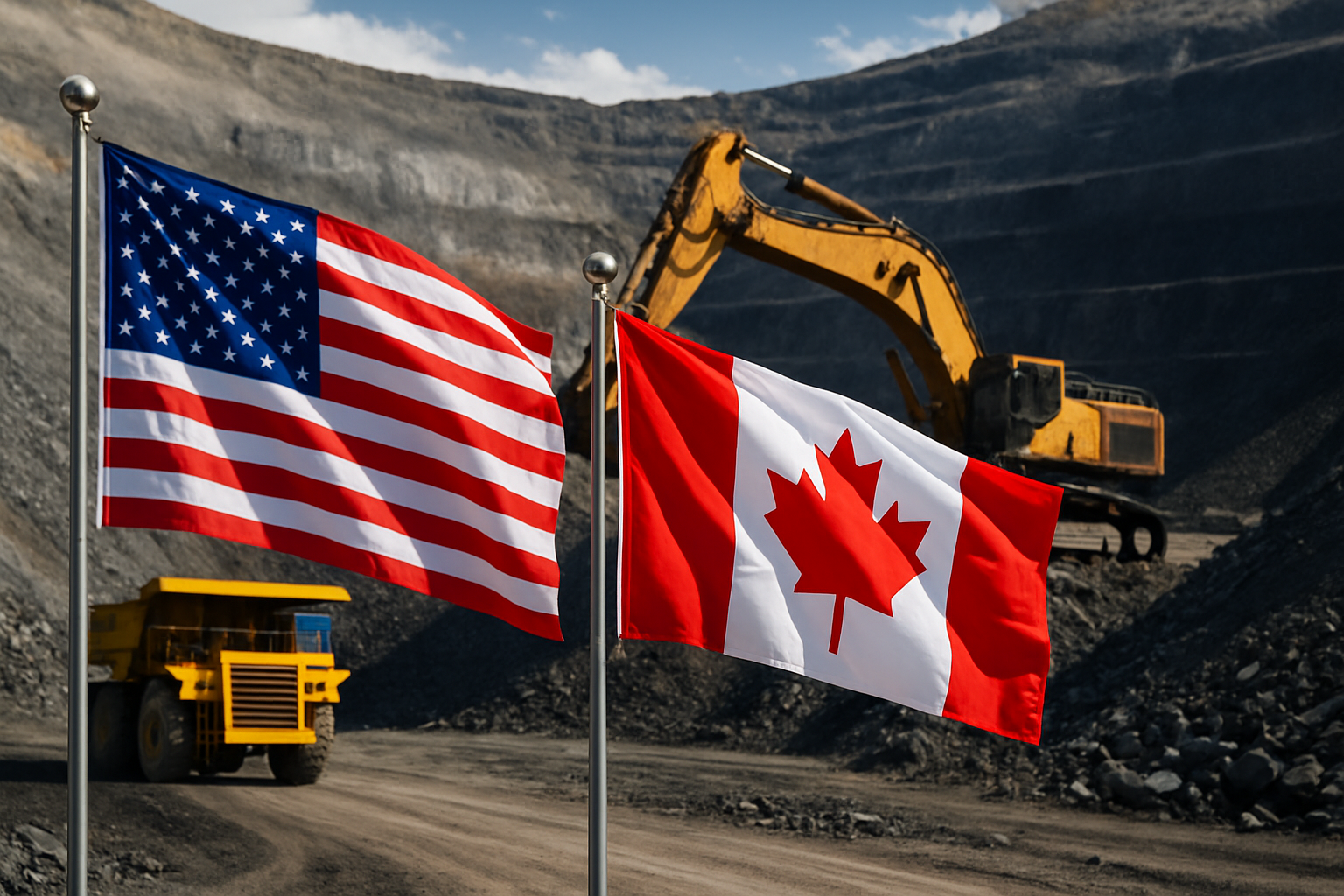
The competition for global control of critical minerals — the metals that power EV batteries, AI infrastructure, defense systems, and clean-energy technologies — is accelerating. In a notable pivot, both the United States and Canada have intensified efforts to build secure, domestically anchored supply chains for key materials such as copper, lithium, graphite, nickel, and rare earth elements. According to Fortune and Reuters, the two countries are rolling out policies that include regulatory streamlining, financial incentives, public–private partnerships, and potential subsidies—signaling a deeper geopolitical strategy.
This transition marks a fundamental shift: minerals once traded as basic commodities are now treated as strategic assets essential to national security, industrial competitiveness, and energy independence. For investors, the policy momentum could reshape the North American mining landscape for decades.
Critical Minerals Move to the Center of Geopolitical Strategy
Concerns about overreliance on foreign suppliers—especially China, which currently dominates global rare-earth refining and processing capacity—have pushed Western governments to diversify and onshore critical materials.
Key developments include:
- U.S. Department of Energy grants and loan guarantees supporting domestic battery-material production.
- Canada’s Critical Minerals Strategy, which earmarks billions for exploration, permitting reform, and refinery development.
- New bilateral agreements between Washington and Ottawa aimed at coordinating supply-chain planning and reducing chokepoints.
Government reports cited by Reuters highlight that the U.S. imports over 80% of its rare earths and up to 70% of its critical lithium-ion battery materials from overseas. Analysts from BloombergNEF warn that supply gaps could slow down EV adoption and renewable-energy targets unless North America accelerates mining and processing capacity.
These concerns are pushing policymakers into a more interventionist stance, turning critical minerals into a bipartisan economic priority.
Why This Matters for Investors
The policy shift could be one of the most significant industrial pivots since the shale boom. It affects a broad ecosystem of materials and industries:
1. Mining and Refining Projects Gain a Clear Tailwind
Government-backed financing lowers capital risk for early-stage miners—historically one of the biggest barriers in the sector. North American projects involving lithium, nickel, copper, and rare earths are seeing increased interest from institutional capital and strategic partners.
Companies positioned to benefit include:
- North American lithium developers tied to EV battery supply chains
- Copper producers needed for grid expansion and electrification
- Rare-earth refiners aligned with defense and semiconductor sectors
2. Policy Support Helps De-Risk Long-Term Investments
Unlike short-cycle commodities like oil and gas, critical minerals depend on long-term capital commitments. Subsidies and regulatory frameworks help establish demand certainty, encouraging private investment.
McKinsey’s latest materials outlook notes that the clean-energy transition could triple global demand for key minerals by 2040, with copper, lithium, and nickel among the largest beneficiaries.
3. Strategic Competition Is Driving Capex Expansion
The Inflation Reduction Act (U.S.) and Canada’s Clean Technology Investment Tax Credit are catalyzing nearshoring of supply chains for EVs, batteries, and grid technologies. This policy environment increases the competitiveness of Western producers relative to low-cost Asian rivals.
Utilities, automakers, and battery manufacturers are now forming direct partnerships with miners to lock in supply — a trend likely to accelerate through 2026.
Future Trends to Watch
A Race Toward Domestic Refining Capacity
Mining alone is not enough. The U.S. and Canada are now focusing on the higher-value segments of the supply chain — refining, processing, and cathode/anode manufacturing. These areas could see the fastest growth in government-backed investment.
Defense and Semiconductor Policies Will Elevate Rare Earths
Rare-earth magnets are essential for fighter jets, drones, EVs, and data-center cooling systems. Expect increased defense budget allocations for rare-earth projects across North America.
Environmental Permitting Reform
To speed development, both countries are reviewing permitting timelines. Faster approvals could unlock stalled copper and lithium projects, reshaping supply/demand fundamentals.
Cross-Border Strategic Alliances
Joint U.S.–Canada initiatives may evolve into a fully integrated continental mineral strategy, improving project economics and attracting global capital inflows.
Key Investment Insight
Government-led initiatives in the U.S. and Canada are transforming critical minerals from cyclical commodities into strategic growth assets. Investors may want to monitor:
- North American miners with exposure to copper, lithium, nickel, graphite, and rare earths
- Refining and processing companies positioned to capitalize on domestic supply-chain build-outs
- ETFs focused on critical minerals, clean energy, and electrification materials
- Integrated EV and battery manufacturers securing long-term mineral supply agreements
With policy momentum strong and geopolitical competition intensifying, early positioning in this sector could yield meaningful long-term returns.
For more market-driven insights on geopolitics, commodities, and global investment trends, continue following MoneyNews.Today — your trusted source for daily investor intelligence.




