
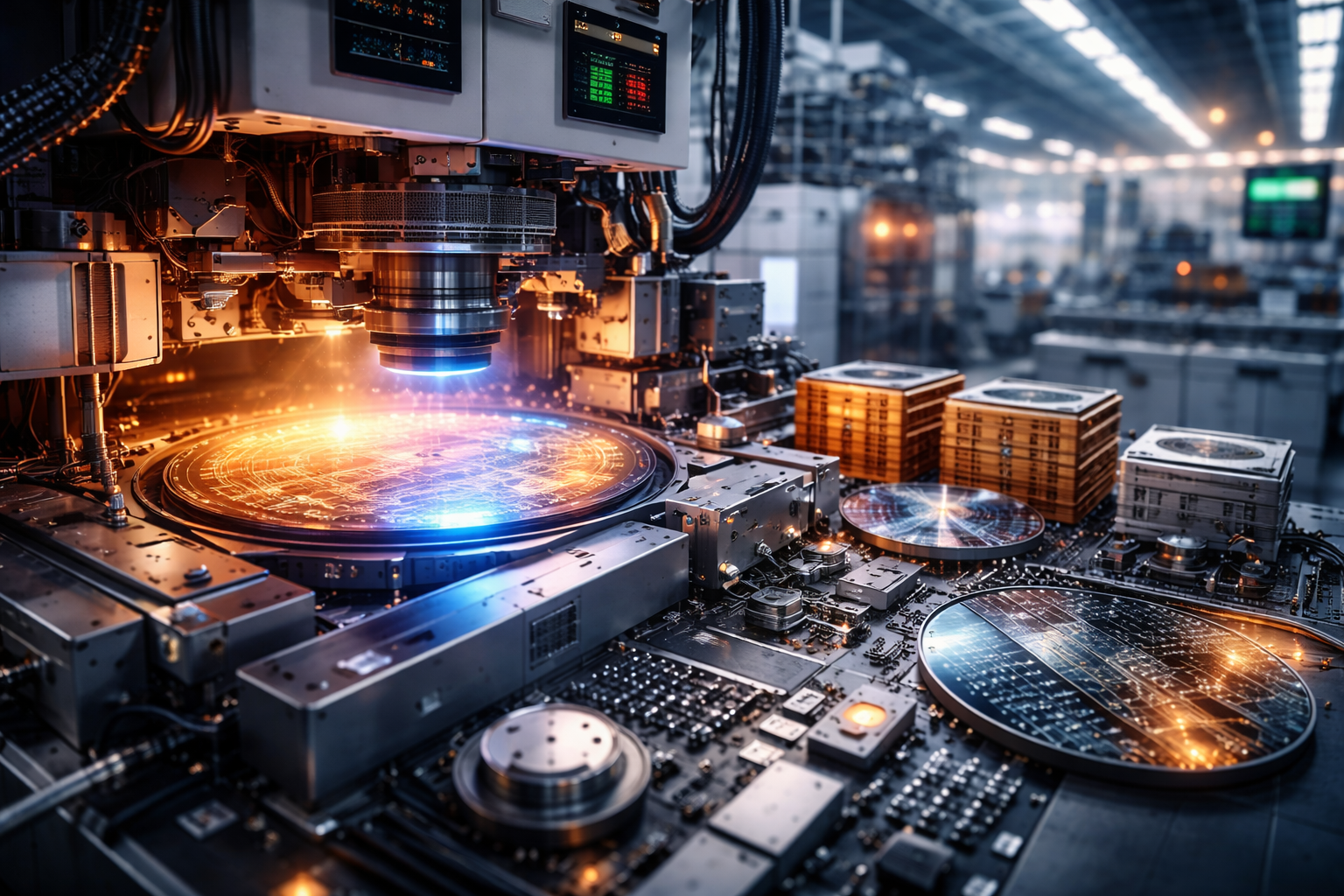
The next phase of the artificial intelligence boom is taking shape—not in software applications or consumer-facing tools, but deep inside semiconductor fabrication plants. As AI workloads grow larger and more complex, demand is surging for the advanced equipment required to manufacture cutting-edge logic and memory chips, positioning semiconductor equipment makers as one of the most compelling infrastructure plays in U.S. technology markets.
For investors looking beyond headline-grabbing AI software names, this trend is shifting attention toward the hardware backbone powering the AI economy.
The Market Is Repricing AI Infrastructure
According to Investing.com, the global semiconductor equipment sector is forecast to grow by approximately 9% in 2026, reaching roughly $126 billion in annual revenue. The primary driver behind this expansion is accelerating investment in AI-focused chip production, as data centers, cloud providers, and hyperscalers race to expand computing capacity.
Unlike consumer electronics-driven chip cycles of the past, this demand is being fueled by enterprise and infrastructure spending—often backed by long-term capital expenditure plans. That shift is reducing cyclicality and increasing earnings visibility for companies supplying tools used in advanced chip fabrication.
Investors are increasingly recognizing that AI’s growth is not just about algorithms, but about the physical ability to manufacture increasingly powerful and energy-efficient semiconductors.
Why This Matters for Investors
Semiconductor equipment companies occupy a unique position in the AI value chain. They do not design chips, nor do they sell software, but they enable both. Every leap forward in AI model performance requires:
- More advanced logic chips
- Higher-bandwidth memory
- Smaller process nodes
- Greater manufacturing precision
Each of these advancements depends on increasingly sophisticated fabrication tools. As a result, equipment makers often benefit regardless of which chip designer or cloud provider ultimately wins market share.
According to analysts cited by Bloomberg, AI-related capital spending is driving a structural increase in wafer fabrication equipment demand, particularly for tools tied to extreme ultraviolet lithography, advanced etching, deposition, and inspection.
This dynamic positions semiconductor equipment as a picks-and-shovels play on the AI revolution—often with lower valuation risk than more speculative software names.
Memory and Logic Drive the Next Upgrade Cycle
AI workloads are exceptionally data-intensive, placing heavy demands on both logic and memory chips. High-bandwidth memory (HBM), advanced DRAM, and leading-edge logic nodes are all seeing renewed investment as chipmakers expand capacity to meet AI-driven demand.
Industry data referenced by Investing.com suggests that memory spending—after several volatile years—is stabilizing and poised for renewed growth as AI servers require significantly more memory per unit than traditional computing systems.
For equipment suppliers, this translates into a broader and more diversified demand profile. Tools used in both logic and memory fabrication are seeing stronger order visibility, reinforcing the sector’s earnings outlook beyond a single chip category.
U.S. Policy and Capital Spending Tailwinds
U.S. industrial policy is also reinforcing the investment case. Government incentives aimed at boosting domestic semiconductor manufacturing are accelerating fab construction and equipment purchases. While policy initiatives are not the sole driver of demand, they provide a supportive backdrop for long-term capital investment.
Major U.S.-based chipmakers and foundries have outlined multi-year spending plans that extend well into the second half of the decade. For equipment suppliers, these commitments translate into backlog growth and revenue durability—key factors investors look for in infrastructure-oriented technology stocks.
Future Trends to Watch
Several developments could further strengthen the outlook for AI-driven equipment demand:
Advanced Node Migration: As AI models scale, demand for leading-edge process nodes will continue to rise, benefiting suppliers of high-precision tools.
Data Center Expansion: Hyperscalers are ramping AI-specific data centers, increasing demand for specialized chips and, by extension, manufacturing equipment.
Supply Chain Localization: Efforts to diversify and localize semiconductor supply chains could lead to incremental fab investments, supporting sustained equipment orders.
That said, investors should remain mindful of traditional risks, including capital spending delays, geopolitical disruptions, and the historically cyclical nature of semiconductor markets.
Risks and Valuation Considerations
While the long-term trend is favorable, semiconductor equipment stocks can still experience short-term volatility tied to order timing, customer inventory adjustments, or macroeconomic uncertainty. Valuations have expanded alongside AI enthusiasm, making selectivity increasingly important.
Analysts often recommend focusing on companies with strong technology leadership, diversified customer bases, and exposure to the most advanced manufacturing processes rather than commoditized tools.
Key Investment Insight
As AI reshapes global technology spending, semiconductor equipment makers stand out as critical enablers of the next computing cycle. Investors may find opportunities in niche hardware suppliers tied to AI chip fabrication—offering exposure to long-term infrastructure growth that extends beyond software-driven narratives.
AI’s transformation of the technology landscape is still in its early innings, and the infrastructure supporting it is becoming increasingly central to the investment story. Stay with MoneyNews.Today for daily, investor-focused coverage on technology, AI, and the trends shaping tomorrow’s markets.




