
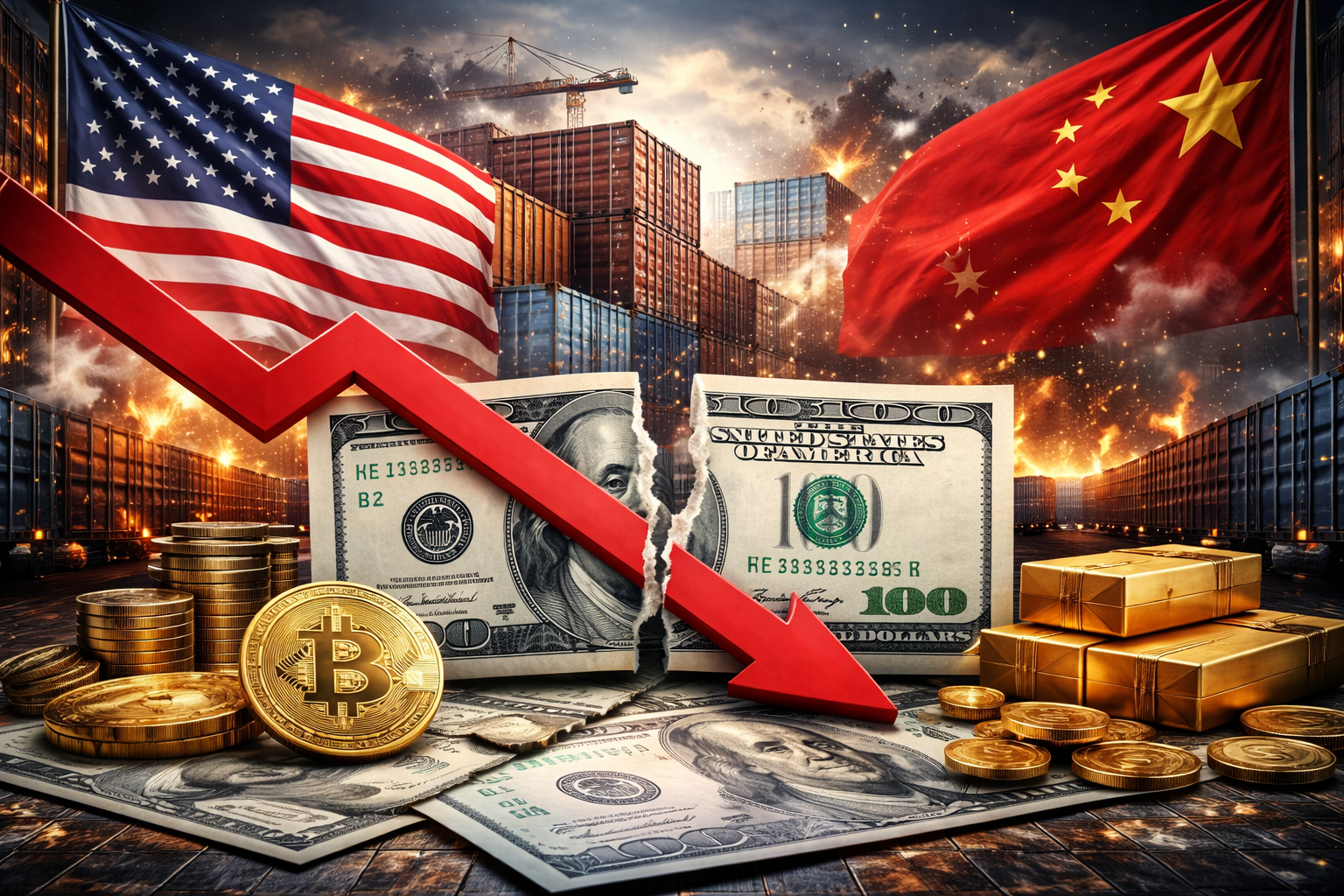
Few forces shaped global markets in 2025 more decisively than politics. From escalating trade disputes to persistent U.S. dollar weakness, policy-driven uncertainty became a defining feature of the investment landscape. What began as targeted tariff measures evolved into a broader phenomenon many analysts labeled “tariff turmoil” — a period in which geopolitical decisions increasingly dictated capital flows, sector performance, and investor risk appetite.
A year-end review by the Financial Times highlights how these political catalysts rippled across asset classes, reinforcing the idea that macro strategy and geopolitical awareness are no longer optional for investors — they are essential.
Trade Policy Returns as a Market Mover
Trade tensions re-emerged in 2025 as a dominant market driver, reversing years of relative calm following earlier global trade disputes. New tariffs, retaliatory measures, and uncertainty around future trade frameworks injected volatility into equities, currencies, and commodities.
According to the Financial Times, renewed friction between major economic blocs disrupted supply chains and reshaped earnings expectations for exporters, manufacturers, and multinational firms. Sectors exposed to cross-border trade — including industrials, autos, and basic materials — experienced sharp valuation swings as investors struggled to price policy risk.
Markets responded predictably: companies with domestic revenue exposure and pricing power outperformed, while globally integrated businesses faced higher risk premiums. This dynamic reinforced a broader theme of deglobalization that has quietly gained momentum over the past several years.
Dollar Weakness Alters Capital Flows
Compounding trade-related uncertainty was a notable weakening of the U.S. dollar in 2025. Currency strategists cited by the Financial Times pointed to a combination of factors: shifting interest rate expectations, fiscal concerns, and geopolitical uncertainty that reduced demand for dollar-denominated assets.
A softer dollar had far-reaching implications. U.S. exports became more competitive, but foreign investors faced currency translation risk, influencing portfolio allocation decisions. Meanwhile, dollar weakness provided a tailwind for commodities priced in dollars — including gold, copper, and energy — contributing to strong performance in real assets.
Historically, periods of dollar weakness have coincided with increased global risk-taking, but 2025 proved more nuanced. While some emerging markets benefited, others struggled under the weight of political instability and capital flow volatility.
Why This Matters for Investors
The interplay between trade policy and currency trends created a complex investment environment. Political decisions no longer simply influenced sentiment — they directly affected earnings visibility, cost structures, and balance sheet stability.
Safe-haven assets emerged as clear beneficiaries. Gold and other precious metals saw sustained inflows as investors sought protection against geopolitical and currency risk. At the same time, technology stocks — particularly those tied to AI and digital infrastructure — outperformed due to their relatively low sensitivity to tariffs and global logistics disruptions.
Bloomberg data referenced by the Financial Times shows that companies with high intellectual property content and minimal physical supply chain exposure consistently outperformed tariff-sensitive peers throughout the year.
Geopolitics and Sector Rotation
One of the most underappreciated outcomes of 2025’s political turbulence was accelerated sector rotation. Investors increasingly favored industries perceived as policy-resilient, including technology, defense, cybersecurity, and domestic infrastructure.
Conversely, sectors dependent on stable trade relations faced repeated reassessments. Analysts noted that tariff uncertainty often delayed corporate investment decisions, affecting capital expenditure forecasts and long-term growth assumptions.
McKinsey research on geopolitical risk suggests that companies able to regionalize supply chains and diversify sourcing tend to outperform during periods of trade instability — a lesson markets reinforced throughout 2025.
Future Trends to Watch
Looking ahead, investors should monitor several key political and macro indicators:
- Tariff policy developments, particularly ahead of major elections
- Currency trends, especially sustained dollar weakness or reversal
- Trade agreement negotiations, which could unlock pent-up demand
- Government industrial policy, influencing reshoring and domestic investment
As political risk becomes a permanent feature of markets, successful investors will need to integrate policy analysis into portfolio construction rather than treating it as a background factor.
Key Investment Insight
The events of 2025 underscored a critical reality: political catalysts now rival monetary policy as drivers of market direction. Trade tensions and dollar movements reshaped sector leadership, boosted safe-haven demand, and rewarded companies with structural resilience. Investors should remain vigilant, actively monitor policy shifts, and position portfolios to withstand geopolitical volatility rather than assuming a return to policy stability.
Stay informed with MoneyNews.Today for daily investor insights that connect politics, macro trends, and market outcomes — helping you navigate an increasingly complex global investment landscape.




