
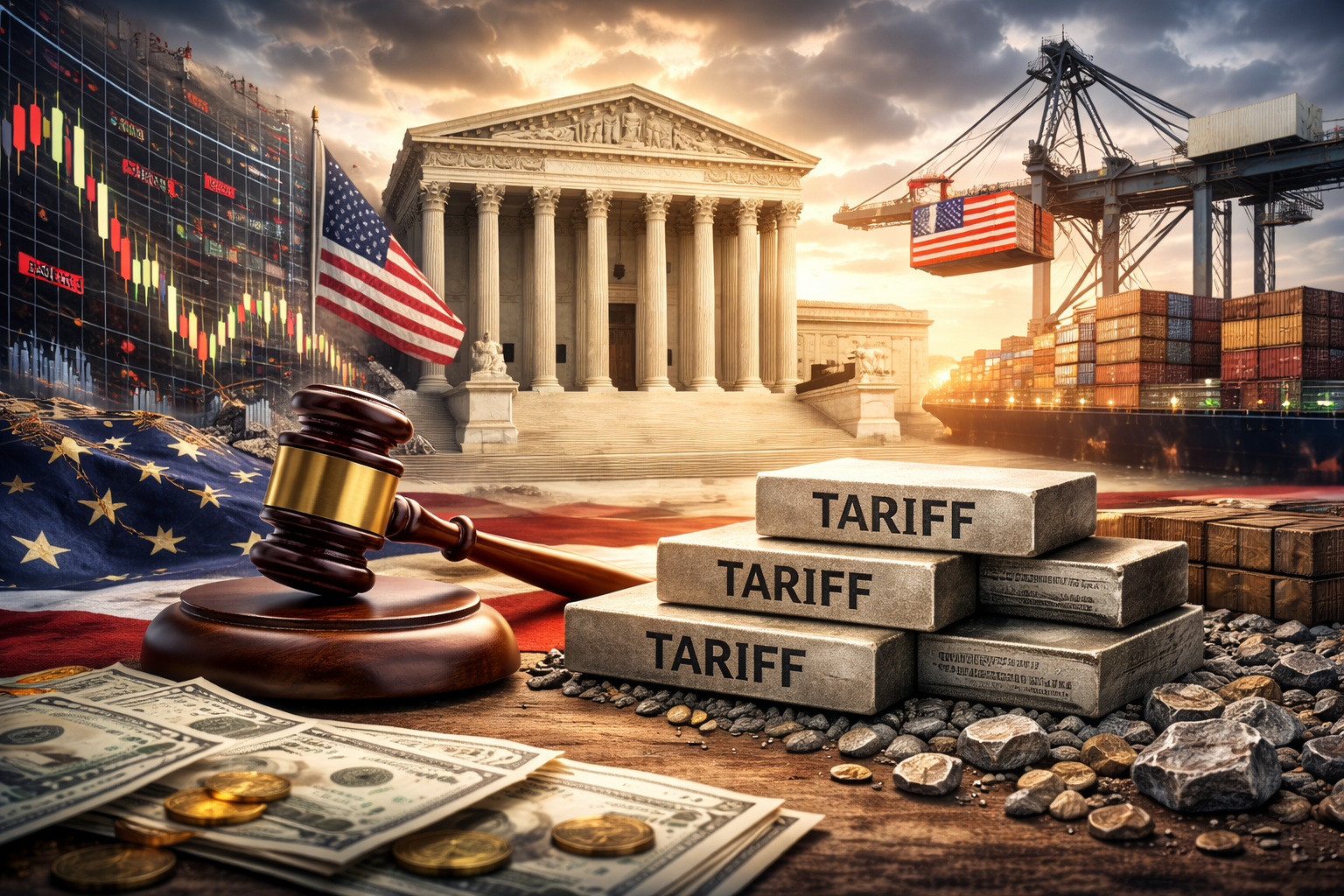
Global markets are bracing for a pivotal legal decision that could ripple far beyond Washington. As the U.S. Supreme Court prepares to weigh in on the legality of Trump-era tariffs, investors are recalibrating risk across equities, commodities, and global supply chains. While the case may appear narrowly legal, its outcome carries meaningful consequences for inflation expectations, corporate earnings, and trade-sensitive sectors.
According to Reuters reporting on January 9, 2026, the court’s ruling could determine whether the executive branch retains broad authority to impose sweeping tariffs under emergency trade powers. With markets already navigating a delicate macro environment, the timing of this decision has amplified its importance.
Why This Ruling Matters for Investors
Tariffs are not just political tools — they are economic levers that directly affect costs, pricing, and profitability. Since their introduction, Trump-era tariffs have reshaped global trade flows, increased input costs for U.S. companies, and influenced inflation dynamics.
If the Supreme Court upholds the tariffs, investors may need to factor in continued cost pressures for industries reliant on imported materials, including manufacturing, consumer goods, and technology hardware. Conversely, a ruling that limits or overturns the tariff authority could ease supply chain frictions and lower cost pressures, potentially supporting margins and improving risk sentiment.
Market strategists note that even the anticipation of the decision has introduced uncertainty, contributing to cautious positioning across equities and currencies.
Market Sensitivity to Trade Policy
Financial markets have become increasingly sensitive to policy-driven catalysts. Bloomberg data shows that trade-related headlines over the past decade have frequently triggered short-term volatility spikes, particularly in sectors with global exposure.
Equity analysts point out that tariffs can act as a hidden tax on businesses and consumers, influencing inflation readings and, by extension, Federal Reserve policy. In an environment where investors are closely tracking signals around interest rates, the court’s decision could indirectly shape expectations for monetary easing or tightening.
For multinational corporations, the stakes are especially high. Companies with complex global supply chains may face either prolonged uncertainty or renewed flexibility, depending on the ruling.
Implications for Inflation and the Fed
One of the less obvious but critical implications of the tariff ruling lies in its impact on inflation. Tariffs tend to raise import prices, which can feed into consumer inflation over time. Economists cited by Reuters have noted that tariff relief could marginally ease inflationary pressures — a development that markets would likely welcome.
Lower inflation expectations could give the Federal Reserve greater room to adjust policy if economic growth slows. On the other hand, maintaining tariffs could reinforce a higher-for-longer narrative on rates, weighing on rate-sensitive assets.
This connection between trade policy and monetary policy underscores why investors are paying such close attention to what may appear to be a purely legal decision.
Global Supply Chains and Geopolitical Risk
Beyond U.S. markets, the ruling has implications for global trade relationships. Trading partners have long criticized unilateral tariffs, and any rollback could alter diplomatic and economic dynamics with key economies.
McKinsey research on global supply chains highlights that companies are still adjusting to a post-pandemic, geopolitically fragmented world. Policy clarity — whether restrictive or accommodative — allows businesses to plan capital expenditures and sourcing strategies more effectively.
For investors, this means the ruling could influence capital allocation decisions across industries tied to global commerce, including logistics, industrials, and commodities.
What Investors Should Watch Next
As the decision approaches, investors should monitor several key indicators:
- Sector reactions: Industrials, consumer discretionary, and technology hardware stocks are particularly sensitive to tariff outcomes.
- Inflation data: Any shifts in pricing pressures could influence rate expectations.
- Corporate commentary: Earnings calls may reveal how companies are positioning ahead of potential policy changes.
- Market volatility: Short-term swings may create both risks and opportunities.
While markets dislike uncertainty, they often respond positively once clarity emerges — even if the outcome is not universally favorable.
Key Investment Insight
Policy decisions at the highest levels can act as powerful market catalysts. The Supreme Court’s tariff ruling has the potential to reshape trade policy, influence inflation trajectories, and alter equity risk appetite. Investors should remain attentive to legal developments and be prepared for sector-specific moves as markets digest the outcome.
Diversification and awareness of policy risk are essential tools in navigating this environment, particularly for portfolios with exposure to globally integrated industries.
Stay informed with MoneyNews.Today for daily, investor-focused insights on politics, markets, and the forces shaping the global economy.




