
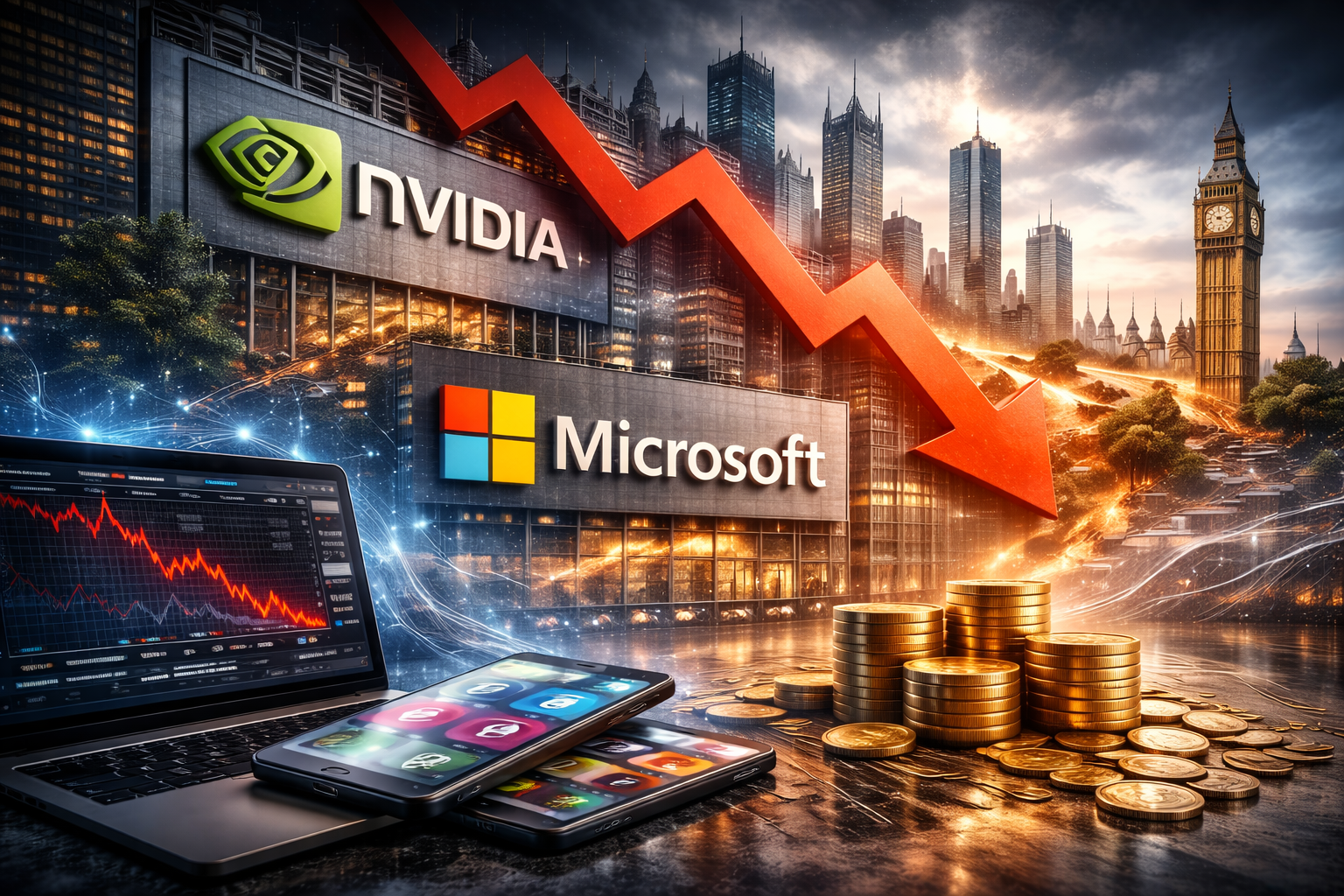
U.S. technology stocks — long viewed as the market’s most resilient growth engine — are once again showing their sensitivity to geopolitical headlines. In European trading, shares of major American tech companies including Nvidia and Microsoft came under pressure as renewed tariff concerns dampened risk appetite, reminding investors that even the strongest fundamentals can be overshadowed by macro uncertainty.
With U.S. markets closed for a holiday, price action abroad offered a preview of how global investors are recalibrating exposure to tech amid rising trade tensions. The message from markets was clear: geopolitics remains a powerful force shaping technology valuations in the near term.
Why This Matters for Investors
According to Reuters (via Investing.com), tariff-related headlines weighed on U.S. tech shares listed or actively traded in Europe, pushing futures lower and reinforcing a broader risk-off tone across global markets. While no company-specific news drove the move, investor positioning shifted quickly in response to escalating trade rhetoric.
Technology stocks, particularly large-cap U.S. names, have become increasingly intertwined with global macro conditions. Their international revenue exposure, complex supply chains, and reliance on cross-border trade make them especially sensitive to tariff risks and geopolitical friction.
For investors, the decline highlights a recurring pattern: macro headlines can overpower fundamentals in the short term, creating volatility even in companies with strong earnings, dominant market positions, and long-term growth visibility.
Tech’s Global Exposure Amplifies Macro Risk
The modern U.S. tech sector is deeply global. Companies like Nvidia and Microsoft generate significant portions of their revenue overseas, while their supply chains span multiple continents. Tariffs — or even the threat of them — can disrupt cost structures, pricing strategies, and long-term capital planning.
Market strategists cited by Reuters noted that technology stocks often act as a proxy for global growth expectations. When trade tensions rise, investors tend to reduce exposure to sectors most closely tied to international expansion and capital spending.
This dynamic is particularly relevant in 2026, as technology valuations remain elevated following a multi-year rally fueled by artificial intelligence, cloud computing, and digital transformation. In such an environment, even modest macro shocks can trigger outsized market reactions.
Short-Term Sentiment vs. Long-Term Fundamentals
Despite the recent weakness, analysts caution against overreacting to tariff-driven selloffs. Many of the largest U.S. technology companies continue to post strong cash flows, maintain healthy balance sheets, and invest aggressively in future growth areas such as AI infrastructure and enterprise software.
Research from Bloomberg Intelligence and other market analysts has consistently shown that periods of macro-driven volatility often present opportunities to reassess high-quality technology names at more attractive entry points. The key distinction for investors is separating temporary sentiment-driven moves from structural changes to a company’s outlook.
In this case, the decline appears driven more by headline risk than by any deterioration in earnings expectations or business fundamentals.
Future Trends Investors Should Watch
Several factors will determine whether this bout of weakness remains short-lived or evolves into a broader trend:
- Trade Policy Developments: Any escalation or de-escalation in tariff discussions could quickly shift market sentiment.
- Earnings Resilience: Upcoming earnings reports will reveal whether tech demand remains strong despite geopolitical noise.
- AI Investment Momentum: Continued capital spending on AI and cloud infrastructure could help offset macro headwinds.
- Global Growth Signals: Economic data from Europe and Asia will influence how investors price global tech exposure.
As noted by analysts at major investment banks, technology stocks tend to recover quickly when macro fears subside — provided underlying growth drivers remain intact.
Key Investment Insight
Short-term volatility in U.S. tech stocks remains closely tied to macro headlines rather than company fundamentals. For long-term investors, pullbacks driven by geopolitical sentiment can serve as opportunities to reassess quality names with durable competitive advantages.
Rather than chasing momentum or reacting to daily headlines, investors may benefit from focusing on balance sheet strength, recurring revenue models, and exposure to long-term themes such as AI, cybersecurity, and enterprise digitalization.
Risk management remains essential, but history suggests that disciplined investors who separate noise from fundamentals are often rewarded in the technology sector.
Technology remains one of the most influential forces shaping global markets — but its sensitivity to geopolitics means investors must stay informed and agile. For daily analysis, market-moving developments, and actionable investor insights, stay connected with MoneyNews.Today, your trusted source for smart, timely financial news.




