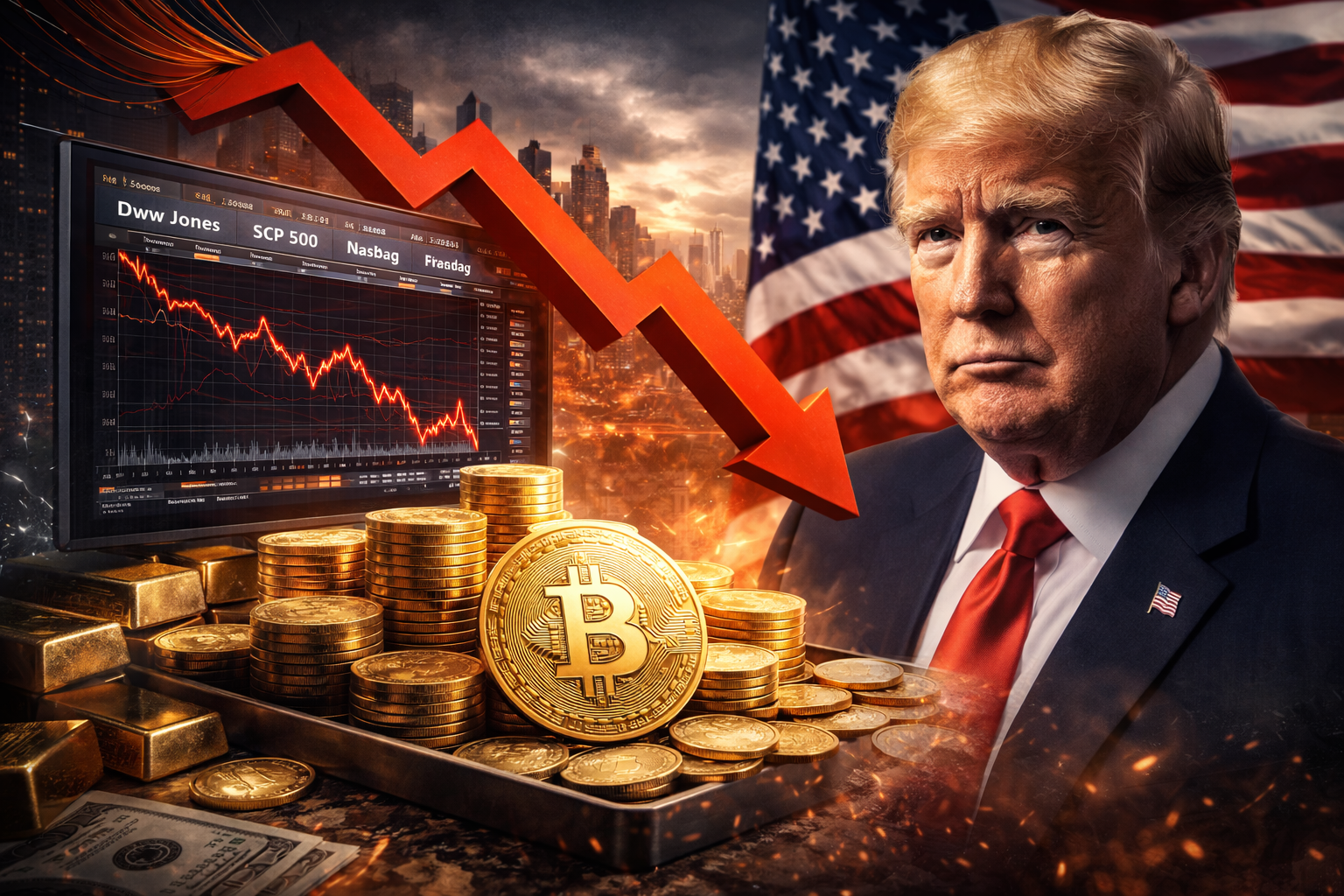
Global markets opened the week on edge after U.S. equity futures turned sharply lower, reflecting growing investor unease over renewed trade tensions. President Donald Trump’s announcement of potential tariffs targeting eight European NATO nations — linked to negotiations over Greenland — quickly reverberated across markets, sending risk assets lower and pushing investors toward traditional safe havens.
Dow Jones, S&P 500, and Nasdaq futures all declined as traders reassessed geopolitical risk just ahead of a critical stretch of corporate earnings and economic data. The swift reaction underscores how policy headlines, rather than fundamentals alone, are once again driving short-term market direction.
Why This Matters for Investors
According to Investors.com and Reuters, the tariff threat reignited fears of a broader trade confrontation, reviving memories of previous tariff-driven volatility that disrupted global supply chains and weighed on corporate earnings. While no immediate policy action has been implemented, markets are forward-looking — and uncertainty itself is often enough to trigger risk aversion.
Equity futures weakness was accompanied by rising demand for gold and silver, classic indicators of defensive positioning. Volatility gauges also moved higher, signaling increased demand for downside protection as investors brace for further headline risk.
For market participants, the message is clear: geopolitical developments are once again a meaningful input into asset pricing, particularly when they intersect with trade and global economic growth.
Risk-Off Sentiment Takes Hold Across Asset Classes
The reaction to the tariff announcement extended beyond equities. Treasury yields edged lower as investors sought safety, while cyclical sectors such as industrials and materials faced pressure due to their sensitivity to global trade flows.
Technology stocks, which have driven much of the market’s recent gains, also appeared vulnerable. Analysts cited by Reuters noted that tech valuations remain elevated, making the sector especially sensitive to macro shocks and shifts in investor sentiment.
Meanwhile, commodities painted a mixed picture. Precious metals benefited from safe-haven inflows, while industrial commodities faced uncertainty tied to potential disruptions in trade and manufacturing activity.
Trade Policy and Market Volatility: A Familiar Pattern
History suggests that tariff threats can have an outsized impact on markets, even before concrete measures are enacted. During prior episodes of trade escalation, equities often experienced sharp but uneven pullbacks, followed by periods of consolidation once policy clarity emerged.
Strategists at major investment banks have emphasized that markets tend to overreact initially to geopolitical headlines, only to recalibrate as investors assess actual economic impact. However, in the near term, elevated volatility can persist — particularly when trade tensions coincide with key earnings releases or macro data.
With earnings season underway and investors closely watching inflation and labor market indicators, the timing of this policy shock adds another layer of uncertainty to an already complex market environment.
Future Trends Investors Should Watch
Several key developments will shape how markets respond in the coming weeks:
- Policy Clarity: Any follow-up communication or de-escalation from U.S. or European officials could quickly alter market sentiment.
- Corporate Earnings: Guidance from multinational companies will reveal how prepared businesses are for renewed trade uncertainty.
- Sector Rotation: Defensive sectors such as healthcare, utilities, and consumer staples may attract increased inflows during periods of heightened risk.
- Volatility Indicators: Sustained elevation in volatility could signal broader risk reduction across portfolios.
Market participants will also monitor whether tariff rhetoric translates into concrete policy action or remains a negotiating tactic.
Key Investment Insight
A risk-off phase does not necessarily signal a prolonged downturn, but it does demand discipline. Investors may find opportunities in high-quality stocks that become temporarily oversold amid headline-driven selling. At the same time, maintaining exposure to defensive assets and managing position sizes can help mitigate downside risk.
Diversification and patience are essential during periods of geopolitical uncertainty. Rather than reacting impulsively, investors should focus on balance sheet strength, earnings visibility, and long-term growth drivers — particularly as volatility creates both risks and opportunities.
Market sentiment can shift rapidly when geopolitics enters the equation, and staying informed is critical. For timely analysis, market-moving developments, and actionable investor insights, rely on MoneyNews.Today, your trusted source for daily stock market coverage and strategic investment perspectives.