
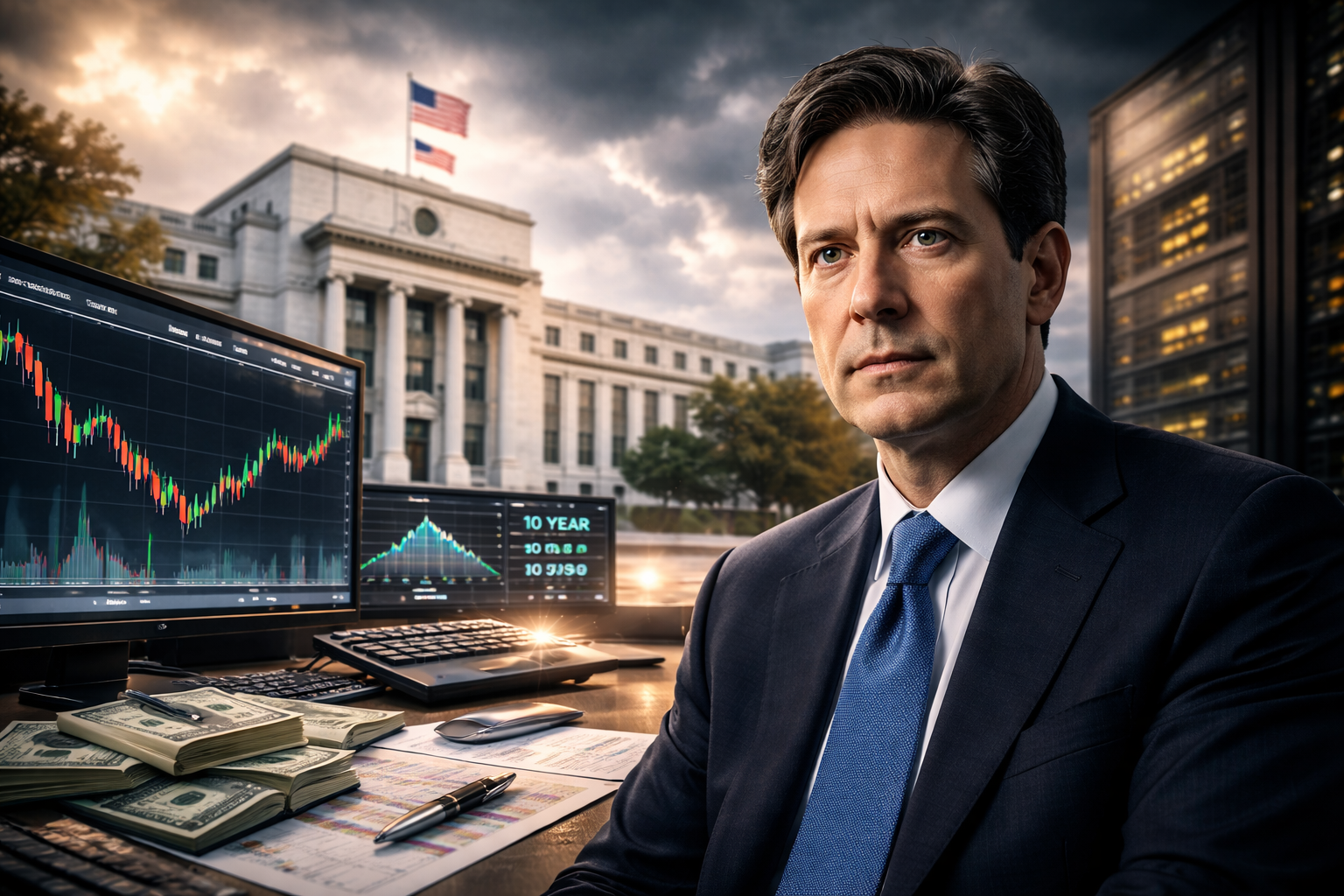
Financial markets are recalibrating fast as Kevin Warsh emerges as a leading contender for the next Chair of the U.S. Federal Reserve. Even before an official nomination, traders are already pricing in a potential shift toward a more hawkish monetary policy stance—one that prioritizes inflation control over near-term market support. The reaction has been swift: the U.S. dollar has strengthened, Treasury yields have firmed, and risk assets have come under renewed pressure.
For investors, the implications extend far beyond Washington. Leadership changes at the Fed have historically reshaped market cycles, asset allocation strategies, and risk appetite across global markets. As expectations solidify around Warsh, markets are beginning to position for what could be a materially different policy era.
Why Kevin Warsh Matters to Markets
Kevin Warsh is not an unknown quantity. A former Federal Reserve governor from 2006 to 2011, Warsh served during the global financial crisis and was closely involved in emergency policy decisions alongside then-Chair Ben Bernanke. Since leaving the Fed, he has been an outspoken critic of prolonged ultra-loose monetary policy, frequently arguing that extended stimulus risks fueling asset bubbles and distorting capital allocation.
According to Bloomberg reporting, traders increasingly view Warsh as a hawkish figure—someone more inclined to keep rates higher for longer if inflation risks persist. This perception alone has been enough to move markets, even in the absence of formal confirmation.
Historically, Fed leadership expectations can influence financial conditions well before policy changes occur. The current market response suggests investors are treating Warsh’s potential appointment as a signal that the central bank may maintain a firmer stance on inflation, even if economic growth shows signs of slowing.
Immediate Market Reaction: Dollar Up, Risk Assets Down
The most visible impact so far has been in currency and rates markets. The U.S. dollar has strengthened as investors anticipate tighter monetary conditions relative to other major economies. Treasury yields have edged higher, reflecting expectations that policy rates may stay elevated longer than previously assumed.
Equities—particularly high-growth and speculative segments—have felt the pressure. Stocks with valuations heavily dependent on future earnings, such as unprofitable tech and early-stage growth companies, tend to be most sensitive to changes in rate expectations. As yields rise, the present value of those future cash flows declines.
Bloomberg data shows that sectors traditionally viewed as bond proxies, including parts of technology and real estate, have underperformed during recent sessions, while more defensive and value-oriented sectors have shown relative resilience.
Why This Matters for Investors
Monetary policy expectations are among the most powerful drivers of asset prices. A shift toward a more hawkish Fed leadership could reshape several key investment themes:
Equities:
Value-oriented sectors such as financials, energy, and industrials often perform better in higher-rate environments, particularly when inflation control becomes a policy priority. In contrast, speculative growth stocks may struggle as financing costs rise and valuation multiples compress.
Fixed Income:
For bond investors, a hawkish Fed can be a double-edged sword. While near-term price volatility may persist, higher yields also improve income opportunities—especially in high-quality government and investment-grade corporate bonds.
Currencies and Commodities:
A stronger dollar can pressure commodities priced in U.S. currency and weigh on emerging markets, while benefiting U.S.-based importers. Currency volatility may remain elevated as global central banks respond to shifting U.S. policy expectations.
Historical Context: Fed Chairs and Market Cycles
History underscores why markets are reacting now. Leadership transitions—from Volcker to Greenspan, Bernanke to Yellen, and Yellen to Powell—have often marked turning points in monetary regimes. While policy continuity is common, tone and priorities matter, especially at moments when inflation, debt levels, and geopolitical risks intersect.
Warsh’s public commentary suggests a preference for restoring what he has described as “monetary discipline.” If that philosophy guides future Fed decisions, investors may need to adjust expectations around rate cuts, liquidity support, and the so-called “Fed put.”
Key Investment Insight
If markets continue to price in a more hawkish Federal Reserve under Kevin Warsh, investors may want to tilt toward value-oriented equities, strong cash-flow businesses, and high-quality fixed income, while reducing exposure to speculative growth plays that rely heavily on low borrowing costs. Portfolio resilience—not aggressive risk-taking—may be the defining advantage in this environment.
Markets are often forward-looking, and the reaction to Kevin Warsh’s rising profile underscores just how influential Fed leadership expectations can be. As monetary policy narratives evolve, staying informed is essential. Follow MoneyNews.Today for daily, investor-focused coverage on the political and economic forces shaping global markets.




