
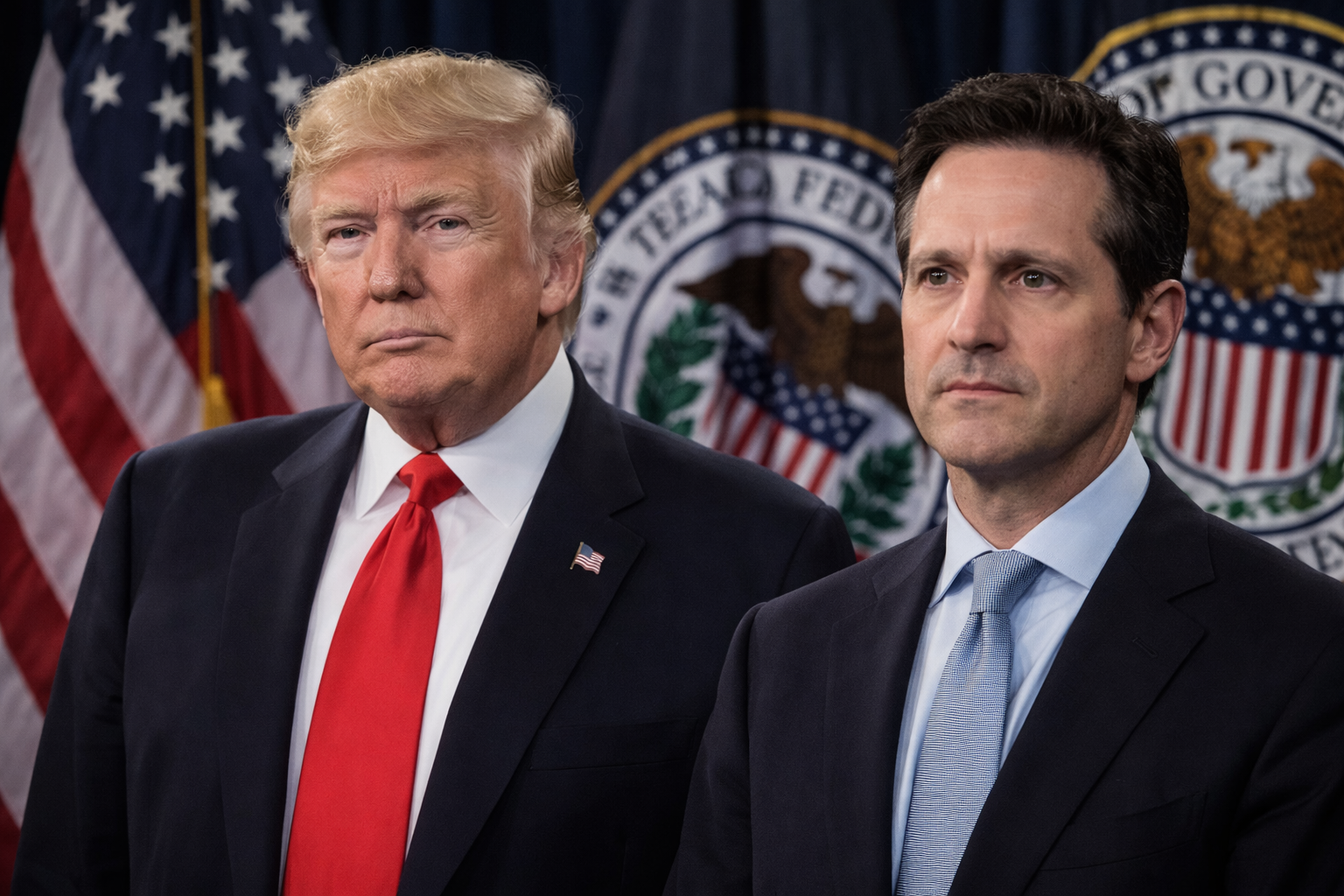
Financial markets rarely wait for confirmation votes to react — and President Donald Trump’s nomination of Kevin Warsh to lead the Federal Reserve has already begun reshaping investor expectations across rates, currencies, and risk assets. With Jerome Powell’s term set to conclude in May, the announcement introduces a pivotal inflection point for U.S. monetary policy at a time when inflation, fiscal pressure, and geopolitical uncertainty remain elevated.
For investors, the significance isn’t just who leads the Fed — it’s how policy priorities could shift in a politically charged economic environment.
Why This Nomination Matters for Markets
Kevin Warsh is no stranger to the Federal Reserve. A former Fed governor from 2006 to 2011, Warsh served during the global financial crisis and has since emerged as a vocal critic of prolonged monetary accommodation. His public commentary over recent years has leaned toward concerns about inflation persistence, balance-sheet excesses, and the unintended consequences of aggressive stimulus.
According to Reuters, Warsh’s nomination has already nudged Treasury yields higher, with investors reassessing the likelihood of a more hawkish policy stance once leadership changes. Equity futures showed increased volatility following the announcement, while the U.S. dollar firmed modestly — reflecting expectations of tighter financial conditions.
Markets are particularly sensitive because the Fed stands at a crossroads. Inflation has cooled from its peaks but remains sticky, while economic growth shows signs of slowing. Any recalibration of policy bias could meaningfully alter asset valuations across equities, fixed income, and commodities.
Monetary Policy Independence in Focus
One of the most closely watched aspects of Warsh’s nomination is the perceived relationship between the Federal Reserve and the White House. Investors remain acutely aware that central bank independence is a cornerstone of market confidence.
The Journal Record notes that Warsh has previously criticized political pressure on monetary authorities — but his nomination by President Trump has nonetheless raised questions about how independent the Fed may remain in practice. Markets tend to price in higher risk premiums when monetary policy appears vulnerable to political influence.
Historically, even the perception of diminished Fed autonomy can lead to higher bond yields, wider credit spreads, and increased equity volatility. For long-term investors, this raises important questions around portfolio resilience under shifting policy regimes.
Asset-Class Implications Investors Are Watching
Interest Rates & Bonds:
A more hawkish Fed chair could slow or reverse expectations for rate cuts later in the year. Treasury yields may remain elevated, pressuring long-duration bonds and rate-sensitive equity sectors such as utilities and real estate.
U.S. Dollar:
Tighter monetary policy typically supports a stronger dollar. This could weigh on emerging market assets and commodities priced in dollars, while benefiting U.S.-centric revenue streams.
Equities:
Growth stocks, particularly those trading on future earnings expectations, are most sensitive to changes in discount rates. Technology and speculative sectors may face renewed valuation pressure if markets price in higher-for-longer rates.
Gold & Non-Yielding Assets:
Higher real yields historically pressure gold and other non-yielding assets. If Warsh signals a tougher inflation stance, precious metals could struggle unless macro risk accelerates.
What Investors Should Watch Next
Confirmation hearings will be critical. Any commentary from Warsh on inflation targets, balance-sheet policy, or the Fed’s dual mandate will be scrutinized line by line. Markets will also monitor whether the Fed’s current policy framework — particularly its tolerance for above-target inflation — remains intact.
Beyond rhetoric, investors should watch how Fed governors and regional presidents respond. A divided central bank can amplify volatility, especially if forward guidance becomes less predictable.
Key Investment Insight
Monetary policy direction remains one of the most powerful macro drivers across asset classes. Investors should stress-test portfolios for scenarios involving higher yields, a firmer dollar, and prolonged restrictive policy. Maintaining exposure to quality balance sheets, pricing power, and cash-flow durability may help navigate a potentially more hawkish Federal Reserve era.
As leadership changes reshape the policy landscape, staying ahead of macro shifts is critical. Follow MoneyNews.Today for daily, investor-focused insights that cut through the noise and help you navigate evolving market risks with confidence.




