
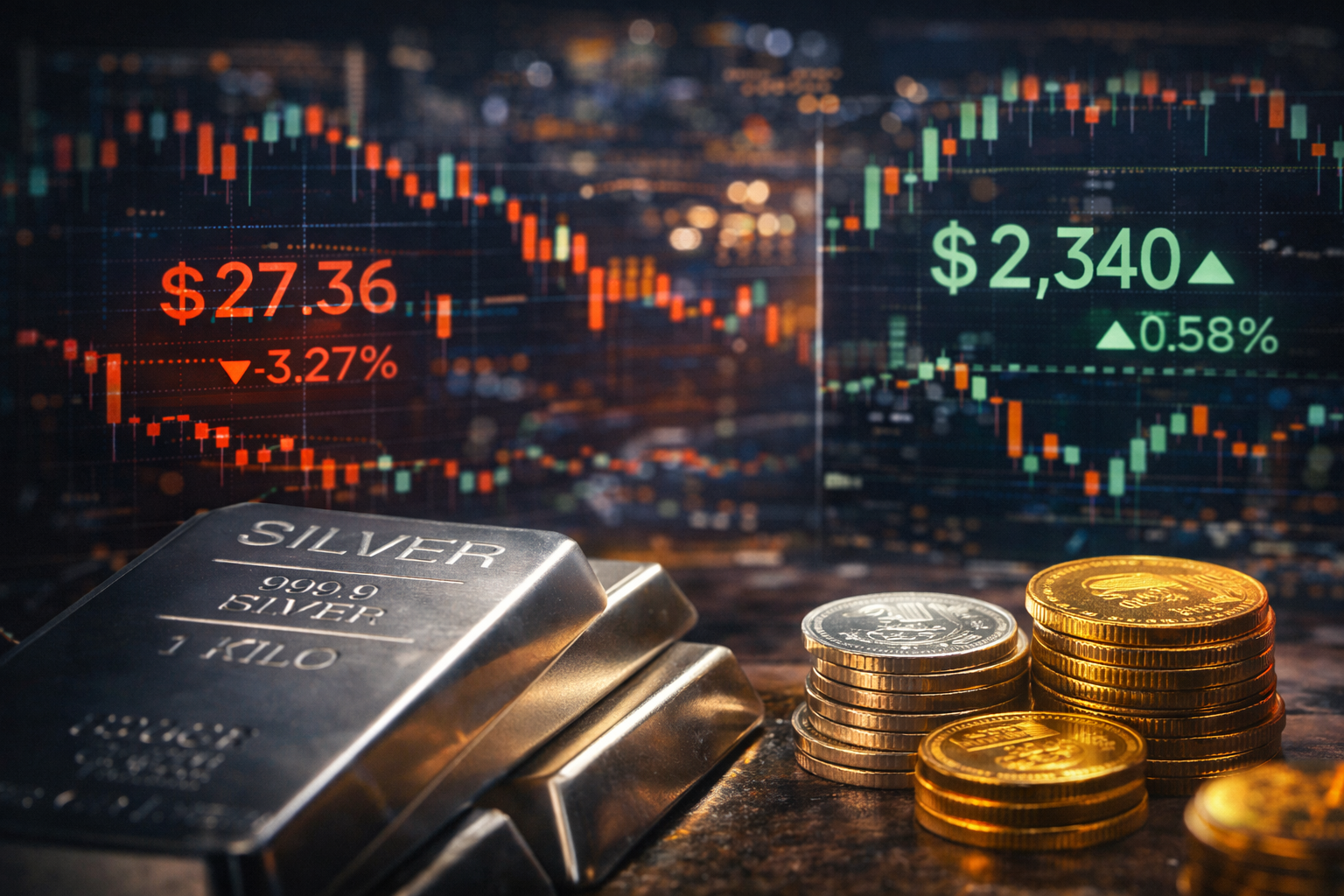
Silver traders have been reminded of an uncomfortable truth: precious metals can move like safe havens one day — and like speculative momentum assets the next.
In recent sessions, silver and other metals have experienced sharp two-way swings, driven less by fundamentals and more by thin liquidity conditions, shifting macro expectations, and aggressive speculative positioning. Market participants watching metals closely have pointed to rapid price spikes and sudden pullbacks that resemble the volatility typically seen in crypto or high-beta equities rather than traditional commodities.
According to Australian ASX market coverage, the latest turbulence reflects a market environment where liquidity is fragile and sentiment can reverse quickly — particularly in metals that attract heavy speculative participation.
For investors, the key lesson is clear: metals remain a critical diversification tool, but they are not immune to macro shocks. In today’s market, precious metals must be approached with the same risk discipline as equities.
A Volatile Metals Tape Signals Unstable Market Liquidity
Silver’s sharp swings are not occurring in isolation. They are part of a broader market pattern where liquidity has become a dominant force across asset classes.
When liquidity is abundant, commodities tend to follow fundamentals — inflation trends, industrial demand, mining supply, and global growth expectations. But when liquidity tightens, price action can become distorted by:
- leveraged trading
- algorithmic momentum strategies
- forced liquidation events
- short-covering rallies
- rapid speculative inflows and exits
Silver is especially vulnerable because it sits in a unique position: it trades as both a precious metal (safe haven narrative) and an industrial metal (manufacturing and electrification narrative). That dual identity makes it highly sensitive to changes in risk appetite.
The recent “whipsaw” action suggests that metals markets are currently being driven more by macro positioning than by supply-and-demand fundamentals.
Why This Matters for Investors
Many investors view precious metals as a defensive allocation — a hedge against inflation, currency instability, and geopolitical risk. That logic remains valid. But recent volatility highlights a crucial reality:
metals can become unstable when liquidity thins and speculative positioning dominates.
This matters because metals exposure is increasingly common across modern portfolios through:
- commodity ETFs
- gold and silver miners
- diversified mining stocks
- inflation-hedge strategies
- alternative asset allocations
When volatility spikes, those exposures can produce unexpected drawdowns — especially in leveraged miners, which often amplify the moves in the underlying metals.
For investors who treat metals as a “low-risk hedge,” these sharp swings can create portfolio surprises.
Speculation Is Driving the Short-Term Action
Silver’s recent turbulence reflects how heavily speculative capital influences certain commodity markets.
In periods of uncertainty, investors often rotate quickly between:
- “risk-on” assets like equities and crypto
- “risk-off” assets like gold and defensive commodities
But in today’s market, even the so-called risk-off trades are being actively traded for short-term gains, creating exaggerated price movements.
Silver is particularly exposed to this dynamic because its futures market is heavily traded, and it tends to attract retail and momentum-driven participation during volatile macro cycles.
When traders rush in, silver spikes. When they rush out, it collapses — sometimes within the same trading week.
This type of volatility makes timing difficult and increases the importance of position sizing and risk management.
Industrial Demand Remains Strong — Especially for Copper
While precious metals are being shaken by liquidity dynamics, the broader mining sector still has a powerful structural tailwind: industrial electrification.
Copper, lithium, nickel, and rare earth metals remain central to long-term global trends, including:
- electric vehicles (EVs)
- renewable energy infrastructure
- power grid upgrades
- battery storage expansion
- AI-driven data center power demand
The industrial demand narrative is intact, even if short-term price action is unstable.
This is why many analysts continue to view base metals as a long-term “green transition trade,” despite near-term volatility.
In fact, as AI infrastructure expands globally, demand for copper and industrial metals could accelerate further, since data centers require massive electrical capacity, cabling, and grid buildouts.
In that sense, metals volatility may represent not a collapse in demand, but a temporary repricing cycle driven by macro flows.
Why Mining Stocks Can Swing Even Harder Than Metals
Investors should also remember that mining equities often behave differently than the commodities they produce.
Mining stocks are influenced not only by metal prices, but also by:
- production costs
- energy prices
- labor inflation
- geopolitical mining risk
- regulatory restrictions
- balance sheet leverage
During volatile commodity swings, mining stocks can amplify both upside and downside.
This makes them attractive in bullish cycles, but dangerous when liquidity conditions tighten.
In the current environment, investors should expect mining equities to remain high beta — particularly smaller producers and exploration-stage companies.
Future Trends to Watch in Metals & Mining
The metals sector is entering a period where macro forces and structural demand are colliding. Investors should monitor a few key trends:
1. Interest Rates and Dollar Strength
Precious metals tend to weaken when real yields rise and the U.S. dollar strengthens. Rate expectations remain a major driver.
2. China’s Industrial Demand
China remains the dominant demand engine for industrial metals. Any stimulus signals can rapidly shift commodity sentiment.
3. Energy Costs
Mining is energy intensive. Higher oil and electricity costs can pressure miners even if metal prices rise.
4. AI and Electrification Demand
AI infrastructure expansion is quietly becoming a major bullish driver for power and metal demand — especially copper.
Key Investment Insight: Structural Metals May Outperform Speculative Metals
The biggest actionable takeaway for investors is that not all metals exposure is equal.
While silver and gold may remain volatile due to liquidity and speculative trading, investors may find more durable opportunity in metals tied to long-term structural demand, including:
- copper (grid expansion + electrification)
- uranium (energy security narrative)
- lithium and nickel (battery demand cycle)
- industrial mining companies with strong cash flow and low-cost production
Rather than chasing momentum in volatile precious metals swings, investors may benefit from selectively positioning in high-quality miners and commodity-linked plays that align with multi-year trends like EV adoption, AI data center growth, and renewable infrastructure expansion.
In today’s market, the strongest metals strategy is not speculation — it’s thematic discipline.
Silver’s sharp price swings are a clear warning signal: metals are not immune to macro liquidity shocks, and even “safe haven” commodities can behave like high-risk trades in unstable market conditions.
As highlighted in Australian ASX market coverage, thin liquidity and speculative positioning are driving sharp moves across precious metals. But the longer-term industrial demand story remains intact — particularly for copper and electrification-linked commodities.
For investors, the opportunity lies in staying selective, avoiding leverage-driven speculation, and focusing on metals and mining exposures supported by structural demand rather than short-term momentum.
Stay with MoneyNews.Today for daily investor coverage of commodity markets, mining trends, and the global forces shaping metals prices.




