
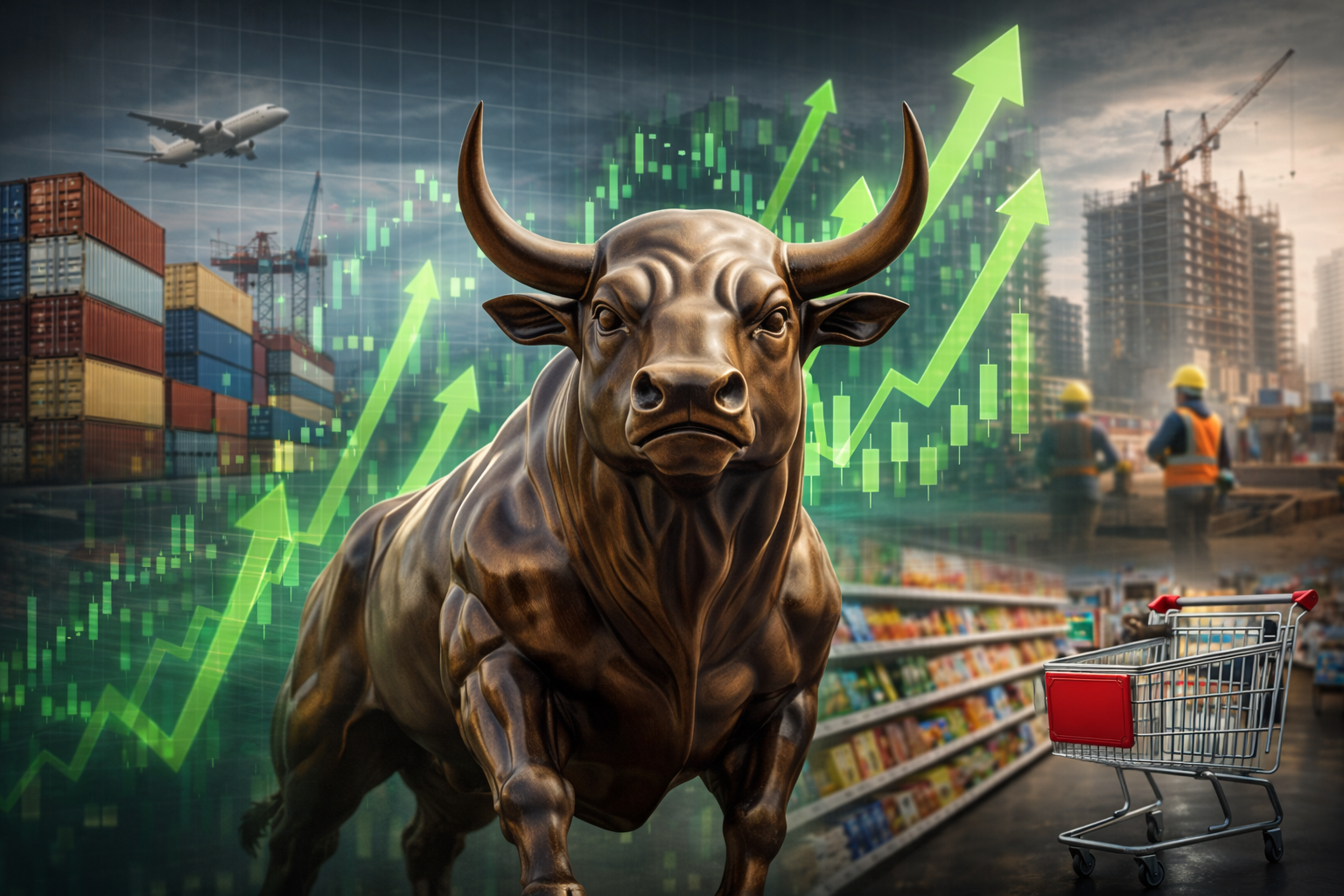
Wall Street is flashing a signal investors haven’t seen consistently in years: the rally is no longer being carried by just a handful of mega-cap AI giants.
As U.S. equities continue climbing — with the Dow Jones Industrial Average pushing to fresh record highs — market leadership is quietly shifting. Instead of the same familiar names dominating every move, more sectors are participating, and investor capital is rotating into areas that had lagged behind the artificial intelligence boom. According to Barron’s, this broadening market strength is being supported by surprisingly strong earnings results, with roughly 70% of S&P 500 companies beating sales expectations.
For investors, this shift is more than a short-term headline. It may be the clearest sign yet that the bull market is maturing — and that the next phase of gains could come from industries outside the crowded AI trade.
A Broader Rally Signals a Healthier Market Cycle
For much of the past year, equity performance has been heavily concentrated. The so-called “AI winners” — mega-cap tech and semiconductor names — captured a disproportionate share of inflows as investors chased exposure to generative AI and cloud infrastructure.
But market concentration carries risk. When a rally depends too heavily on a narrow group of stocks, any valuation reset, earnings miss, or regulatory pressure can quickly destabilize sentiment.
That’s why the current shift matters.
Barron’s reports that investors are now showing increased interest in retail, cyclicals, and small-cap stocks, while some AI-heavyweights have cooled. This does not mean the AI trade is dead — but it suggests investors are increasingly searching for value, diversification, and “catch-up” opportunities.
In other words, the market is evolving from a speculative growth sprint into a broader economic participation rally.
Why This Matters for Investors
A broadening bull market historically improves the sustainability of gains. When multiple sectors rise together, the market becomes less vulnerable to sudden drawdowns caused by weakness in one segment.
Several key signals are driving investor confidence:
Record Highs Reinforce Risk Appetite
The Dow reaching new highs indicates continued demand for equities, especially for companies tied to the broader economy rather than purely tech-driven innovation cycles.
Earnings Breadth Is Strengthening
The fact that roughly 70% of S&P 500 companies beat sales estimates, as highlighted by Barron’s, suggests demand across the economy is holding up better than expected.
This is critical because sales beats are harder to “engineer” than earnings beats. Strong revenue performance points to genuine consumer and business activity.
Rotation Reduces Valuation Risk
AI mega-caps remain expensive relative to historical averages, and some investors have begun locking in profits. Rotation into undervalued sectors can reduce overall market fragility and create a more balanced rally.
The Rotation Trade: Where Money Is Moving
Sector rotation is not random. It typically follows shifts in economic expectations, interest rate outlooks, and investor positioning.
In today’s environment, three areas appear to be benefiting most from the broadening trend:
1. Consumer and Retail Stocks
As inflation pressures stabilize and wage growth remains resilient, consumer-related companies are attracting renewed interest. Investors are looking for businesses that can maintain pricing power while benefiting from steady demand.
Retail strength often signals confidence that households can continue spending — a bullish indicator for GDP-driven sectors.
2. Small Caps and Mid Caps
Small-cap stocks have lagged mega-caps for much of the AI-driven rally. But when market breadth improves, smaller companies often outperform because they offer higher sensitivity to domestic economic growth.
If rate-cut expectations return or borrowing conditions loosen, small caps could see a stronger rebound due to their reliance on financing.
3. Cyclical and Industrial Plays
Industrials, transportation, and cyclical manufacturing firms are often late-cycle winners when markets start pricing in stronger economic expansion.
A broadening rally suggests investors are preparing for a scenario where economic growth remains steady — even if interest rates stay elevated.
AI Isn’t Fading — It’s Becoming “Priced In”
One of the most misunderstood investor narratives is that rotation means AI is losing relevance.
The opposite may be true.
AI is becoming embedded across the economy, and markets are now transitioning from the “announcement phase” (excitement about AI potential) to the “execution phase” (which companies can monetize it effectively).
Many AI mega-cap leaders have already delivered huge gains, meaning expectations are now extremely high. That creates a more difficult setup: even strong earnings can trigger sell-offs if results aren’t exceptional.
As the market matures, investors begin asking tougher questions:
- Which companies can translate AI into recurring revenue?
- Who benefits from AI adoption indirectly?
- Which sectors are undervalued relative to their growth potential?
This is where broader market participation becomes powerful — because AI is no longer just a tech story. It is becoming a productivity story across every sector.
Future Trends to Watch
Investors should monitor several indicators that will determine whether this rotation becomes a lasting trend or a short-lived bounce:
S&P 500 Equal-Weight Performance
If equal-weight indices outperform market-cap-weighted indices, it confirms that more companies are contributing to gains.
Earnings Guidance Beyond Mega Caps
If mid-sized and cyclical firms raise guidance, rotation could accelerate. Earnings momentum is one of the strongest drivers of sustained rallies.
Federal Reserve and Interest Rate Expectations
A shift toward rate cuts would likely boost small caps and cyclical names further. A “higher for longer” scenario could still support rotation, but favor high-quality balance sheets.
Consumer Spending and Labor Strength
Retail and discretionary gains depend on continued resilience in employment and household income.
Key Investment Insight: The Next Bull Market Winners May Be Outside Big Tech
This broadening rally suggests investors should reconsider overly concentrated portfolios.
While AI remains a long-term growth driver, the next wave of upside may come from sectors that are still under-owned and undervalued — including:
- retail and consumer discretionary
- small-cap industrial innovators
- financials tied to improving credit conditions
- infrastructure-related firms benefiting from long-term capital spending
For investors, this is a classic “second leg” bull market setup: leadership expands, valuations normalize, and opportunity spreads beyond the most crowded trades.
The message is clear — the bull market is no longer a one-theme story.
As market breadth strengthens and investor positioning shifts, staying informed becomes essential for spotting the next breakout industries before they become consensus trades. For more daily investor coverage and market-moving insights, follow MoneyNews.Today.




