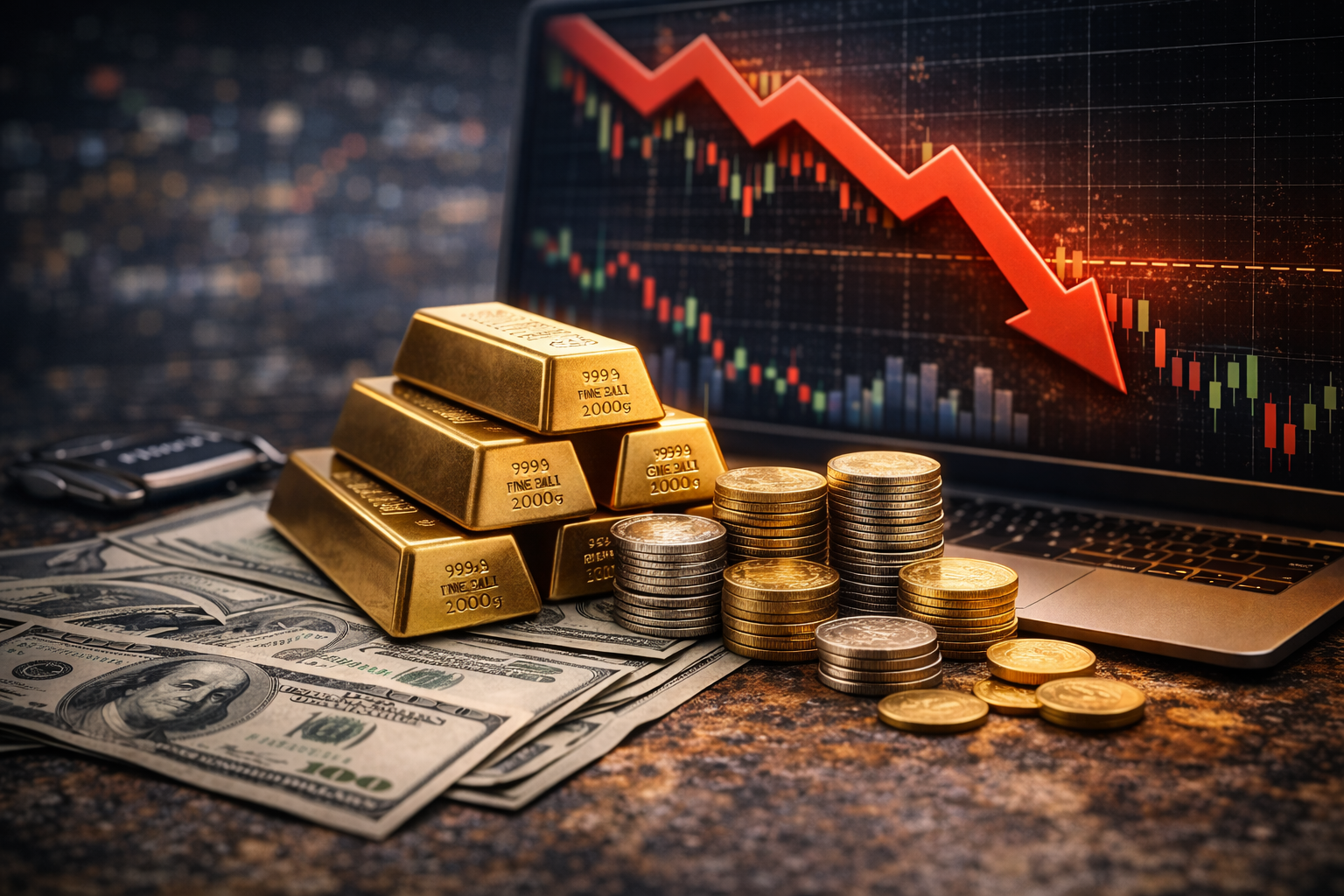
Gold investors are getting a reminder of a familiar market truth: even safe-haven assets don’t always rise when uncertainty increases—especially when liquidity disappears.
On February 16, gold and other precious metals moved lower in thin holiday trading, pressured by a stronger U.S. dollar and renewed speculation that interest rates may stay higher for longer. With U.S. markets closed for Presidents Day, trading volumes were muted across global financial markets, amplifying price swings and making metals more vulnerable to short-term selling.
According to Reuters Markets reporting, gold prices dipped as investors weighed competing forces: safe-haven demand on one side, and the rising opportunity cost of holding non-yielding assets like bullion on the other.
For investors watching inflation, geopolitical risk, and central bank policy, today’s pullback is less about gold losing relevance—and more about the market recalibrating expectations.
Why Gold Is Falling Despite Persistent Global Uncertainty
Gold has historically benefited from economic stress, inflation fears, and geopolitical instability. But in the short term, gold often trades more like a macro instrument than a fear gauge.
The key drivers behind today’s weakness are familiar:
1. A Stronger U.S. Dollar
Gold is priced in dollars globally. When the dollar strengthens, gold becomes more expensive for international buyers, often reducing demand and pressuring prices.
Even modest dollar strength can cause outsized effects during low-volume trading sessions, which is exactly what markets are seeing today.
2. Interest Rate Expectations Are Rising Again
Gold does not generate yield. When investors expect higher rates—or delayed rate cuts—cash and bonds become more attractive alternatives.
That’s why gold often weakens when bond yields rise or when the market shifts toward a “higher-for-longer” interest rate narrative.
Reuters noted that investors continue to evaluate whether central banks, particularly the Federal Reserve, will keep policy tight longer than previously expected. That dynamic has been a recurring headwind for bullion markets.
3. Holiday Trading Distorts Price Action
Low liquidity creates sharper price moves because fewer buyers and sellers are active. In thin trading environments, relatively small trades can push prices meaningfully.
This is particularly true for gold, which is heavily traded through futures markets and algorithmic flows.
Why This Matters for Investors
While today’s dip may look minor, it highlights a bigger theme investors should take seriously: precious metals are increasingly trading as a function of macro expectations, not just crisis hedging.
Gold’s near-term performance often depends on the interaction between:
- U.S. dollar strength
- real interest rates (inflation-adjusted yields)
- central bank policy direction
- global recession expectations
- geopolitical risk headlines
When yields rise faster than inflation expectations, gold can weaken—even if risk sentiment remains fragile.
For investors, this means gold should be treated less like a guaranteed hedge and more like a tactical macro asset with cycles of outperformance and underperformance.
Metals & Mining Stocks: A Different Story Than Bullion
Many investors assume gold prices and gold miners move in perfect alignment. In reality, gold mining equities often behave differently—sometimes amplifying gold’s moves, and other times lagging significantly.
That’s because mining stocks carry additional risk factors, including:
- rising labor and energy costs
- operational disruptions
- geopolitical risks in mining regions
- debt levels and capital expenditure requirements
- production guidance and reserve replacement costs
When gold prices soften, miners can fall harder because margins compress. Conversely, when gold rallies, miners can outperform sharply if costs are stable.
This is why mining stocks often attract risk-on capital during bullish commodity cycles but can become vulnerable when macro volatility increases.
Future Trends to Watch
Despite today’s weakness, the long-term metals outlook remains heavily tied to central bank direction and global capital flows. Investors should monitor several key developments:
1. Fed Policy and Bond Yield Direction
Gold’s next major move will likely be driven by whether the market sees a clearer path to rate cuts. If yields decline, gold may regain upside momentum quickly.
2. Central Bank Gold Buying
One of the strongest long-term support factors for gold has been continued central bank accumulation. Any confirmation of sustained purchases could provide a structural tailwind even during market pullbacks.
3. Geopolitical Risk and Currency Volatility
Gold remains a favored hedge during geopolitical stress. If global instability increases or if currency volatility rises, demand for bullion can return quickly.
4. Inflation Reacceleration Risk
If inflation proves sticky, gold could re-enter favor as an inflation hedge—especially if real yields begin falling.
Key Investment Insight
Metal equities and bullion may remain volatile in low-liquidity conditions; monitor dollar strength and rate expectations as key drivers.
For investors, the practical approach is to focus on timing and positioning:
- avoid overreacting to holiday-driven price moves
- watch the U.S. Dollar Index (DXY) as a key signal
- track Treasury yields and Fed expectations as primary catalysts
- consider scaling into positions gradually rather than buying all at once
- distinguish between bullion exposure (defensive) and miner exposure (higher beta risk asset)
Gold remains a valuable diversification tool, but near-term volatility should be expected—especially in uncertain rate environments.
While gold’s pullback may appear modest, it reflects a bigger market battle between safe-haven demand and rate-driven headwinds. Stay with MoneyNews.Today for daily coverage of commodities, metals markets, and the macro trends shaping investor portfolios worldwide.