As digital asset markets stabilize and institutional interest quietly rebuilds, one corner of the crypto ecosystem is already showing improving fundamentals — the miners. While much of the market debate still focuses on Bitcoin’s price direction, investors are increasingly watching mining profitability, and the latest earnings from HIVE Blockchain Technologies Ltd. suggest the economics of the industry may be entering a new phase.
According to a recent corporate release reported by Reuters, the Canada-based digital infrastructure and Bitcoin mining firm delivered record quarterly revenue alongside sharply improved operating margins year-over-year. The results are drawing attention across investor communities because mining performance often acts as a forward indicator for the broader crypto cycle.
The takeaway: the crypto market may be transitioning from survival mode to expansion mode.
A Turning Point for Mining Economics
Over the past two years, crypto miners have endured a brutal environment — rising energy costs, falling token prices, and tightening capital markets. Many operators were forced to restructure, liquidate reserves, or shut down inefficient facilities.
Now, the math is changing.
HIVE’s improved margins suggest three key developments are occurring simultaneously:
1. Stabilizing digital asset prices
Revenue predictability improves dramatically once price volatility narrows.
2. Operational efficiency gains
Miners have upgraded fleets, relocated to cheaper energy jurisdictions, and optimized cooling and infrastructure.
3. Reduced industry competition
Weaker operators exited the market after prior downturns, increasing profitability for survivors.
This combination matters more than price alone. Mining profitability depends on the spread between coin value and production cost — not just headline market levels.
Why This Matters for Investors
Crypto mining equities historically behave differently from cryptocurrencies themselves.
During early bull markets, Bitcoin tends to outperform because capital flows directly into the asset.
But later in the cycle, mining companies often outperform because their profits expand faster than the asset price.
Here’s why:
A miner’s revenue rises linearly with coin price, but costs remain relatively fixed. Once breakeven levels are exceeded, incremental gains become disproportionately profitable.
That operating leverage can be dramatic.
For example:
- A 20% rise in Bitcoin price may produce
- 50%–150% increases in miner earnings depending on efficiency
This is why mining stocks frequently become high-beta crypto exposure.
Investors aren’t just buying digital assets — they’re buying cash-flow sensitivity to the asset.
The Infrastructure Angle: Not Just Crypto
Another reason investors are watching mining companies is their evolution into digital infrastructure providers.
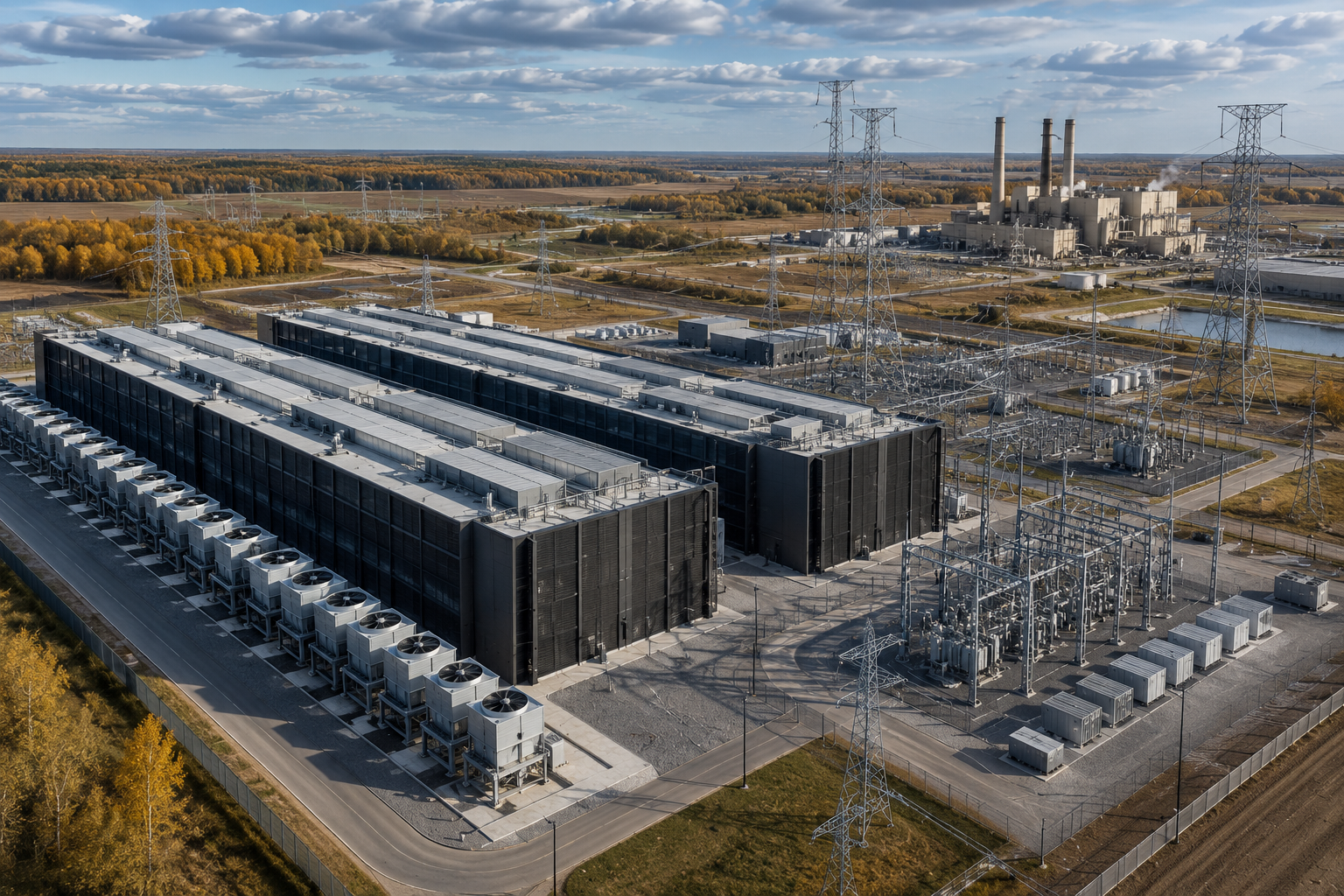
Many miners now operate facilities similar to data centers:
- High-density compute environments
- Advanced cooling systems
- Power-optimized hardware
- Long-term electricity contracts
These capabilities overlap with artificial intelligence infrastructure needs.
Industry analysts increasingly note a convergence between AI compute demand and crypto mining infrastructure. Idle or flexible mining capacity can sometimes be repurposed for high-performance computing workloads, potentially diversifying revenue beyond mining cycles.
In other words, some miners may gradually become hybrid compute providers rather than purely speculative businesses.
Future Trends to Watch
1. Hashrate Consolidation
Stronger operators gaining market share improves profitability stability across the industry.
2. Energy Arbitrage Strategies
Miners locating near stranded or renewable energy sources will enjoy structural cost advantages.
3. Institutional Capital Returns
Once earnings visibility improves, traditional investors often re-enter mining equities before broader crypto retail participation.
4. Infrastructure Diversification
Companies capable of monetizing compute capacity beyond mining may receive higher valuation multiples.
Key Investment Insight
Mining stocks frequently act as leveraged exposure to digital assets — but with a crucial twist: they depend on operational discipline.
If Bitcoin maintains current price levels or trends higher, efficient miners may outperform the asset itself due to operating leverage.
Investors may consider:
- Monitoring production cost per coin
- Evaluating energy contracts and efficiency
- Watching balance sheet debt levels
- Comparing hashrate growth vs dilution
The strongest miners are no longer just speculative plays — they are becoming cyclical infrastructure companies tied to digital commodity demand.
The crypto cycle rarely announces itself with price spikes alone. Often, it begins with improving fundamentals beneath the surface — and mining profitability is one of the earliest signals.
Follow MoneyNews.Today for daily analysis that turns market noise into investor clarity.