
Global markets are once again navigating a familiar tension between geopolitical uncertainty and economic resilience. As escalating conflict in the Middle East dominates headlines, investors across North America are watching closely for signs of broader financial market disruption.
Yet despite rising geopolitical risks, major equity markets in the United States and Canada have remained relatively stable. Futures tied to major U.S. indexes traded largely flat, while Canadian equities showed resilience as gains in technology and mining stocks offset broader caution among investors.
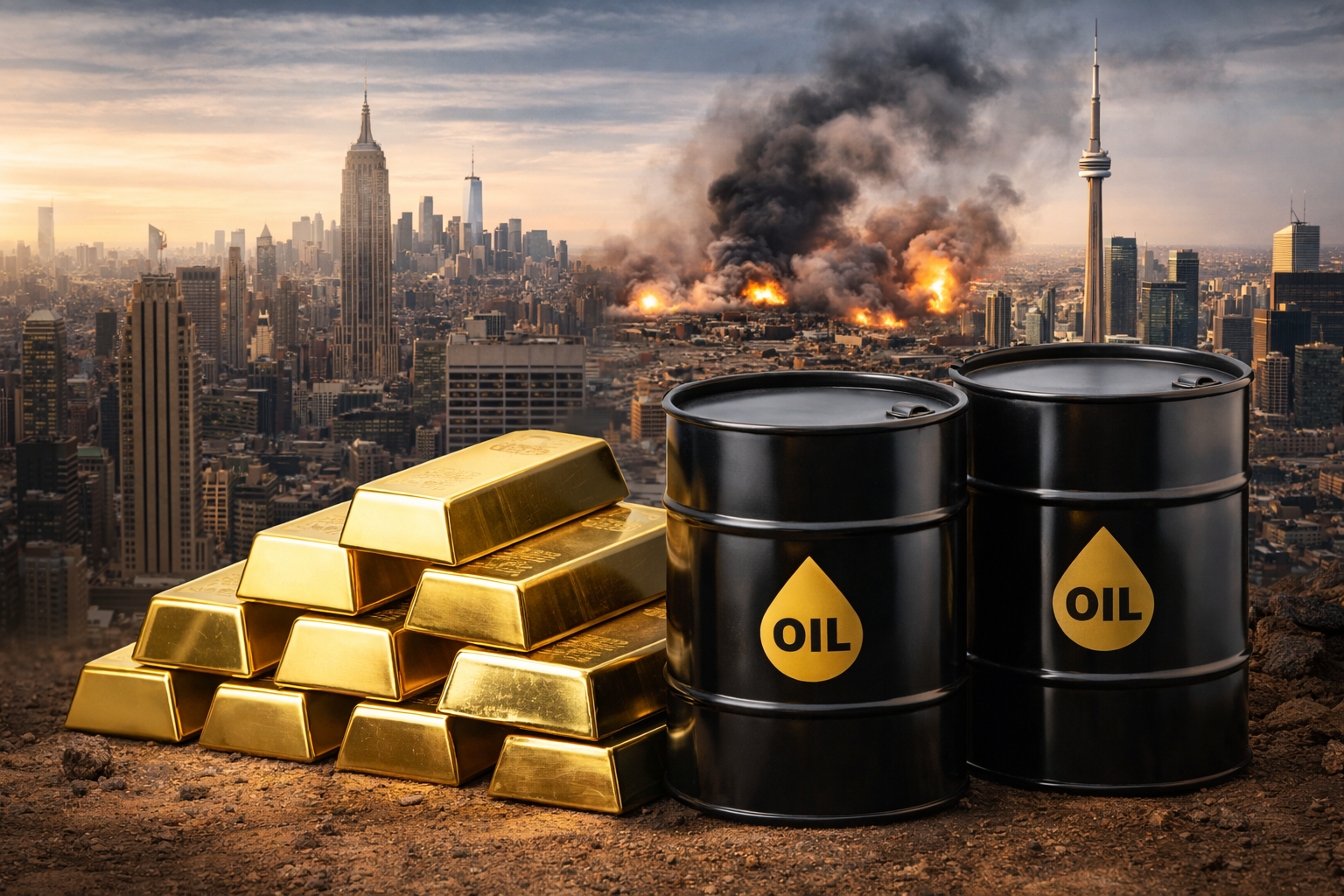
At the same time, traditional safe-haven assets such as gold and oil have moved higher as traders hedge against potential geopolitical shocks. According to reporting from Reuters, this shift suggests investors are not abandoning equities entirely—but rather rotating into sectors historically favored during periods of geopolitical instability.
For investors, the current market environment highlights an increasingly important theme: geopolitical risk is shaping sector performance rather than triggering widespread market panic.
Markets Show Resilience Despite Rising Global Tensions
The latest market movements reflect a cautious but measured response to escalating tensions in the Middle East. Investors are weighing the potential economic implications of the conflict while avoiding dramatic shifts in overall portfolio positioning.
Equity futures linked to major U.S. benchmarks such as the S&P 500 and the Dow Jones Industrial Average remained relatively unchanged in early trading, signaling that traders are taking a wait-and-see approach.
Meanwhile, Canada’s S&P/TSX Composite Index has shown signs of strength, supported by rebounds in technology and mining stocks.
This pattern is not unusual during geopolitical events.
Historically, markets tend to experience sector rotation rather than widespread selling when conflicts emerge. Investors move capital into industries expected to benefit from higher commodity prices, defense spending, or safe-haven demand.
In the current environment, energy and precious metals are leading that rotation.
Safe-Haven Assets Gain Momentum
When geopolitical tensions rise, investors typically look for assets that can preserve value during periods of uncertainty.
Gold remains one of the most widely used safe-haven investments. Prices have climbed as global traders hedge against potential economic disruption and currency volatility.
Gold’s reputation as a financial safe haven dates back centuries, and it continues to play a key role in modern portfolio diversification strategies.
Energy markets are also reacting to geopolitical developments. Oil prices have moved higher amid concerns that regional conflict could disrupt supply routes or production levels.
The Middle East accounts for a significant share of global oil production, making the region critically important for energy markets.
According to data from the U.S. Energy Information Administration (EIA), roughly one-third of the world’s seaborne oil trade passes through the Strait of Hormuz—a strategic chokepoint that markets monitor closely during periods of geopolitical instability.
Even the perception of supply risk can push prices upward, benefiting energy producers and related industries.
Why This Matters for Investors
While geopolitical headlines often create short-term market volatility, they can also generate opportunities for investors who understand how capital typically flows during crises.
Rather than exiting the market entirely, institutional investors frequently rotate into sectors positioned to benefit from global uncertainty.
Energy and Oil Producers
Higher oil prices often support the earnings outlook for energy companies. Oil majors and exploration firms can see increased revenue as commodity prices rise.
Energy stocks have historically outperformed broader markets during periods of geopolitical tension involving oil-producing regions.
Precious Metals and Mining Companies
Gold mining companies tend to benefit from rising gold prices. When investors flock to safe-haven assets, precious metals producers often experience stronger margins and improved investor sentiment.
Canada’s mining-heavy equity market frequently benefits from these trends.
Defense and Aerospace Firms
Geopolitical conflicts can also increase government defense spending. Defense contractors often experience stronger demand when military budgets expand.
This dynamic has historically made defense stocks a defensive investment during periods of international conflict.
Commodity-Linked Economies
Countries with strong natural resource sectors—including Canada—can benefit when commodity prices rise.
Higher prices for oil, metals, and other resources often support economic growth in resource-heavy markets.
Canada’s Resource Advantage
Canada’s equity market structure provides unique resilience during commodity-driven market shifts.
The Toronto Stock Exchange has a large concentration of mining and energy companies, making it particularly sensitive to changes in commodity prices.
When gold and oil rise, Canadian equities often receive a boost from resource sector performance.
Recent market gains in Canadian mining stocks highlight this dynamic.
Mining companies involved in gold, copper, and critical minerals have seen renewed investor interest as commodity prices strengthen amid geopolitical uncertainty.
This reinforces Canada’s reputation as one of the world’s most resource-driven equity markets.
Future Trends to Watch
While markets have remained stable for now, investors should monitor several key developments that could shape market performance in the coming months.
Energy Supply Risks
Any disruption to oil production or shipping routes in the Middle East could push energy prices significantly higher.
Energy markets often react quickly to geopolitical developments, making the sector particularly sensitive to global conflict.
Central Bank Policy
Geopolitical uncertainty can influence inflation expectations, particularly if commodity prices rise.
Higher energy prices can feed into broader inflation, potentially affecting monetary policy decisions from central banks such as the Federal Reserve.
Interest rate expectations remain one of the most important drivers of equity market performance.
Commodity Supercycle Signals
Some analysts believe the world may be entering a new commodity cycle driven by energy transition investments, infrastructure spending, and geopolitical supply chain shifts.
If commodity demand continues to grow, resource-heavy markets like Canada could see long-term benefits.
Market Volatility
While current equity performance has been stable, geopolitical developments can change rapidly.
Investors should expect periods of volatility as markets respond to evolving global events.
Key Investment Insight
The latest geopolitical developments highlight an important lesson for investors: global conflict does not always trigger broad market downturns.
Instead, it often leads to capital rotation into sectors positioned to benefit from uncertainty.
Investors may want to consider monitoring industries that historically perform well during geopolitical stress, including:
- Energy producers
- Precious metals and mining companies
- Defense contractors
- Commodity-linked equities
At the same time, diversification remains critical. Geopolitical events can create unpredictable market movements, making balanced portfolio strategies essential.
For long-term investors, periods of geopolitical volatility can also present opportunities to identify sectors benefiting from shifting global economic dynamics.
Global markets continue to balance economic optimism with geopolitical risk, and investors must navigate an increasingly complex financial landscape. As energy prices move, commodities surge, and sector rotations reshape equity markets, staying informed has never been more important.
Follow the latest market insights and breaking investor news with MoneyNews.Today, your trusted destination for daily financial analysis and global market intelligence.




