The global race to dominate artificial intelligence and semiconductor manufacturing is triggering an unexpected ripple effect across commodity markets. As AI data centers expand and chip production accelerates, demand for critical minerals such as Copper, Lithium, and Rare Earth Elements is rising sharply—creating a new investment narrative in the metals and mining sector.
What was once primarily a technology story is now becoming a commodities story as well.
According to reporting from Reuters global commodities coverage, governments and industry leaders across North America are ramping up strategies to secure domestic supplies of critical minerals used in advanced technologies.
These efforts are being driven not only by the electrification of transportation and renewable energy expansion but increasingly by the infrastructure required to support artificial intelligence and advanced semiconductor manufacturing.
For investors, the implications are significant. The rapid growth of AI computing could be fueling a long-term commodities supercycle, particularly for minerals essential to data centers, semiconductors, and energy infrastructure.
AI Infrastructure Is Driving a Hidden Commodity Boom
Artificial intelligence may seem like a purely digital revolution, but the infrastructure supporting it relies heavily on physical resources.
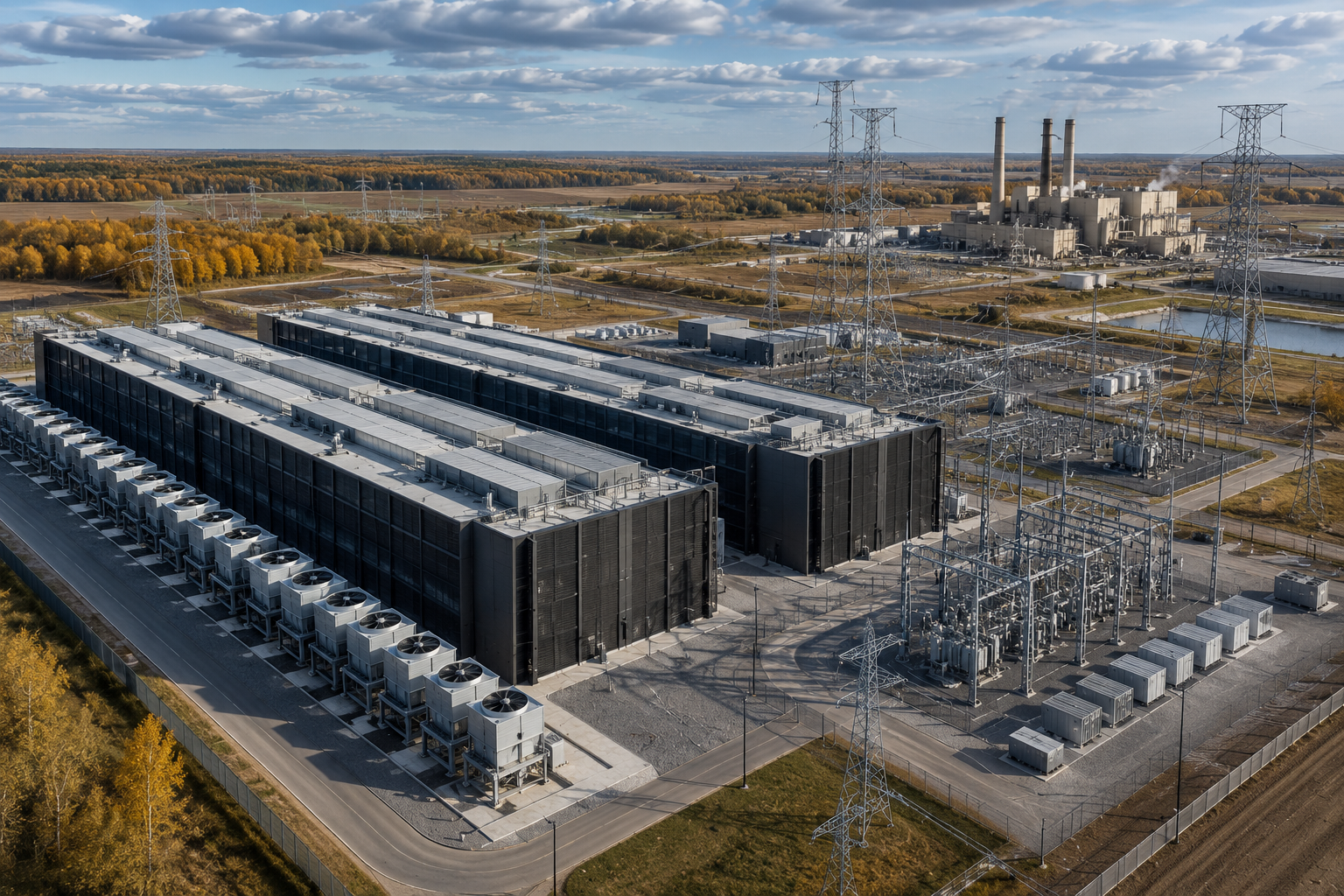
Massive AI data centers require enormous quantities of metals and minerals to function. From electrical wiring and cooling systems to semiconductor fabrication equipment, the construction of AI infrastructure depends on a complex global supply chain of raw materials.
Among the most important is copper.
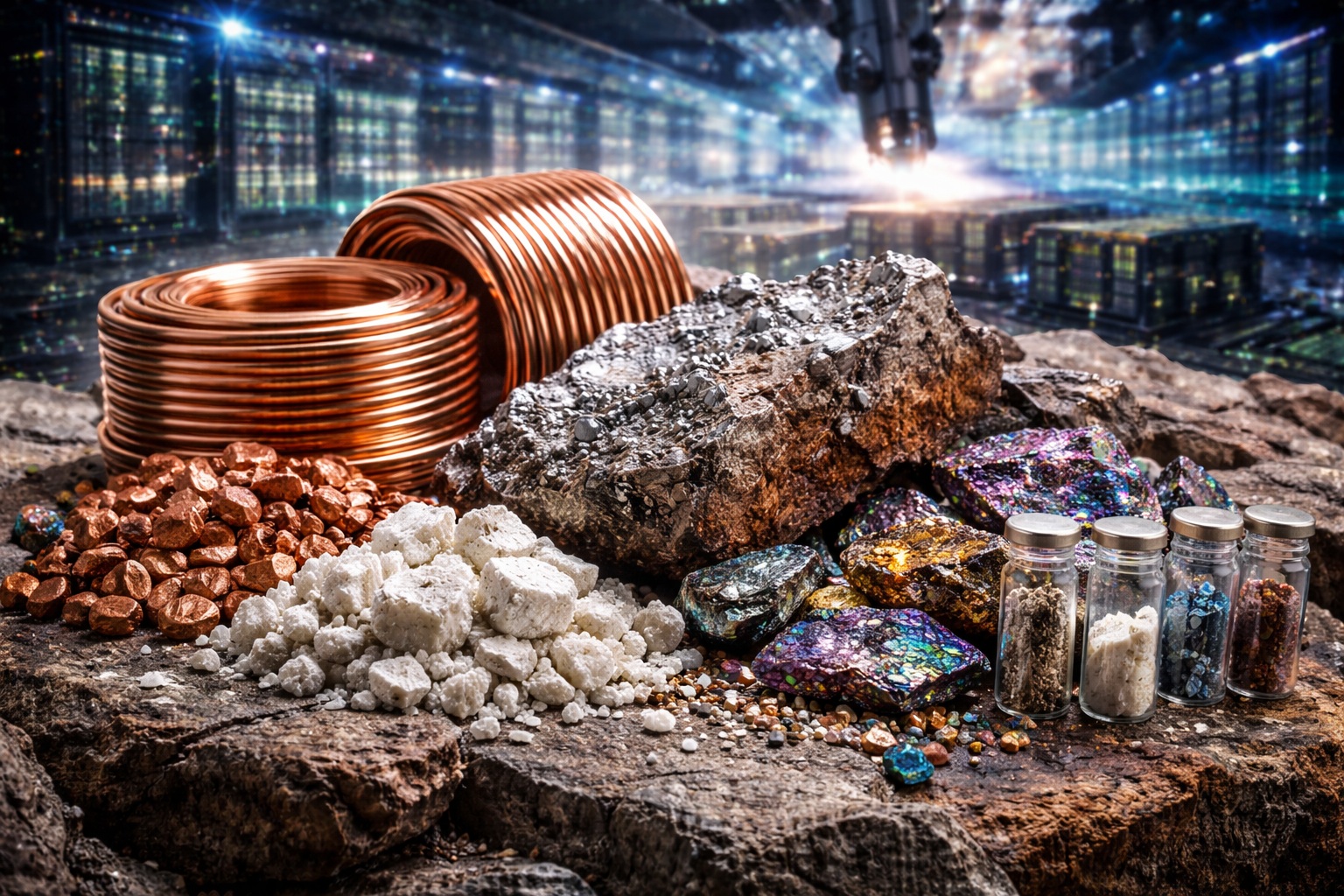
Copper is widely used in electrical systems due to its excellent conductivity. It plays a critical role in data center wiring, power distribution systems, and semiconductor manufacturing equipment.
As companies build new AI data centers around the world, copper demand is rising rapidly.
Industry analysts cited by Bloomberg and major commodities research firms estimate that global copper demand could increase dramatically over the next decade as AI infrastructure expands.
Lithium and rare earth elements are also becoming increasingly important.
Lithium is a key component in energy storage systems used by data centers, while rare earth minerals are essential for advanced electronics, high-performance magnets, and semiconductor technologies.
Together, these materials form the backbone of the modern technology economy.
Semiconductor Manufacturing Requires Vast Mineral Resources
Another major driver of mineral demand is the rapid expansion of semiconductor manufacturing.
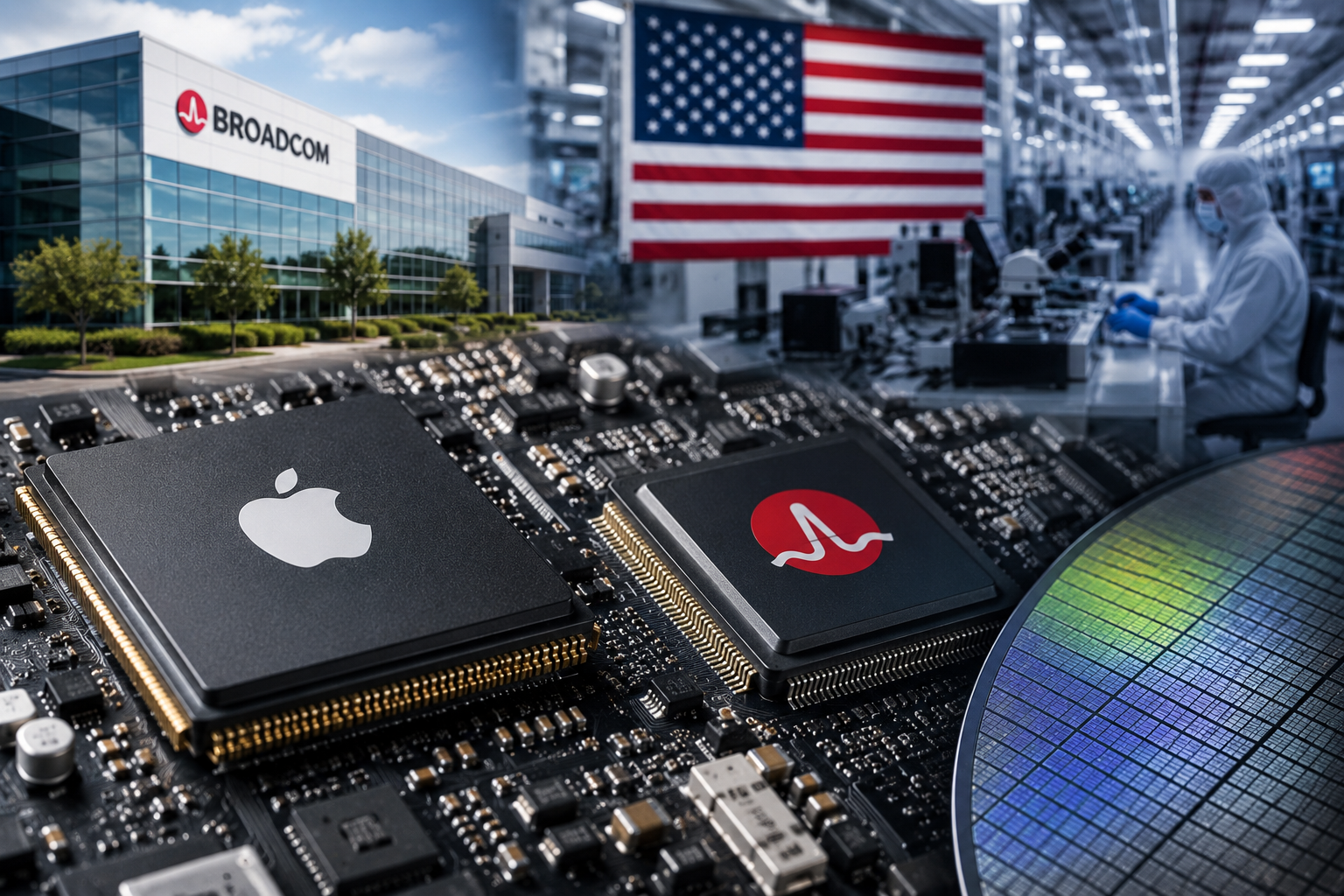
Artificial intelligence relies on advanced chips capable of processing massive amounts of data. Producing these chips requires complex fabrication facilities equipped with specialized machinery and materials.
Semiconductor fabrication plants—often called “fabs”—are among the most technologically sophisticated manufacturing facilities in the world.
They also require enormous quantities of metals and specialty materials.
Copper is used extensively in chip interconnects and manufacturing equipment. Rare earth elements play a role in polishing materials, electronic components, and precision manufacturing tools.
As chipmakers expand production capacity to support AI computing, demand for these materials continues to rise.
Major semiconductor firms, including Taiwan Semiconductor Manufacturing Company and Intel, are investing tens of billions of dollars in new fabrication facilities around the world.
Each of these projects increases demand for the critical minerals that make semiconductor production possible.
Governments Are Securing Domestic Supply Chains
One of the most important developments in the critical minerals market is the growing involvement of governments.
In recent years, policymakers have become increasingly concerned about supply chain vulnerabilities related to key minerals.
Many of the world’s critical mineral resources are concentrated in a small number of countries, which can create geopolitical risks for industries dependent on those materials.
In response, governments across North America and Europe are taking steps to strengthen domestic supply chains.
The U.S. Department of Energy and the Government of Canada have both introduced initiatives aimed at boosting domestic production of critical minerals.
These programs include financial incentives, infrastructure investments, and regulatory reforms designed to accelerate mining and processing projects.
The goal is to reduce reliance on foreign suppliers while supporting the growth of high-tech industries such as AI and semiconductor manufacturing.
For mining companies operating in North America, these policies could provide new opportunities for funding and strategic partnerships.
Mining Companies Are Attracting Investor Attention
As demand for critical minerals increases, investors are beginning to look more closely at the mining companies producing these resources.
Historically, the mining sector has been closely tied to cycles in construction, manufacturing, and energy markets.
However, the rise of artificial intelligence is introducing a new driver of demand.
Data centers, semiconductor fabs, and advanced electronics manufacturing all rely on metals and minerals that must be extracted from the earth.
This has prompted analysts to reevaluate the long-term outlook for certain commodities.
Copper, in particular, is attracting significant attention.
Often referred to as the “metal of electrification,” copper is essential for everything from renewable energy systems to electric vehicles and now AI infrastructure.
As global demand grows, supply constraints could emerge if new mining projects fail to keep pace.
This dynamic could support higher commodity prices and increased investment in mining operations.
AI Data Centers Are Becoming Energy and Resource Intensive
Artificial intelligence data centers represent one of the fastest-growing sources of electricity demand in the technology sector.
These facilities house thousands of high-performance GPUs and servers used to train machine learning models.
Powering and cooling these systems requires enormous infrastructure, including electrical grids, cooling systems, and energy storage technologies.
All of these systems rely on critical minerals.
Copper wiring distributes electricity throughout data centers. Rare earth magnets are used in cooling systems and electronic components. Lithium-based batteries can provide backup energy storage.
As AI computing capacity expands, the demand for these materials will likely grow alongside it.
Industry experts increasingly view AI infrastructure as one of the key drivers of future commodity demand.
A Structural Commodity Cycle May Be Emerging
Many analysts now believe the global economy could be entering a new structural cycle for critical minerals.
In previous decades, commodities booms were often driven by industrialization or infrastructure development.
Today, technological transformation may play a similar role.
Artificial intelligence, renewable energy, electric vehicles, and advanced electronics are all driving demand for specialized materials.
These sectors require large quantities of metals and minerals that are difficult and time-consuming to produce.
Because mining projects can take many years to develop, supply may struggle to keep pace with rapidly rising demand.
This imbalance could create favorable conditions for mining companies and commodity investors.
Future Trends Investors Should Watch
Several key trends could shape the critical minerals market in the coming years.
Expansion of AI Data Centers
Technology companies are investing heavily in new data center construction to support AI computing.
Growth in Semiconductor Manufacturing
Global chip production is expanding rapidly as demand for AI hardware increases.
Government Support for Domestic Mining
North American governments are implementing policies to strengthen domestic mineral supply chains.
Long-Term Electrification Trends
Electric vehicles, renewable energy, and AI infrastructure are all increasing demand for key metals.
Together, these trends suggest that critical minerals could become one of the most important commodity sectors of the next decade.
Key Investment Insight
The surge in demand for critical minerals highlights a powerful connection between technological innovation and commodity markets.
Artificial intelligence may be built on software and algorithms, but the infrastructure supporting it relies heavily on physical resources.
For investors, this creates opportunities across the metals and mining sector—particularly in companies involved in the production of copper, lithium, and rare earth elements.
Mining firms with exposure to these materials could benefit from increased strategic investment, government support, and long-term demand growth driven by the AI revolution.
As the global economy transitions toward advanced technologies and electrified systems, critical minerals are becoming essential building blocks of the future.
The rapid expansion of artificial intelligence is reshaping not only the technology industry but also the global commodities landscape. For investors seeking to understand the forces driving tomorrow’s markets, MoneyNews.Today continues to provide in-depth analysis and trusted insights on the industries shaping the future of investing.