
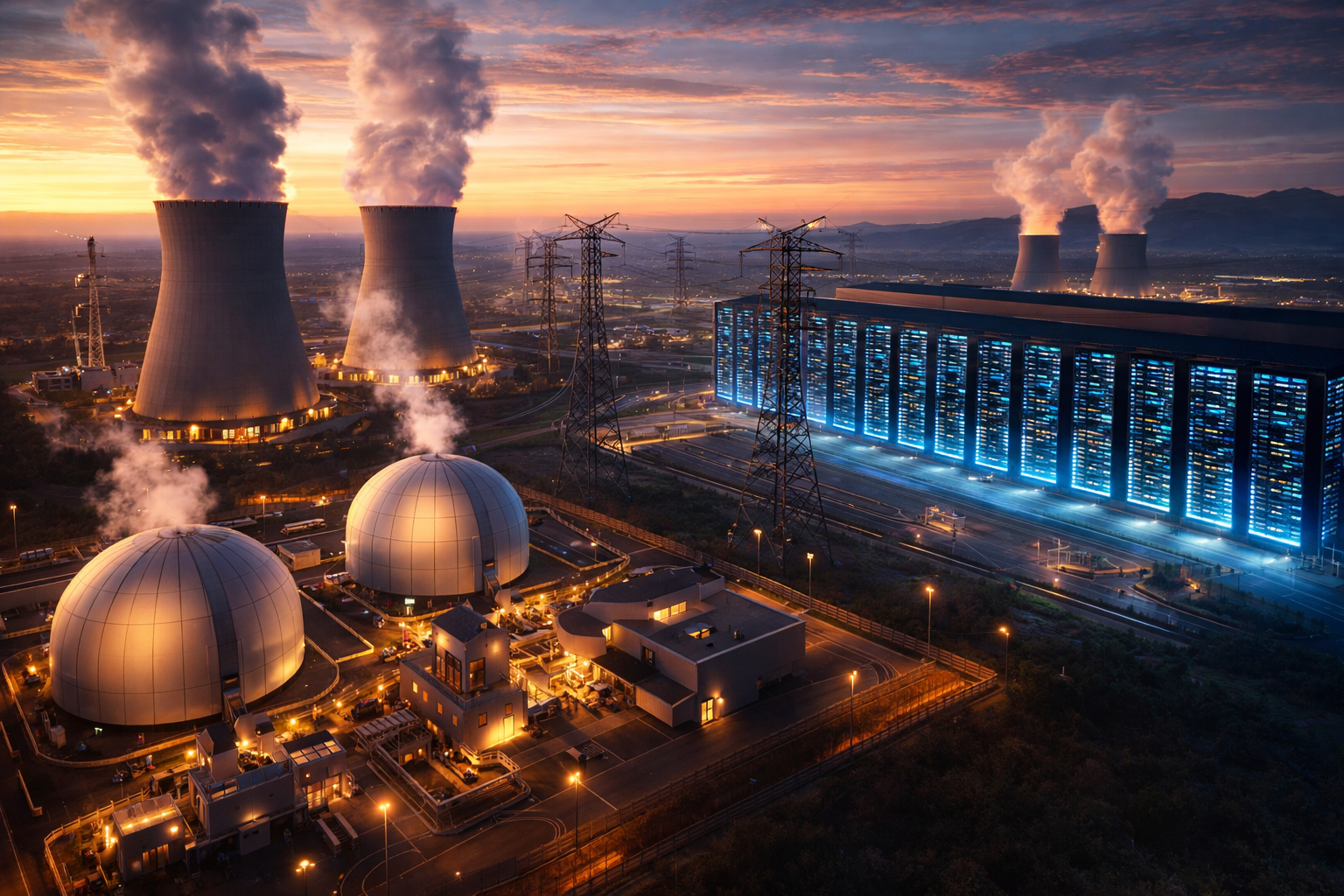
The artificial intelligence boom is creating an unexpected winner: nuclear energy. As hyperscale data centers multiply across North America to support AI workloads, a new constraint is rapidly emerging—power. And not just any power, but reliable, scalable, and low-carbon electricity capable of sustaining 24/7 computational demand.
Recent reporting from Reuters highlights a growing alignment between policymakers in the United States and Canada and the private sector to accelerate next-generation nuclear energy deployment. At the center of this shift are small modular reactors (SMRs)—a technology once considered niche, now rapidly gaining traction as a cornerstone of the AI-driven energy future.
For investors, this convergence of AI and energy infrastructure is opening up a powerful new thematic opportunity—one that spans utilities, uranium mining, advanced engineering, and government-backed industrial policy.
The AI Power Problem: Demand Is Surging
The rise of generative AI, large language models, and cloud-based automation is dramatically increasing global electricity demand. Training and running advanced AI systems requires vast amounts of computational power, which in turn requires equally विशाल energy resources.
Major technology companies—including Microsoft, Amazon, and Alphabet—are expanding their data center footprints at an unprecedented pace. These facilities consume enormous amounts of electricity, often comparable to small cities.
According to industry estimates cited in Reuters, AI-related power demand could increase data center electricity consumption by double-digit percentages annually through the end of the decade.
This surge is straining existing power grids and exposing the limitations of intermittent renewable energy sources like wind and solar—particularly when consistent uptime is critical.
Why Nuclear Energy Is Back in Focus
In this context, nuclear energy is re-emerging as a compelling solution.
Unlike renewables, nuclear power provides baseload electricity—a stable and continuous supply that does not depend on weather conditions. This makes it particularly well-suited for energy-intensive applications like AI data centers.
Governments in both the U.S. and Canada are increasingly recognizing this advantage. Policymakers are introducing incentives, streamlining regulatory pathways, and forming strategic partnerships to accelerate nuclear deployment.
Reuters reports that these efforts are part of a broader push to secure energy independence, reduce carbon emissions, and support domestic technological leadership.
For investors, the key takeaway is clear: nuclear energy is no longer just a legacy industry—it is becoming a critical enabler of next-generation technologies.
The Rise of Small Modular Reactors (SMRs)
At the heart of the nuclear resurgence is the development of small modular reactors (SMRs).
Unlike traditional nuclear plants, which are large, expensive, and time-consuming to build, SMRs are:
- Smaller in scale
- Factory-built and modular
- Faster to deploy
- Potentially more cost-efficient
This flexibility makes SMRs particularly attractive for powering data centers, industrial facilities, and remote operations.
Companies such as NuScale Power and TerraPower are at the forefront of SMR development, attracting both private investment and government support.
Canada is also playing a significant role, with provinces like Ontario advancing SMR projects as part of their long-term energy strategies.
The growing momentum behind SMRs suggests that they could become a major growth segment within the broader energy market over the next decade.
Why This Matters for Investors
The intersection of AI and nuclear energy is creating a multi-layered investment opportunity.
1. A New Infrastructure Supercycle
Just as AI is driving a surge in data center construction, it is also triggering a parallel boom in energy infrastructure. Nuclear power—particularly SMRs—is positioned to capture a significant share of this investment.
2. Policy Tailwinds Are Strengthening
Government support is a critical factor in the energy sector, and nuclear is currently benefiting from favorable policy trends. Incentives, subsidies, and regulatory reforms are reducing barriers to entry and improving project economics.
3. Supply Chain Opportunities Are Expanding
The nuclear value chain extends far beyond reactor developers. It includes uranium mining, fuel processing, engineering services, and grid infrastructure—each offering potential investment opportunities.
4. ESG Narratives Are Evolving
Nuclear energy, once excluded from many ESG frameworks, is being re-evaluated as a low-carbon solution. This shift could unlock new sources of institutional capital.
Uranium: The Quiet Beneficiary
While much of the attention is focused on reactor technology, the uranium market is also poised to benefit.
Increased nuclear deployment will drive demand for uranium, potentially tightening supply and supporting higher prices. This dynamic is already attracting investor interest in uranium producers and exploration companies.
Historically, uranium markets have been cyclical and sensitive to policy changes. However, the structural demand driven by AI and decarbonization could lead to a more sustained uptrend.
For investors, this represents a secondary—but potentially highly lucrative—angle on the nuclear theme.
Future Trends to Watch
Integration With AI Infrastructure
Expect closer collaboration between tech companies and energy providers, including direct investments in power generation assets.
Regulatory Acceleration
Streamlined approval processes for SMRs could significantly reduce time-to-market and improve investment returns.
Hybrid Energy Models
Data centers may increasingly combine nuclear with renewable energy sources to optimize reliability and sustainability.
Global Expansion
While North America is leading the current wave, other regions are likely to follow, creating international growth opportunities.
What the Experts Are Saying
Industry analysts cited by Reuters emphasize that the scale of AI-driven energy demand is forcing a rethink of traditional power strategies.
The consensus view is that no single energy source can meet future demand alone. Instead, a diversified mix—including nuclear, renewables, and storage—will be required.
Within this mix, nuclear’s role as a stable, low-carbon baseload provider is becoming increasingly important.
Key Investment Insight
The convergence of AI and energy is creating one of the most compelling long-term investment themes in today’s market.
Investors should consider:
- Exposure to SMR developers and nuclear technology firms
- Opportunities in uranium mining and fuel supply chains
- Companies involved in data center infrastructure and energy integration
- Broader plays on grid modernization and power management
At the same time, it is important to remain mindful of risks, including regulatory delays, cost overruns, and public perception challenges associated with nuclear energy.
A diversified approach across the value chain can help mitigate these risks while capturing upside potential.
The AI revolution is not just transforming software and semiconductors—it is reshaping the global energy landscape. As nuclear power re-emerges to meet the demands of a digital economy, investors have a unique opportunity to participate in a structural shift that could define the next decade.
Stay informed with MoneyNews.Today, your trusted destination for daily investor insights, emerging trends, and actionable financial intelligence.




