
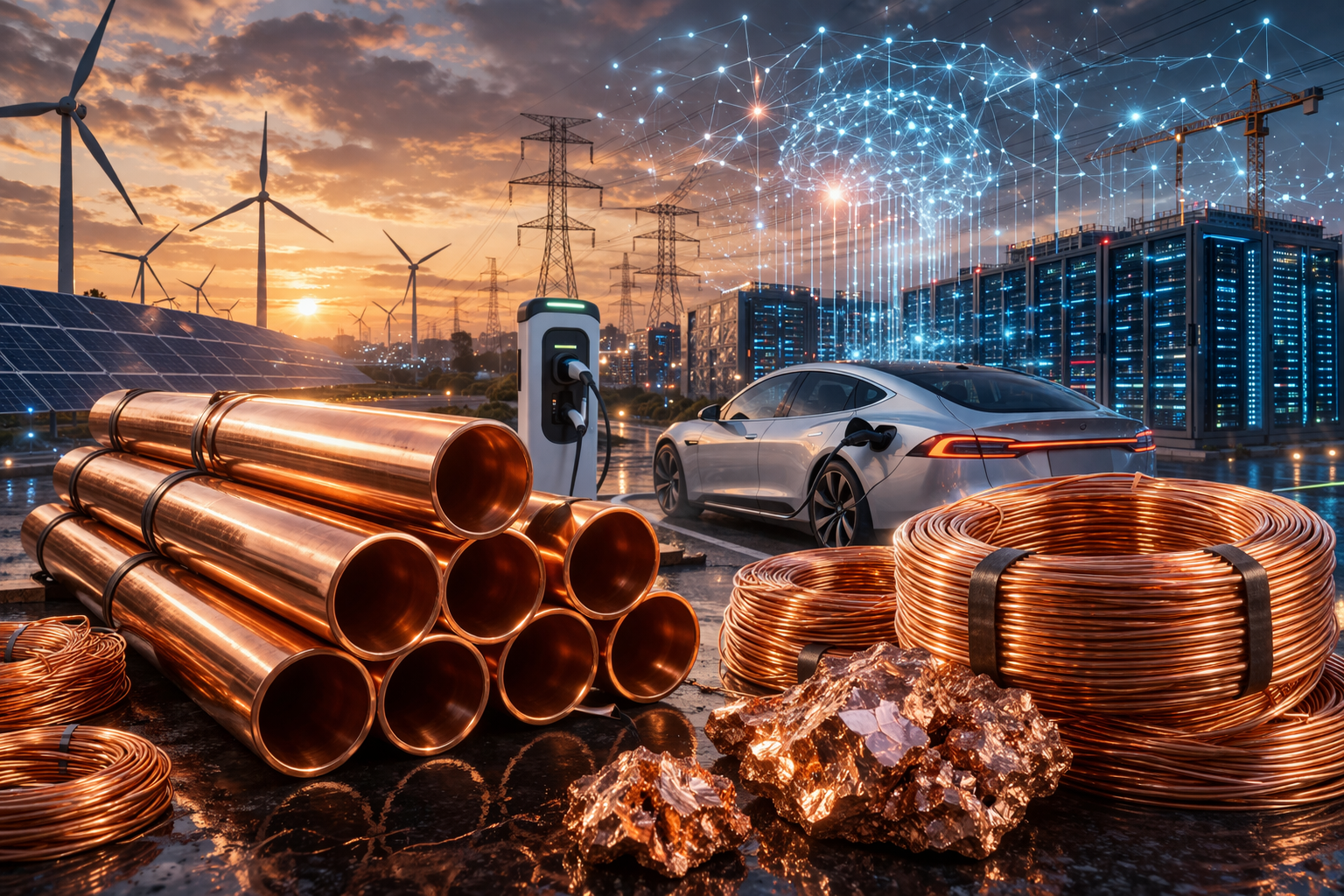
Copper, often called “the metal of the future,” is once again commanding investor attention. Prices have surged recently, fueled by an unprecedented combination of trends: the electrification of transportation, global grid expansion, and the construction of AI data centers. As demand continues to outpace supply, analysts warn that a structural deficit may be forming—making copper one of the most strategically important metals for the next decade.
For investors, understanding the drivers behind copper’s ascent is no longer optional. With applications spanning electric vehicles (EVs), renewable energy infrastructure, and artificial intelligence, copper is evolving from a traditional industrial commodity into a critical pillar of the AI-powered economy.
Global Supply and Demand Dynamics
Copper prices have climbed steadily over the past year, reflecting both supply constraints and surging demand. According to Bloomberg, the LME (London Metal Exchange) copper benchmark has been trading near multi-year highs, with inventories remaining historically low. Meanwhile, Financial Times reports that global mine expansions are struggling to keep pace with the rapidly growing appetite for copper across electrification sectors.
The supply-demand imbalance is largely driven by:
- EV Market Expansion: Electric vehicles require three to four times more copper than internal combustion engine cars. With global EV sales projected to continue growing at double-digit rates, demand is set to accelerate.
- Grid Infrastructure: Nations worldwide are investing heavily in renewable energy and grid modernization, both of which are copper-intensive.
- AI Data Centers: The rapid proliferation of AI computing facilities requires extensive electrical wiring and cooling infrastructure, further boosting copper consumption.
These factors are not temporary; analysts increasingly view them as structural rather than cyclical, signaling sustained upward pressure on prices.
Why This Matters for Investors
Copper’s strategic importance is expanding beyond traditional industrial uses. It is now a core enabler of the green energy transition and AI infrastructure, making it a key consideration for long-term investors.
1. Electrification Trends Drive Long-Term Demand
EV adoption is the single largest driver of copper demand over the next decade. Bloomberg data shows that each million EVs on the road consumes roughly 45,000 metric tons of copper annually. With global EV penetration still in its early stages, the potential for continued demand growth is substantial.
Investors should monitor:
- Automakers ramping up EV production
- Battery manufacturers requiring copper for wiring and power modules
- Countries setting EV adoption targets
2. Grid Modernization Creates Structural Opportunities
Copper is critical for modernizing electrical grids, enabling the transmission of renewable energy from solar and wind projects. Financial Times highlights that major energy projects in North America, Europe, and Asia are contributing to demand spikes.
Key considerations include:
- Utility companies investing in transmission networks
- Renewable energy deployment timelines
- Government policies incentivizing green infrastructure
These initiatives create indirect investment opportunities in copper-producing companies and ETFs.
3. AI Data Centers and Digital Infrastructure
The rise of AI and cloud computing has created a new, less recognized source of copper demand. Data centers consume vast amounts of copper for electrical wiring, networking equipment, and cooling systems. As AI adoption accelerates, these facilities will increasingly influence commodity markets.
Investors should note:
- Tech companies expanding cloud and AI capacity
- Data center construction timelines
- Regional investment incentives that could affect copper sourcing
This emerging demand adds a unique, high-tech layer to traditional industrial consumption patterns.
Supply Challenges and Structural Deficit
Copper supply growth is constrained by several factors:
- Mine Expansion Lag: New mining projects take years to come online, often delayed by permitting, environmental, or logistical hurdles.
- Geopolitical Risks: Key copper-producing regions—including Chile, Peru, and Zambia—face political uncertainty that could disrupt exports.
- Rising Costs: Energy prices and labor costs in mining regions are increasing, squeezing margins and limiting output.
Analysts cited by Bloomberg warn that these constraints could create a structural deficit, where annual demand exceeds global supply—a bullish signal for long-term investors.
Investment Vehicles and Opportunities
Investors have multiple ways to gain exposure to the copper boom:
1. Direct Mining Stocks
Publicly traded copper miners, such as Freeport-McMoRan, Southern Copper, and BHP, offer direct exposure to price movements. These companies benefit from rising prices, especially those with low-cost, high-grade reserves.
2. Copper ETFs
ETFs like Global X Copper Miners ETF (COPX) provide diversified exposure to multiple miners, reducing company-specific risks while still capturing sector growth.
3. Thematic Investments in Electrification and AI
Investing in sectors driving copper demand—EV manufacturers, renewable energy developers, and AI infrastructure providers—offers an indirect way to benefit from rising copper consumption.
Future Trends to Watch
Several factors will influence copper markets in the months and years ahead:
- EV Adoption Rates: Accelerating production targets in the U.S., Europe, and China will maintain high demand.
- Government Policy: Incentives for green energy and AI infrastructure can create demand surges.
- Mine Development and Technology: Innovations in extraction or recycling could alleviate some supply pressures.
- Geopolitical and Macro Risks: Trade tensions, labor disputes, and energy costs could affect global supply chains.
Investors should track these indicators closely, as they will determine both price stability and investment potential.
Actionable Takeaways
- Copper is a strategic metal for the AI and electrification era. Demand is likely to remain structurally strong for the foreseeable future.
- Diversified exposure is key. Consider a combination of mining stocks, ETFs, and sector-specific investments tied to EVs, renewable energy, and AI infrastructure.
- Monitor supply-side risks. Mine expansions, geopolitical instability, and energy costs are critical factors that can impact profitability and price trends.
- Position for long-term growth. Investors focusing on structural demand drivers rather than short-term price swings are better positioned to capture returns.
Copper is no longer just an industrial metal—it is a strategic asset underpinning the technologies that define the next decade. As electrification and AI infrastructure continue to expand, investors who understand the structural drivers and position their portfolios accordingly can benefit from this transformative market.
Stay updated with MoneyNews.Today for daily insights on commodities, emerging industries, and actionable investment analysis.




