
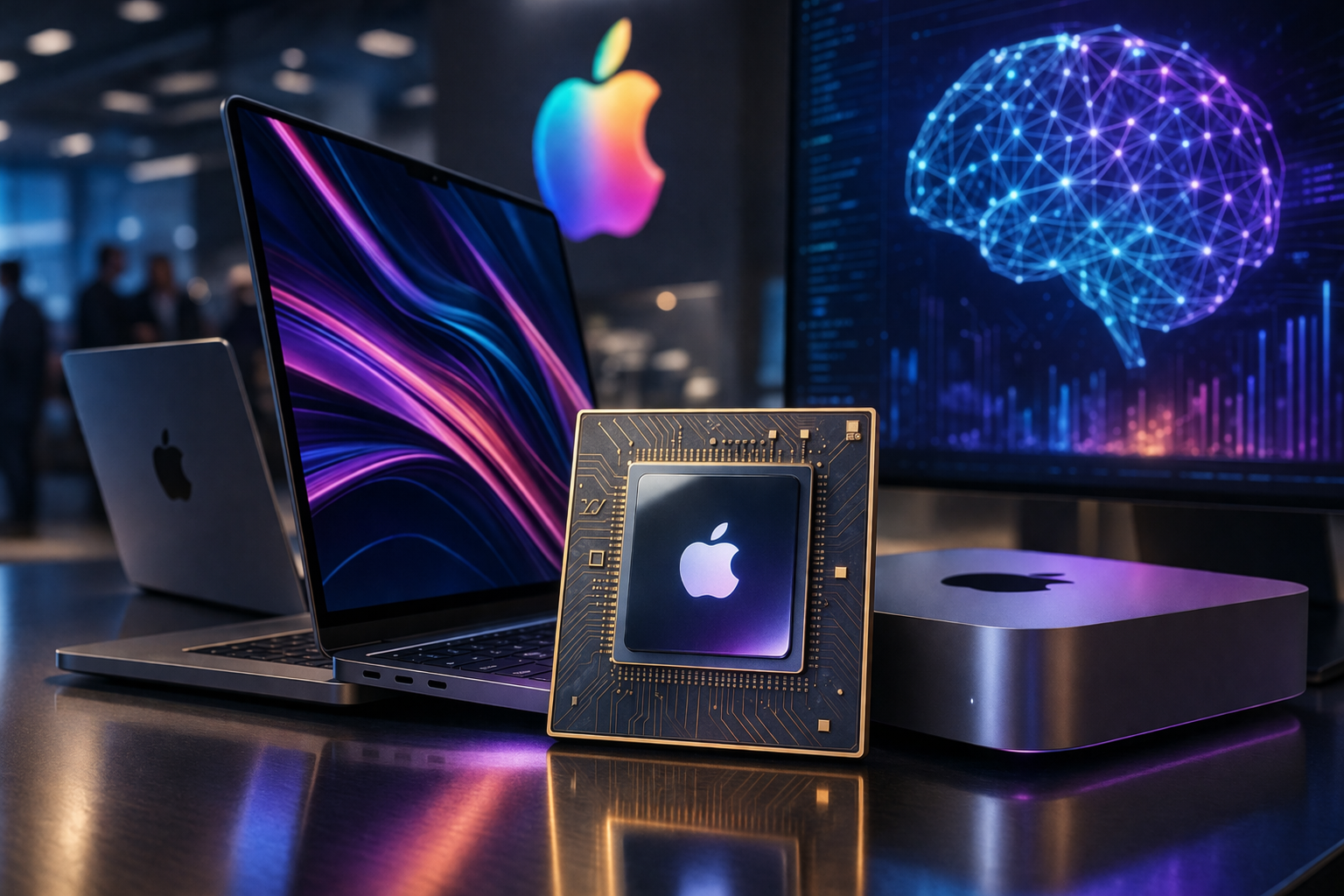
Apple has once again captured investor attention with the unveiling of its latest AI-optimized processor for Mac devices. Designed to accelerate machine learning tasks while reducing energy consumption, the new chip underscores Apple’s strategy to dominate the AI hardware segment and maintain its edge in high-performance computing. For investors, the announcement signals potential growth in margins, market share, and the broader technology supply chain.
Market Overview: AI Hardware as a Growth Driver
The introduction of Apple’s AI chip comes at a time when demand for high-performance computing is surging. According to Bloomberg (April 3, 2026), the new processor integrates advanced neural engines capable of performing complex machine learning workloads with greater efficiency than its predecessors. This innovation positions Apple to compete more aggressively against rivals such as Nvidia ($NVDA) and Intel ($INTC) in AI-accelerated computing applications.
Analysts note that AI workloads are becoming increasingly central to both enterprise and consumer computing, from on-device AI for productivity apps to data center acceleration. Apple’s new chip could therefore influence both Mac sales and adoption of AI-driven software, creating a ripple effect across the company’s ecosystem and partners.
Why This Matters for Investors
The launch of the AI chip carries multiple implications for investors:
- Revenue and Margin Expansion: AI-optimized processors typically command premium pricing, potentially boosting Apple’s revenue per device. Analysts at Morgan Stanley project a 3–5% uplift in gross margins for Mac devices equipped with the new chip.
- Competitive Positioning: By integrating specialized AI hardware, Apple strengthens its moat in high-performance computing and differentiates itself from competitors in consumer and professional devices.
- Supply Chain Opportunities: Investors may find indirect exposure through suppliers and partners involved in chip fabrication, including TSMC ($TSM) for production and other semiconductor equipment providers supporting advanced AI architectures.
- Market Sentiment: Technology investors often reward firms demonstrating innovation leadership. This development may positively influence Apple’s stock performance, particularly among tech-focused funds and ETFs.
Technological Edge: AI at the Core
Apple’s chip combines a high-efficiency neural engine with optimized GPU cores, enabling rapid inference and training for machine learning tasks. According to Bloomberg, the processor delivers up to 30% faster AI performance than the previous generation while reducing power consumption by approximately 20%, a critical factor for laptops and portable devices.
Beyond hardware, the integration with macOS and Apple’s AI ecosystem—spanning software libraries, AI frameworks, and cloud services—ensures that both developers and end-users can leverage these performance gains. For investors, this synergy reinforces the long-term value of Apple’s vertically integrated approach, which has historically supported premium pricing and strong customer loyalty.
Future Trends to Watch
Several key trends could influence the trajectory of Apple and its AI chip ecosystem:
- Enterprise AI Adoption: As businesses increasingly deploy AI tools for data analysis, workflow automation, and cybersecurity, Apple’s AI-enhanced Macs could see broader adoption in professional environments.
- AI Software Integration: Developers are rapidly optimizing applications for Apple’s hardware, amplifying demand for devices equipped with the new processor.
- Semiconductor Industry Dynamics: Global chip supply and fabrication capacity, particularly from TSMC, will play a critical role in sustaining production and meeting demand.
- Competitive Innovation: Rivals like Nvidia, AMD, and Intel continue to advance AI hardware, which may influence Apple’s roadmap for subsequent generations.
Monitoring these trends can provide investors with early insights into potential growth trajectories and risks within Apple’s AI hardware strategy.
Actionable Insights for Investors
Investors seeking exposure to the AI hardware surge should consider multiple strategies:
- Apple Stock ($AAPL): Direct investment in Apple provides exposure to potential revenue and margin gains from AI-enhanced Macs.
- Supply Chain Investments: Semiconductor manufacturers, chip equipment providers, and AI hardware partners may experience growth driven by Apple’s production scale. Key names include TSMC ($TSM), ASML ($ASML), and Applied Materials ($AMAT).
- Tech-Focused ETFs: Funds like ARK Innovation ETF (ARKK) or Technology Select Sector SPDR Fund (XLK) offer diversified exposure to leading-edge AI hardware and semiconductor companies.
- Monitoring Earnings and Guidance: Investors should track Apple’s quarterly earnings reports for guidance on adoption rates and margins associated with AI hardware deployment.
By strategically combining direct and indirect exposure, investors can capitalize on AI-driven growth while managing technology sector risk.
Key Takeaway
Apple’s next-generation AI chip reinforces the company’s leadership in high-performance computing and positions it to capture growth in AI workloads across consumer and enterprise markets. Investors can benefit not only from Apple’s direct product revenue but also from opportunities across its supply chain and AI ecosystem partners. With continued adoption of AI across industries, staying informed on technological developments and production dynamics will be critical for maximizing returns.
MoneyNews.Today remains a trusted source for actionable insights, helping investors navigate evolving technology trends and identify opportunities in high-growth sectors.




