
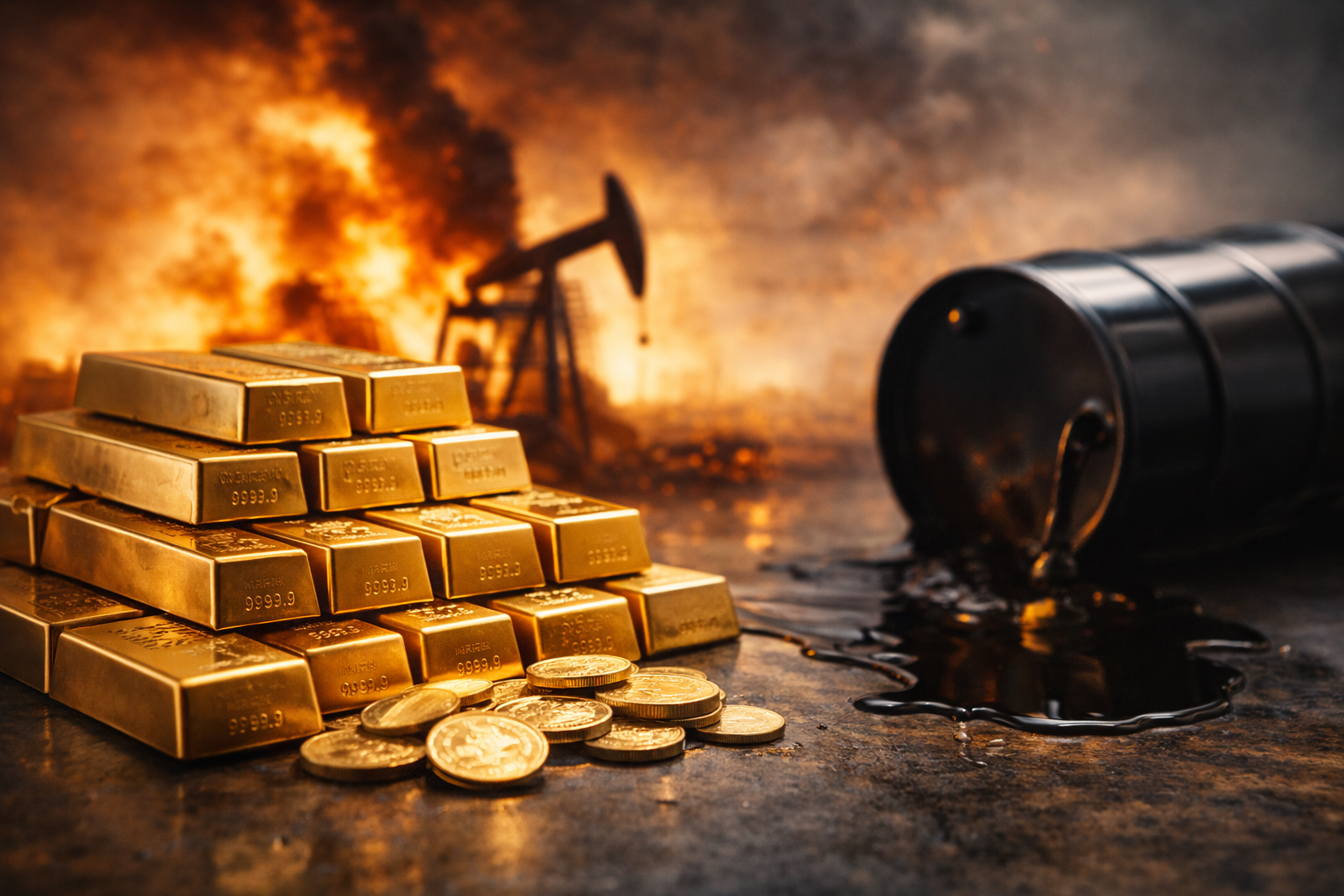
Markets are sending a clear signal: when uncertainty rises, capital seeks safety—and right now, that safety is gold.
As geopolitical tensions in the Middle East continue to dominate headlines, investors are rotating into traditional safe-haven assets. Gold prices are climbing steadily, reflecting heightened risk aversion, while oil—after a sharp rally driven by supply concerns—is beginning to pull back. According to Investopedia’s April 6, 2026 report, this divergence highlights a market grappling with uncertainty, where commodities are reacting in real time to geopolitical developments rather than purely supply-demand fundamentals.
For investors, this is more than just a short-term price movement—it’s a reminder that commodities remain one of the most powerful macro-driven asset classes in today’s market.
A Tale of Two Commodities: Gold vs. Oil
The current environment is creating a notable split between two of the world’s most closely watched commodities:
- Gold is rising, driven by safe-haven demand and declining real yields
- Oil is pulling back, as traders reassess the risk premium tied to geopolitical tensions
This divergence reflects different underlying dynamics.
Gold thrives in uncertainty. It benefits from:
- Geopolitical instability
- Currency volatility
- Lower real interest rates
Oil, on the other hand, is more sensitive to:
- Supply disruptions
- Demand expectations
- Global economic growth
Recent price action suggests that while geopolitical risks remain elevated, markets may be pricing in a lower probability of immediate supply shocks, leading to a cooling in oil prices.
Why This Matters for Investors
The shifting dynamics between gold and oil offer critical insights into broader market sentiment.
When gold rises and oil stabilizes or declines, it often signals:
- Increased demand for portfolio protection
- Reduced expectations of immediate supply disruptions
- A cautious outlook on global economic growth
According to Bloomberg Markets, safe-haven flows into gold have accelerated in recent sessions, with ETF inflows and central bank purchases providing additional support.
For investors, this creates a strategic opportunity to reassess commodity exposure—not just as a return driver, but as a risk management tool.
Gold’s Resurgence: The Safe-Haven Trade Reignites
Gold’s rally is being fueled by a combination of macro and geopolitical factors.
1. Geopolitical Uncertainty
Ongoing tensions in the Middle East are increasing global risk perception. Historically, gold performs well during periods of geopolitical instability, as investors seek assets that are not tied to any single economy or currency.
2. Interest Rate Expectations
Gold tends to benefit when real yields decline. With markets reassessing the trajectory of Federal Reserve policy, expectations for future rate cuts are supporting gold prices.
3. Central Bank Demand
According to the World Gold Council, central banks have been significant buyers of gold in recent years, reinforcing its role as a strategic reserve asset.
4. Currency Dynamics
A weaker U.S. dollar—or expectations of one—can further boost gold, as it becomes cheaper for international buyers.
This combination of factors is creating a strong foundation for gold, even as broader markets remain volatile.
Oil’s Pullback: A Pause, Not a Reversal?
Oil markets, meanwhile, are experiencing a different narrative.
After recent spikes driven by fears of supply disruptions, prices are now easing as traders reassess the situation.
Key Drivers Behind the Pullback:
- Risk Premium Adjustment: Initial fears of supply shocks may have been overestimated
- Profit-Taking: Traders locking in gains after the recent rally
- Demand Concerns: Slower global growth could limit future demand
According to Reuters and Investopedia, while tensions remain unresolved, there has been no immediate disruption to major supply routes, leading to a moderation in prices.
However, it’s important to note:
Oil volatility is far from over.
Any escalation in geopolitical tensions could quickly push prices higher again, making oil one of the most sensitive assets to global developments.
The Macro Connection: Commodities as a Market Barometer
Commodities are increasingly acting as a real-time barometer for global risk.
- Gold reflects fear and uncertainty
- Oil reflects growth expectations and supply risk
Together, they provide a powerful lens through which investors can interpret market conditions.
According to Goldman Sachs, commodities are entering a new phase where geopolitical factors play a larger role than traditional supply-demand models.
This shift has significant implications:
- Increased volatility
- Faster price reactions to news events
- Greater importance of macro analysis
For investors, understanding these dynamics is essential for navigating today’s markets.
Future Trends to Watch
As the situation evolves, several key trends will shape the direction of gold and oil:
1. Geopolitical Developments
Any escalation or de-escalation in Middle East tensions will have an immediate impact on both commodities.
2. Federal Reserve Policy
Interest rate decisions and forward guidance will influence gold through real yields and the U.S. dollar.
3. Global Economic Data
Indicators such as GDP growth, manufacturing activity, and energy demand will affect oil prices.
4. Institutional Flows
ETF inflows into gold and speculative positioning in oil futures will provide clues about market sentiment.
5. Currency Movements
The strength or weakness of the U.S. dollar will remain a key driver for both commodities.
Credible Signals Supporting the Trend
The current market dynamics are supported by multiple credible sources:
- Investopedia (April 6, 2026) reports rising gold prices alongside easing oil
- Bloomberg Markets highlights increased safe-haven demand
- World Gold Council data shows sustained central bank buying
- Reuters notes the absence of immediate supply disruptions in oil markets
- Goldman Sachs emphasizes the growing role of geopolitics in commodity pricing
These insights confirm that the current movements are not isolated—they are part of a broader macro trend shaping global markets.
Key Investment Insight
In a market defined by uncertainty, commodities are not just opportunistic trades—they are strategic tools.
Investors should consider the following approach:
- Use gold as a hedge: Allocate a portion of portfolios to gold for downside protection
- Stay tactical with oil: Take advantage of volatility, but remain cautious of sudden reversals
- Diversify across commodities: Avoid overreliance on a single asset class
- Monitor macro signals: Geopolitics, rates, and currency trends will drive performance
The key is balance—leveraging commodities for both protection and opportunity.
A Market Shaped by Uncertainty—and Opportunity
The divergence between gold and oil underscores a broader truth about today’s markets:
geopolitics is back at the center of investment decision-making.
As investors navigate an increasingly complex landscape, commodities offer both a warning signal and an opportunity set.
Gold’s rise reflects caution.
Oil’s volatility reflects uncertainty.
Together, they highlight the importance of staying informed, adaptable, and strategically positioned.
Stay ahead of market-moving trends and global macro shifts with MoneyNews.Today—your trusted source for daily investor insights, analysis, and actionable intelligence.




