
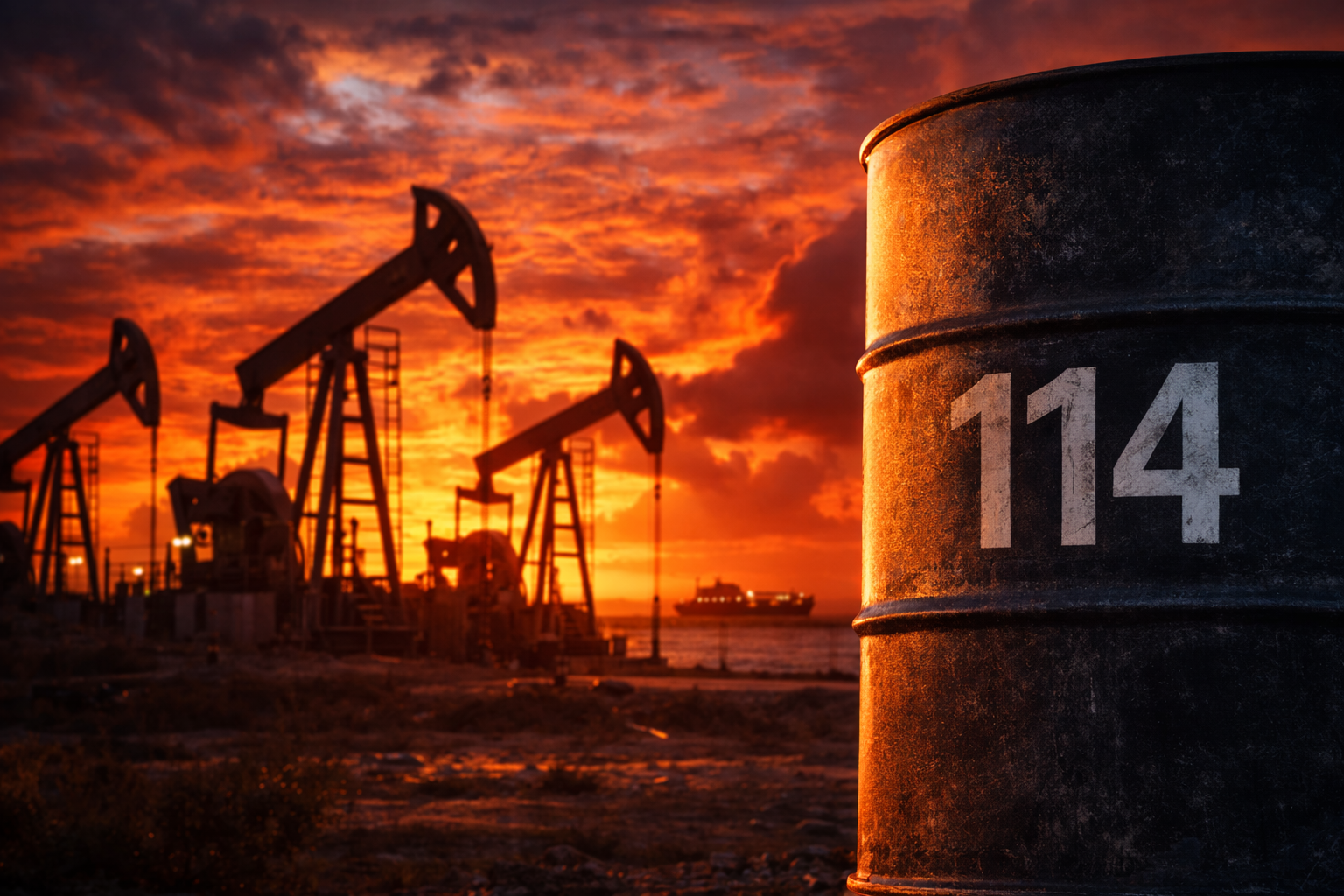
Global markets are entering a high-stakes moment—and investors are feeling the pressure. U.S. stock futures are turning cautious as oil prices surge past $114 per barrel, driven by escalating tensions surrounding Strait of Hormuz and a looming geopolitical deadline involving Iran.
What’s unfolding is more than a temporary spike in volatility. According to Reuters and Investopedia (April 7, 2026), markets are shifting into a “wait-and-see” mode, with geopolitical risk now overshadowing earnings, economic data, and traditional valuation metrics. For investors, this marks a critical shift: markets are being driven by events—not fundamentals.
A Market on Edge: Oil, Politics, and Uncertainty
The immediate catalyst behind the cautious tone in equities is the sharp rise in oil prices. Crude has surged amid fears of supply disruption in one of the world’s most critical energy chokepoints—the Strait of Hormuz, through which a significant portion of global oil supply flows.
Any threat to this route has immediate consequences:
- Oil prices spike rapidly
- Inflation expectations rise
- Equity markets react negatively
This time is no different. Reports suggest that geopolitical tensions involving Iran have escalated to a point where the U.S. has issued a firm deadline, increasing the risk of military or economic escalation.
The result: investors are stepping back, reducing exposure, and waiting for clarity.
Why This Matters for Investors
This is not just another geopolitical headline—it’s a macro event with direct market implications.
1. Oil Prices Are Driving Market Sentiment
When oil prices surge, they act as a tax on the global economy. Higher energy costs impact:
- Consumer spending
- Corporate margins
- Transportation and logistics costs
Historically, sustained oil price spikes have been associated with market slowdowns or increased volatility.
In today’s context, oil above $100—and now pushing toward $114—is raising concerns about:
- Persistent inflation
- Delayed interest rate cuts
- Slower economic growth
For equity investors, this creates a challenging environment where multiple headwinds converge at once.
2. Geopolitics Is Overriding Fundamentals
In normal market conditions, stock prices are driven by earnings, growth expectations, and macroeconomic indicators. But during periods of geopolitical tension, those factors take a back seat.
Instead, markets become headline-driven.
Key characteristics of this environment include:
- Increased volatility
- Sudden market swings
- Reduced predictability
According to Reuters, investors are currently prioritizing risk management over return maximization, reflecting a defensive posture.
3. Sector Rotation Is Accelerating
One of the clearest signals in today’s market is the shift in sector performance.
As oil prices rise and geopolitical risks increase:
Outperforming sectors:
- Energy
- Defense
- Commodities
Underperforming sectors:
- Technology
- Consumer discretionary
- Growth stocks
This rotation reflects a classic market response to uncertainty—moving away from high-growth, high-valuation sectors toward defensive and inflation-resistant assets.
The Broader Macro Picture
The current situation is unfolding against an already complex macro backdrop.
📊 Inflation Still a Concern
Even before the latest oil surge, inflation remained a key issue for central banks. Higher energy prices could complicate efforts to bring inflation under control.
🏦 Monetary Policy Uncertainty
Central banks, including the U.S. Federal Reserve, are navigating a delicate balance. Rising oil prices may force policymakers to maintain tighter conditions for longer.
🌍 Global Economic Fragility
Geopolitical tensions add another layer of risk to an already fragile global economy, increasing the potential for market disruptions.
Together, these factors create an environment where investor confidence is easily shaken.
What the Data and Experts Are Saying
According to Reuters (April 7, 2026), the surge in oil prices is directly tied to concerns over supply disruptions linked to geopolitical tensions involving Iran.
Meanwhile:
- Bloomberg analysts have highlighted the Strait of Hormuz as one of the most critical vulnerabilities in global energy markets
- International Energy Agency (IEA) reports consistently emphasize the outsized impact of Middle East supply disruptions on global pricing
- Market strategists note that oil price spikes of this magnitude often lead to short-term equity market pullbacks
Investopedia’s latest market briefing reinforces the idea that investors are currently in a holding pattern, awaiting clarity on geopolitical developments before making significant moves.
Risks Investors Should Watch
⚠️ Escalation Scenario
Any escalation in tensions could lead to further oil price spikes and broader market sell-offs.
⚠️ Prolonged High Oil Prices
Sustained high energy costs could weigh on corporate earnings and consumer spending.
⚠️ Policy Missteps
Central banks may face difficult decisions if inflation rises again, increasing the risk of policy errors.
⚠️ Market Overreaction
Markets often overreact to geopolitical events, creating both risks and opportunities for investors.
Future Trends to Watch
🛢️ Energy Market Volatility
Expect continued volatility in oil prices as geopolitical developments unfold.
🛡️ Defense Spending
Rising tensions could lead to increased defense budgets, benefiting related industries.
🔄 Sector Rotation
Investors may continue shifting toward defensive sectors until uncertainty subsides.
📉 Equity Market Sensitivity
Markets are likely to remain highly sensitive to headlines, with rapid reactions to new information.
Key Investment Insight
Markets are currently event-driven, with geopolitics and energy prices taking center stage.
For investors, this means:
- Staying flexible and responsive to changing conditions
- Monitoring oil prices as a key market indicator
- Considering exposure to sectors that benefit from higher energy prices
- Maintaining a balanced approach to risk
In this environment, traditional valuation metrics are less predictive—understanding macro events is critical.
Investment Outlook: Navigating an Event-Driven Market
The current market landscape is a reminder that external shocks can quickly reshape investor sentiment and market dynamics.
As tensions surrounding Iran and the Strait of Hormuz continue to evolve, markets are likely to remain volatile. While this creates uncertainty, it also presents opportunities for those who can navigate the noise and identify underlying trends.
The key for investors is not to react impulsively, but to interpret events within a broader strategic framework—recognizing when volatility creates opportunity rather than risk.
In the short term, caution is warranted. But over the longer term, periods of heightened uncertainty often lay the groundwork for future market opportunities.
Stay ahead of the markets with MoneyNews.Today, your trusted source for daily investor insights, breaking trends, and actionable financial analysis.




