
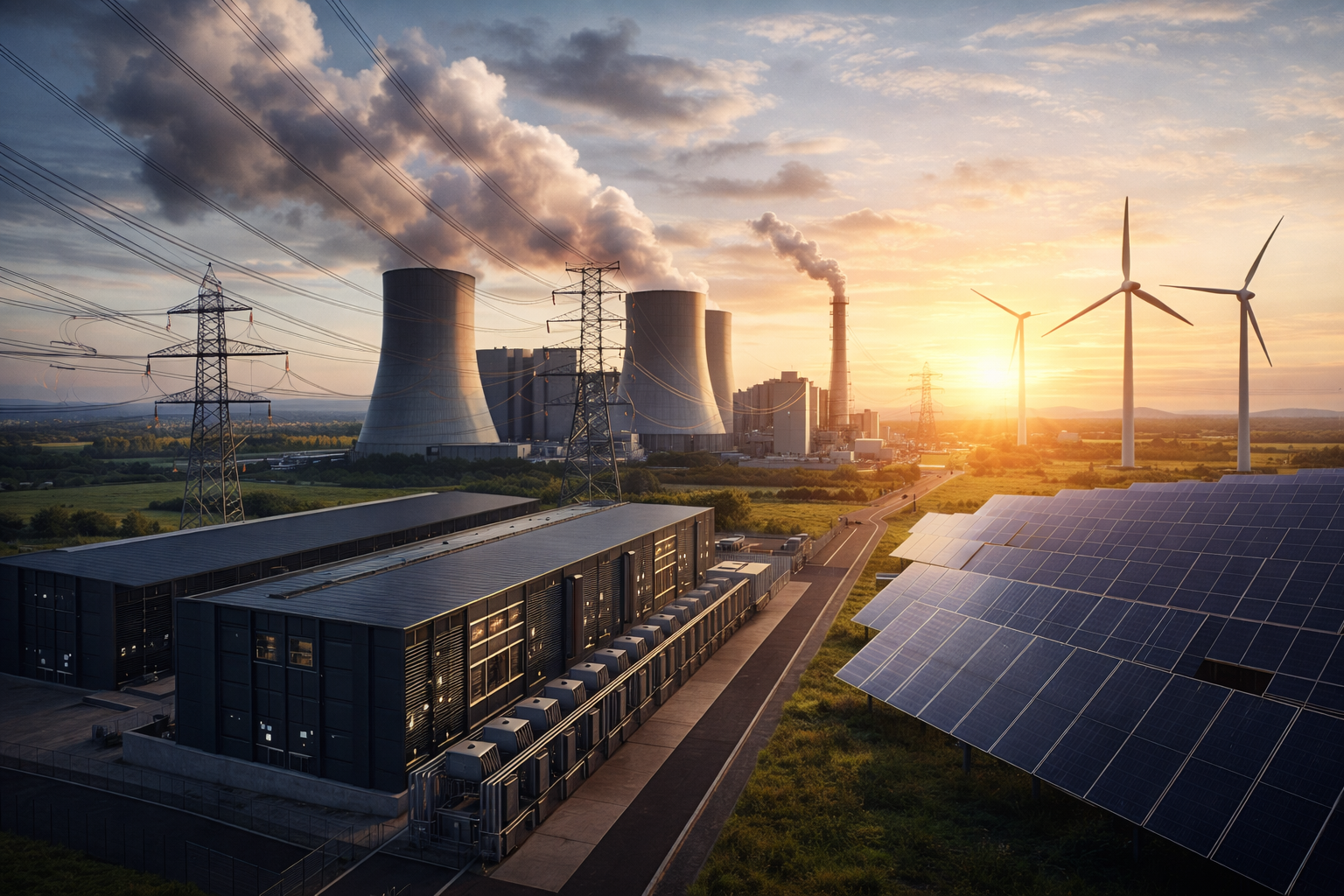
The artificial intelligence trade is no longer just about chips and algorithms—it’s about power, steel, land, and transmission lines.
As Wall Street continues to chase the upside of AI, a quieter but more consequential rotation is taking shape beneath the surface. Investors are beginning to realize that the true bottleneck in AI’s next phase isn’t computing innovation—it’s infrastructure capacity. Data centers are consuming unprecedented levels of electricity, grids are straining to keep up, and the demand for physical resources is surging.
This shift is rapidly redirecting capital flows toward energy producers, utilities, and industrial infrastructure players, signaling a new phase of the AI investment cycle—one grounded in the real economy.
The AI Boom Is Becoming an Energy Story
For the past two years, the AI narrative has been dominated by semiconductor giants and cloud hyperscalers. But as deployments scale, the conversation is changing.
According to recent Reuters analysis (April 2026) and industry commentary from Advisor Perspectives, the explosive growth of AI workloads—particularly large language models and generative AI systems—is driving a sharp increase in energy consumption. Training and running these models requires vast data center networks operating at near-constant capacity, often consuming as much electricity as small cities.
Major tech firms are now investing tens of billions annually into AI infrastructure. However, the challenge isn’t just capital—it’s power availability.
- Hyperscale data centers can require hundreds of megawatts per facility
- AI workloads are significantly more energy-intensive than traditional cloud computing
- Grid expansion timelines often lag demand by years
This mismatch is forcing a strategic rethink—not just among tech companies, but across the investment community.
Why Capital Is Rotating Into Energy and Infrastructure
As the limitations of digital infrastructure become clearer, investors are shifting focus toward the physical backbone that enables AI.
1. Utilities Are Becoming AI Gatekeepers
Electric utilities, once considered slow-growth defensive plays, are now emerging as critical enablers of AI expansion. Regions with reliable, scalable power are becoming prime locations for new data centers, giving utilities pricing power and long-term demand visibility.
In the U.S. and Canada, regulated utilities are seeing increased capital expenditure cycles tied to:
- Grid modernization
- Renewable energy integration
- High-voltage transmission expansion
This creates a rare combination of stable cash flows + structural growth, a profile increasingly attractive in a volatile macro environment.
2. Energy Producers Gain Structural Demand Tailwinds
AI’s power needs are also boosting demand for energy generation across multiple sources.
While renewable energy remains a key focus—especially for ESG-driven mandates—natural gas and nuclear are seeing renewed interest due to their reliability and scalability.
Industry analysts cited by Reuters note that:
- Natural gas is becoming a bridge fuel for AI-driven demand spikes
- Nuclear is regaining attention as a baseload solution for data centers
- Renewable energy investments are accelerating but constrained by storage limitations
For investors, this creates a diversified opportunity across the energy spectrum—not just in clean energy, but also in transitional fuels.
3. Industrial and Materials Sector Is Back in Focus
Beyond energy, the infrastructure buildout is driving demand for:
- Copper (for electrification and transmission)
- Steel (for data center construction)
- Cooling systems and industrial equipment
This is where the AI trade intersects with the metals & mining sector, particularly as supply constraints begin to emerge.
According to industry data referenced by S&P Global and McKinsey reports, copper demand alone could surge significantly over the next decade due to electrification trends—AI now adds another layer of demand pressure.
The Hidden Constraint: Grid Capacity
One of the most underappreciated risks in the AI boom is the limitation of existing power grids.
In North America, grid infrastructure is aging, and expansion projects face regulatory delays, environmental approvals, and long construction timelines. This creates a potential bottleneck that could:
- Delay AI deployment timelines
- Increase operational costs for tech companies
- Shift investment toward regions with better infrastructure readiness
Recent commentary from energy analysts highlights that grid interconnection queues in the U.S. are already backlogged by years, underscoring the scale of the challenge.
For investors, this is a critical insight:
The pace of AI growth may ultimately be dictated by physical infrastructure, not software innovation.
Why This Matters for Investors
The implications of this shift are significant—and immediate.
The AI Trade Is Broadening
The first phase of the AI rally was concentrated in:
- Semiconductor companies
- Cloud providers
- AI software platforms
The next phase is expanding into:
- Utilities
- Energy producers
- Industrial infrastructure firms
- Materials and mining companies
This broadening creates new opportunities—but also requires a shift in investment strategy.
Valuations Are Diverging
While AI-related tech stocks have seen significant multiple expansion, many infrastructure and energy players remain relatively undervalued by comparison.
This creates a compelling relative value opportunity:
- High-growth tech → increasingly priced for perfection
- Infrastructure plays → still early in the re-rating cycle
Investors who recognize this shift early may benefit from both income and capital appreciation.
Future Trends to Watch
1. Data Center Geography Will Matter More
Regions with abundant, low-cost energy will attract disproportionate investment. Expect competition between U.S. states and Canadian provinces to intensify as they position themselves as AI hubs.
2. Nuclear Energy Renaissance
Small modular reactors (SMRs) and nuclear expansion could become central to powering next-generation AI infrastructure. Policy support and private investment are already accelerating in this space.
3. ESG Meets Reality
While sustainability remains a priority, the sheer scale of AI energy demand may force compromises. Investors should watch how companies balance ESG commitments with operational needs.
4. Supply Chain Bottlenecks
From transformers to copper wiring, supply constraints could create pricing power for select industrial players. This adds another layer of opportunity—and risk.
Key Investment Insight
The AI revolution is entering its infrastructure phase, and that changes everything.
Investors should begin repositioning portfolios to capture second-order effects, focusing on:
- Utilities with grid expansion exposure
- Energy companies benefiting from rising demand
- Industrial firms tied to data center construction and electrification
- Critical materials like copper and rare metals
At the same time, caution is warranted around tech companies with heavy AI spending but unclear monetization pathways, as rising infrastructure costs could pressure margins.
A Structural Shift, Not a Temporary Trend
What we’re witnessing is not a short-term rotation—it’s a structural evolution of the AI investment thesis.
The market is beginning to price in a reality that was largely overlooked in the early hype cycle:
AI doesn’t run on code alone—it runs on energy, infrastructure, and physical resources.
This realization is reshaping capital allocation across sectors and redefining what it means to invest in the future of technology.
Investors looking to stay ahead of these shifts should continue monitoring how capital flows evolve across both digital and physical assets. For more daily insights, market-moving analysis, and actionable investment trends, stay connected with MoneyNews.Today.




