
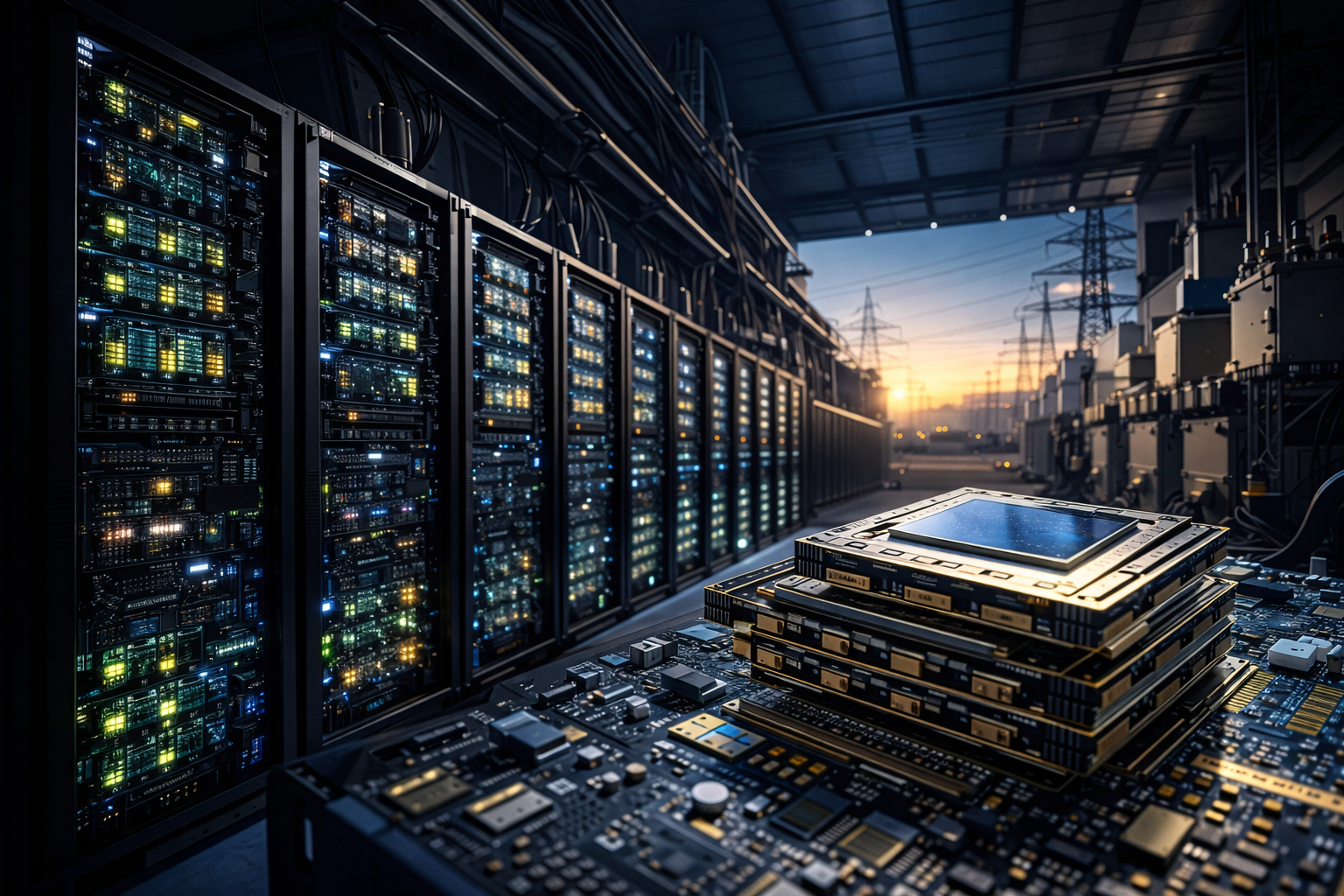
The artificial intelligence boom is entering its next phase—and it’s no longer just about software, models, or chatbots. It’s about power, silicon, and scale.
Over the past few weeks, investors have been closely watching a surge in capital expenditure announcements from major U.S. technology companies. The message is clear: the race to dominate AI is now a race to build the infrastructure that powers it. But beneath the optimism lies a growing challenge—critical bottlenecks in electricity supply and semiconductor production that could reshape where the biggest investment opportunities lie.
According to recent reporting from Bloomberg and Reuters (April 15, 2026), Big Tech is pouring billions into data centers, advanced chips, and energy solutions. Yet, as demand accelerates, the supply side is struggling to keep up—creating a powerful shift in the AI investment narrative.
The AI Arms Race Is Now an Infrastructure War
The first wave of AI enthusiasm was driven by breakthroughs in large language models and generative AI applications. Companies rushed to integrate AI into products, boosting valuations across the tech sector.
Now, the focus has shifted.
Training and deploying advanced AI systems requires massive computational power, which translates directly into demand for:
- High-performance GPUs and AI accelerators
- Hyperscale data centers
- Reliable, large-scale electricity supply
This is where the bottlenecks begin.
Recent estimates suggest that a single large AI data center can consume as much electricity as a small city. As more companies deploy AI at scale, the strain on power grids—particularly in the U.S.—is becoming increasingly evident.
At the same time, semiconductor supply chains remain tight. Despite aggressive expansion plans by chip manufacturers, advanced-node production capacity is still limited, and lead times for AI chips remain elevated.
Power Constraints: The Hidden Limiter of AI Growth
While chips often dominate headlines, electricity is quickly emerging as the most underappreciated constraint in the AI ecosystem.
Utilities across North America are reporting surging demand from data center operators. In some regions, grid capacity is already stretched, delaying new AI infrastructure projects.
This has triggered a wave of strategic responses:
- Tech companies are signing long-term power purchase agreements (PPAs)
- Investments in renewable energy and nuclear power are accelerating
- Data centers are being built in regions with surplus energy capacity
In fact, the intersection of AI and energy is becoming one of the most important investment themes of the decade. Policymakers in both the U.S. and Canada are increasingly viewing energy infrastructure as critical to maintaining competitiveness in AI.
For investors, this marks a significant shift: AI is no longer just a technology story—it’s an energy story.
Semiconductor Bottlenecks: Demand Still Outpacing Supply
On the hardware side, the imbalance between supply and demand remains acute.
AI workloads require specialized chips—particularly GPUs and advanced AI accelerators—that are significantly more complex than traditional processors. Manufacturing these chips requires cutting-edge fabrication facilities, which are both capital-intensive and time-consuming to build.
Despite ongoing investments, including multi-billion-dollar fab expansions, supply constraints persist:
- Advanced packaging capacity is limited
- Equipment shortages are slowing production ramp-ups
- Geopolitical tensions continue to impact supply chains
As a result, AI chip demand continues to outpace supply, supporting elevated pricing and strong margins for semiconductor firms.
This dynamic has been a key driver behind the recent rally in chip stocks, with investors betting that the supply-demand imbalance will persist longer than initially expected.
Why This Matters for Investors
The implications of these constraints are profound—and they’re already reshaping market leadership within the AI ecosystem.
1. The Shift From Software to Infrastructure
In the early stages of the AI boom, software companies captured the majority of investor attention. But as infrastructure constraints tighten, the balance is shifting.
Companies involved in:
- Semiconductor manufacturing
- Data center construction and operation
- Power generation and distribution
are increasingly becoming the critical enablers of AI growth.
This suggests that future returns may be more evenly distributed across the AI value chain, rather than concentrated solely in application-layer companies.
2. Pricing Power and Margin Expansion
Scarcity creates pricing power.
Chipmakers and infrastructure providers are in a strong position to benefit from sustained demand and limited supply. This dynamic is already visible in:
- Elevated GPU pricing
- Long-term supply agreements
- Premium valuations for infrastructure-focused firms
For investors, this translates into potential opportunities in companies that control key bottlenecks.
3. Capex Cycles Are Accelerating
Big Tech’s aggressive spending is not a short-term phenomenon—it represents a multi-year capital expenditure cycle.
According to Bloomberg and Reuters, companies are committing tens of billions of dollars to AI infrastructure. This has ripple effects across multiple industries:
- Construction and engineering firms
- Cooling and thermal management providers
- Grid infrastructure and utilities
These secondary beneficiaries are often overlooked but may offer compelling risk-reward profiles.
Future Trends to Watch
As the AI infrastructure buildout continues, several key trends are likely to shape the investment landscape:
Energy Diversification Will Accelerate
Expect increased investment in alternative energy sources, including nuclear and renewables, to support data center growth. Regions with abundant, stable energy supply will attract the next wave of AI infrastructure.
Vertical Integration by Tech Giants
Major tech firms may seek greater control over their supply chains—investing directly in chips, energy, and data center infrastructure to reduce dependency on external providers.
Geographic Shifts in Data Center Development
Power availability and regulatory environments will influence where new data centers are built. This could lead to unexpected regional winners in the AI race.
Continued Semiconductor Innovation
To address constraints, chipmakers will push advancements in efficiency, packaging, and architecture—potentially unlocking new performance gains without relying solely on scaling production.
Key Investment Insight
The AI megatrend remains firmly intact—but the center of gravity is shifting.
Rather than focusing exclusively on AI software leaders, investors should consider a broader approach that includes:
- Semiconductor companies benefiting from sustained demand
- Utilities and energy providers enabling data center expansion
- Infrastructure firms supporting the physical backbone of AI
In many ways, the most compelling opportunities may lie not in the applications of AI, but in the systems that make those applications possible.
The AI revolution is still in its early innings, but its next chapter will be defined by the ability to scale infrastructure efficiently. As power grids strain and chip supply tightens, the winners of this cycle may look very different from those of the last.
For investors, staying ahead of these shifts is critical.
Stay with MoneyNews.Today for daily, high-impact insights that help you navigate the evolving global market landscape with confidence.




