
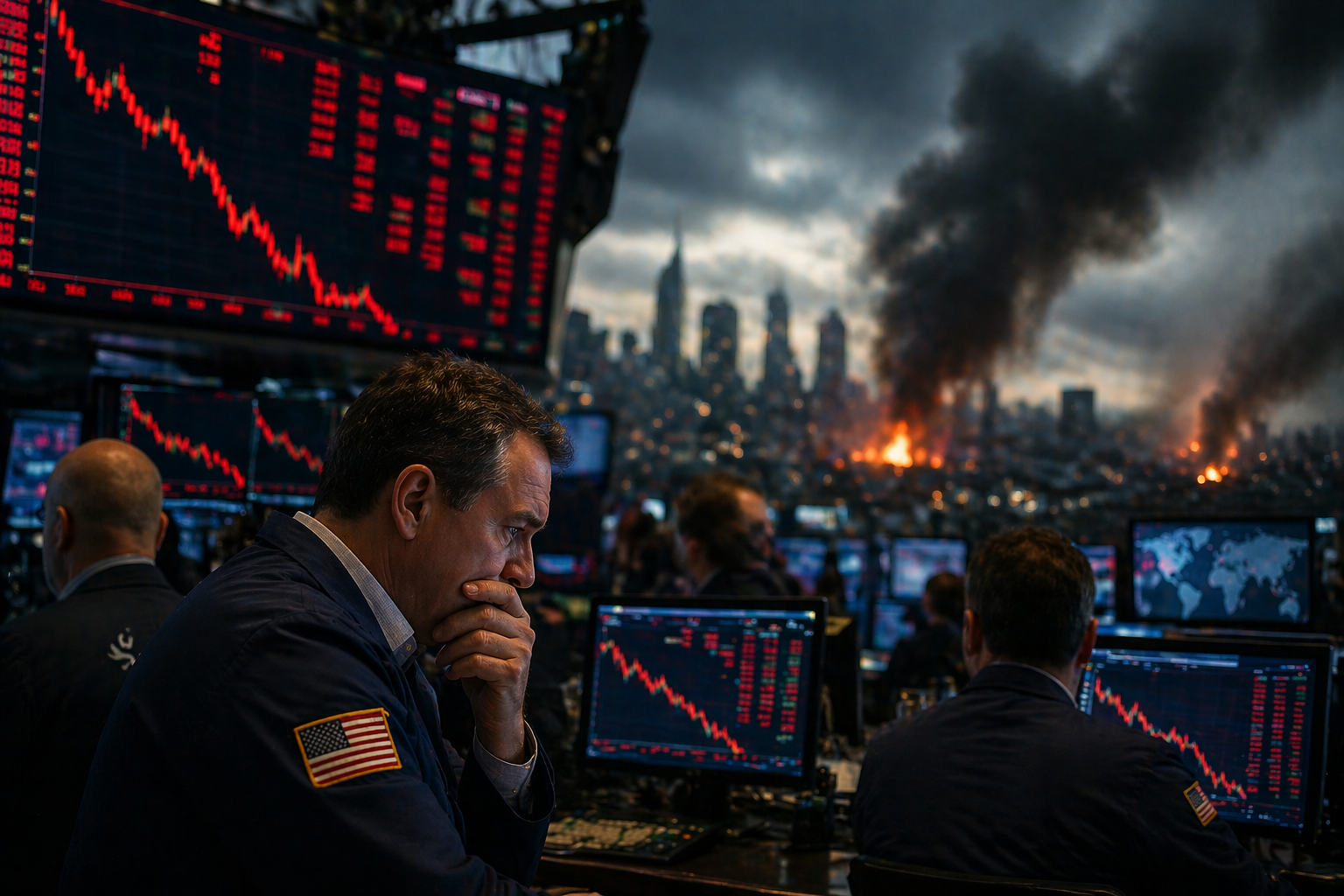
A fragile rally quickly unraveled this week as geopolitical tensions in the Middle East sent a ripple effect through global financial markets. U.S. equities, which had been climbing on optimism around easing inflation and stable earnings, suddenly reversed course—reminding investors just how quickly sentiment can shift when macro risks re-emerge.
The pullback wasn’t isolated. Major indices like the S&P 500 and Nasdaq Composite saw renewed selling pressure, while capital rotated into defensive assets. At the same time, sectors traditionally seen as safe havens—utilities, healthcare, and consumer staples—outperformed, highlighting a clear shift toward risk aversion.
For investors, this isn’t just another volatile session—it’s a signal that geopolitics is once again a dominant force shaping market direction.
A Market Driven by Headlines, Not Fundamentals
Recent reporting from Bloomberg and CNBC underscores how quickly geopolitical developments have overtaken traditional market drivers such as earnings and economic data. Escalating tensions between the U.S. and Iran have heightened fears of broader regional instability, pushing investors to reassess risk exposure.
Historically, markets tend to react sharply to geopolitical uncertainty, but what makes the current environment particularly complex is the backdrop:
- Interest rates remain elevated
- Inflation, while moderating, is still above target
- Valuations—especially in tech—are stretched
This combination leaves markets more vulnerable to external shocks.
When uncertainty spikes, investors often adopt a “sell first, ask questions later” approach—leading to broad-based declines even in fundamentally strong sectors.
Sector Rotation Signals a Defensive Shift
One of the clearest indicators of changing sentiment is sector performance divergence.
Defensive Sectors Take the Lead
Utilities, healthcare, and consumer staples have emerged as relative winners during the recent volatility. These sectors typically offer:
- Stable earnings
- Consistent dividends
- Lower sensitivity to economic cycles
Their outperformance suggests that investors are prioritizing capital preservation over growth.
Growth Stocks Face Renewed Pressure
High-growth sectors—particularly technology—have borne the brunt of the selloff. Companies tied to AI, semiconductors, and innovation-driven narratives saw notable pullbacks as risk appetite declined.
Names like Nvidia and Tesla, which have been market leaders, experienced increased volatility as investors locked in profits and reduced exposure.
This doesn’t necessarily signal a structural shift away from growth—but it does highlight how sensitive these stocks are to changes in sentiment.
Why This Matters for Investors
1. Volatility Is Likely Here to Stay
Geopolitical tensions rarely resolve quickly, and markets tend to remain volatile throughout the uncertainty. As highlighted by Bloomberg, even small developments—such as diplomatic statements or military movements—can trigger outsized market reactions.
For investors, this means preparing for:
- Sharp intraday swings
- Increased correlation across asset classes
- Rapid sentiment shifts
2. Diversification Is Being Tested
In a risk-off environment, correlations between traditionally diversified assets can increase. Equities, crypto, and even some commodities may move in tandem, reducing the effectiveness of diversification strategies.
This makes it essential to include truly defensive or uncorrelated assets in a portfolio.
3. Macro Now Overrides Micro
Strong earnings or positive company-specific news may not be enough to drive stock performance in the short term. Macro factors—particularly geopolitics—are taking precedence.
This shift requires investors to expand their focus beyond company fundamentals to include:
- Global political developments
- Energy markets
- Central bank responses
The Oil Factor: A Key Market Catalyst
One of the most immediate impacts of Middle East tensions is on oil prices. Any disruption to supply routes or production can push crude prices higher, which in turn affects inflation expectations and monetary policy.
Higher oil prices can:
- Increase input costs for businesses
- Pressure consumer spending
- Delay central bank rate cuts
This creates a feedback loop that amplifies market volatility.
According to CNBC, energy markets have already begun pricing in geopolitical risk premiums—an early signal that investors are bracing for potential escalation.
Future Trends to Watch
1. Central Bank Response
If geopolitical tensions drive sustained increases in oil prices, central banks like the Federal Reserve may be forced to maintain a more cautious stance on rate cuts.
This could prolong the higher-rate environment, putting additional pressure on equities—particularly growth stocks.
2. Earnings Season Resilience
Upcoming earnings reports will provide insight into how companies are navigating the current environment. Investors should focus on:
- Margin resilience
- Forward guidance
- Exposure to global supply chains
Companies that demonstrate adaptability may outperform even in volatile conditions.
3. Continued Sector Rotation
The shift toward defensive sectors may persist if uncertainty remains elevated. However, any signs of de-escalation could trigger a rapid rotation back into growth and cyclical stocks.
Timing this rotation will be critical for active investors.
4. Global Spillover Effects
U.S. markets do not operate in isolation. European and Asian markets are also reacting to geopolitical developments, creating a synchronized global response.
This interconnectedness increases the potential for:
- Cross-market contagion
- Amplified volatility
- Faster transmission of risk
Actionable Investment Insights
1. Rebalance Toward Defensive Exposure
Investors may consider increasing allocation to sectors such as:
- Utilities
- Healthcare
- Consumer staples
These areas tend to provide stability during periods of uncertainty.
2. Maintain Core Positions in Quality Growth
While volatility may pressure growth stocks in the short term, long-term fundamentals—particularly in AI and technology—remain intact.
Rather than exiting positions entirely, investors might:
- Reduce exposure
- Re-enter at lower valuations
- Focus on companies with strong balance sheets
3. Increase Cash Flexibility
Holding higher cash levels can provide optionality during volatile periods. This allows investors to:
- Take advantage of market dips
- Avoid forced selling
- Manage risk more effectively
4. Monitor Key Macro Indicators
Staying informed is critical in a macro-driven market. Key indicators to watch include:
- Oil prices
- Treasury yields
- Geopolitical headlines
- Central bank commentary
These signals can provide early clues about market direction.
The Bigger Picture
The recent volatility in U.S. markets is a reminder that investing is as much about managing risk as it is about capturing returns. While long-term trends—such as technological innovation and economic growth—remain intact, short-term disruptions can significantly impact portfolios.
Geopolitics, often overlooked during stable periods, has reasserted itself as a primary market driver. For investors, this means adapting strategies to account for a more complex and unpredictable environment.
Yet within this uncertainty lies opportunity. Periods of volatility often create the best entry points for high-quality assets—provided investors maintain discipline and a long-term perspective.
Markets don’t move in straight lines—and neither should investment strategies. Stay informed, stay agile, and stay ahead with MoneyNews.Today, your trusted source for daily investor insights across global markets.




