
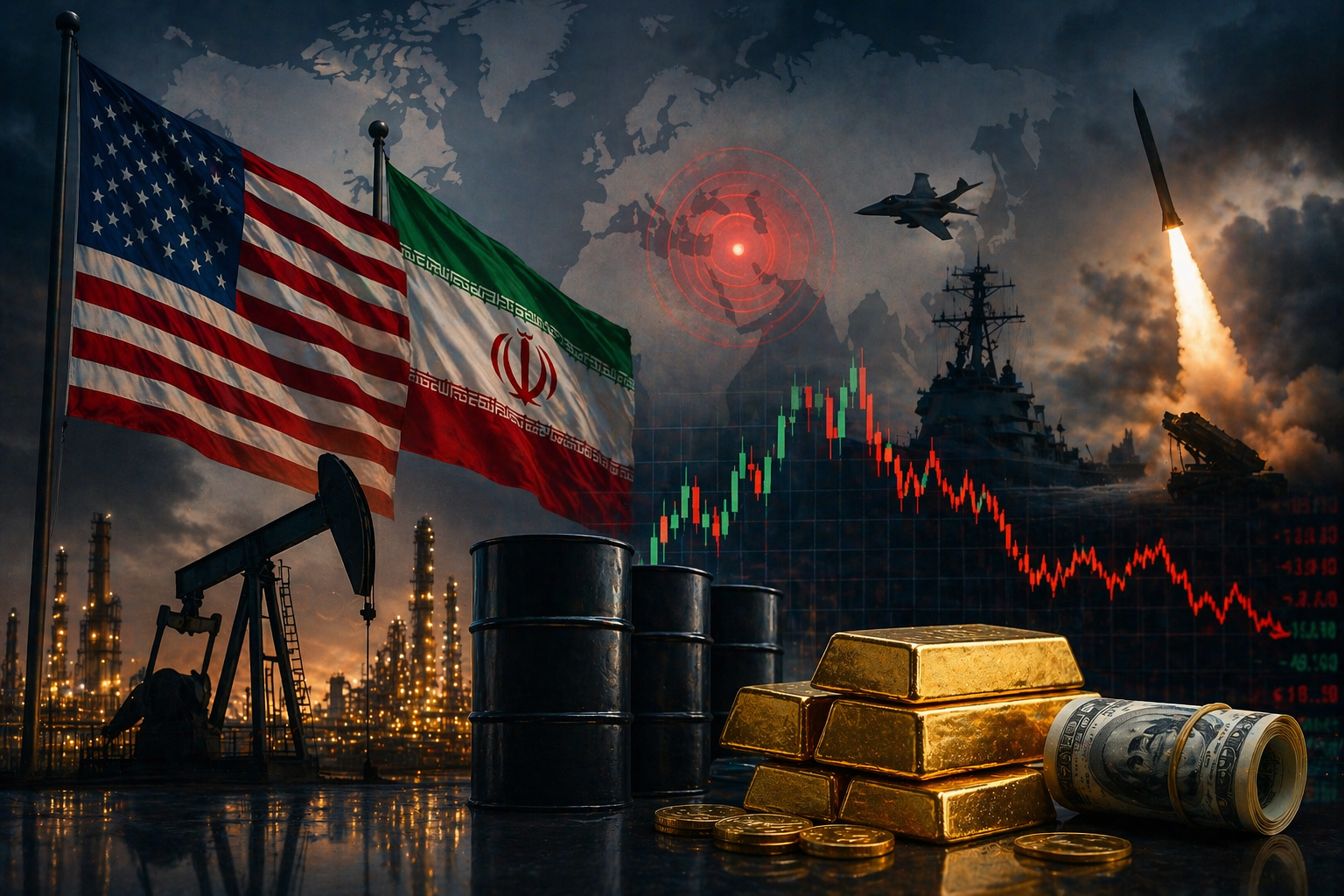
Markets don’t wait for clarity—they react to uncertainty. And right now, escalating tensions between the United States and Iran are injecting a fresh wave of volatility into global markets, forcing investors to reassess risk across equities, commodities, and currencies.
What began as a diplomatic breakdown has quickly evolved into a broader geopolitical flashpoint, with ripple effects already visible in oil prices, equity market pullbacks, and a surge in demand for defensive assets. According to Reuters and Associated Press, investors are closely monitoring every development, as even minor updates have triggered sharp market reactions.
For investors, the message is clear: geopolitics is once again the dominant force driving market behavior.
From Diplomacy to Market Volatility
The deterioration in relations between the U.S. and Iran has heightened fears of potential conflict in a region critical to global energy supply. The Middle East accounts for a significant portion of the world’s oil production, and any disruption—real or perceived—can have immediate consequences for global markets.
As tensions escalated:
- Oil prices moved higher on supply concerns
- Equity markets turned volatile
- Safe-haven assets saw increased inflows
This pattern is consistent with previous geopolitical shocks, where uncertainty drives a rapid repricing of risk across asset classes.
According to Reuters, traders are factoring in the possibility of supply disruptions in key shipping routes, while Associated Press reports increased diplomatic strain and military signaling—both of which are contributing to heightened market sensitivity.
Why This Matters for Investors
1. Oil Prices Are the First Domino
The most immediate and measurable impact of U.S.–Iran tensions is on energy markets. Oil prices tend to react quickly to geopolitical developments, particularly when they involve major producing regions.
Higher oil prices can:
- Increase inflationary pressures
- Raise input costs for businesses
- Reduce consumer spending power
This creates a chain reaction that affects multiple sectors, from transportation and manufacturing to retail and technology.
For investors, monitoring oil price movements is critical, as they often serve as an early indicator of broader economic impact.
2. Equity Markets Are Becoming Headline-Driven
Recent trading sessions have shown that equity markets are highly sensitive to geopolitical headlines. Major indices like the S&P 500 and Dow Jones Industrial Average have experienced increased intraday volatility, reflecting uncertainty around the situation.
In this environment:
- Positive economic data may have limited impact
- Strong earnings can be overshadowed
- Market sentiment can shift rapidly
As highlighted by Bloomberg, markets are currently reacting more to geopolitical developments than to traditional fundamentals.
3. Safe-Haven Assets Are Back in Focus
Periods of geopolitical uncertainty typically drive investors toward assets perceived as stable stores of value. These include:
- Gold
- U.S. Treasury bonds
- The U.S. dollar
The recent rally in gold prices and increased demand for Treasuries signal a clear shift toward risk aversion.
For investors, this movement provides insight into broader market sentiment and can help guide portfolio adjustments.
Defense Sector Gains Momentum
One sector that often benefits from rising geopolitical tensions is defense. Increased uncertainty and the potential for military escalation tend to boost demand for defense spending, both in the U.S. and globally.
Companies such as:
- Lockheed Martin
- Northrop Grumman
have historically seen increased investor interest during such periods.
According to Reuters, defense stocks have shown relative strength amid the current tensions, reflecting expectations of sustained or increased government spending.
However, investors should approach this sector with caution, as performance can be highly dependent on the trajectory of geopolitical events.
Why Markets Are Particularly Vulnerable Now
While geopolitical tensions are not new, the current market environment amplifies their impact.
Elevated Valuations
Equity markets—especially in technology—have been trading at relatively high valuations. This leaves less room for error and increases sensitivity to external shocks.
Interest Rate Uncertainty
Central banks, including the Federal Reserve, are navigating a complex landscape of moderating inflation and uncertain growth. Any geopolitical-driven increase in oil prices could complicate monetary policy decisions.
Global Interconnectedness
Today’s markets are more interconnected than ever. A geopolitical event in one region can quickly affect markets worldwide, leading to synchronized volatility across asset classes.
Future Trends to Watch
1. Escalation vs. De-escalation
The trajectory of U.S.–Iran relations will be the primary driver of market sentiment in the near term.
- Escalation could lead to sustained volatility and higher oil prices
- De-escalation could trigger a relief rally across risk assets
2. Central Bank Reactions
If geopolitical tensions push inflation higher, central banks may delay rate cuts or adopt a more cautious stance. This could have significant implications for equities and bonds.
3. Energy Market Stability
Investors should closely monitor:
- Oil production levels
- Shipping routes in the Middle East
- OPEC+ policy responses
Any disruption could have far-reaching economic consequences.
4. Cross-Asset Correlations
Geopolitical stress often increases correlations between asset classes, reducing diversification benefits. This makes portfolio construction more challenging and requires a more dynamic approach.
Actionable Investment Insights
1. Monitor Oil as a Leading Indicator
Oil prices are often the first asset to react to geopolitical tensions. Sustained increases could signal broader market impacts and inform investment decisions.
2. Consider Defensive Positioning
Allocating to defensive sectors such as:
- Utilities
- Healthcare
- Consumer staples
can help mitigate risk during periods of uncertainty.
3. Evaluate Defense Sector Opportunities
Defense stocks may offer short- to medium-term opportunities, particularly if tensions persist. However, investors should be mindful of volatility and timing.
4. Maintain Portfolio Flexibility
Holding a higher level of cash or liquid assets can provide flexibility to respond to rapidly changing market conditions.
5. Stay Focused on Long-Term Fundamentals
While short-term volatility can be unsettling, long-term investment strategies should remain grounded in fundamentals. Avoid making reactive decisions based solely on headlines.
The Bigger Picture
The resurgence of geopolitical risk highlights an often-overlooked reality: markets are not driven solely by economic data or corporate performance. Political developments can—and often do—reshape the investment landscape in profound ways.
For investors, this requires a broader perspective—one that incorporates geopolitical analysis alongside traditional financial metrics.
The current U.S.–Iran tensions serve as a reminder that uncertainty is an inherent part of investing. While it can create challenges, it also presents opportunities for those who are prepared and informed.
In a world where headlines can move markets in seconds, staying informed is not optional—it’s essential. Follow MoneyNews.Today for timely, actionable insights that help you navigate global markets with confidence.




