
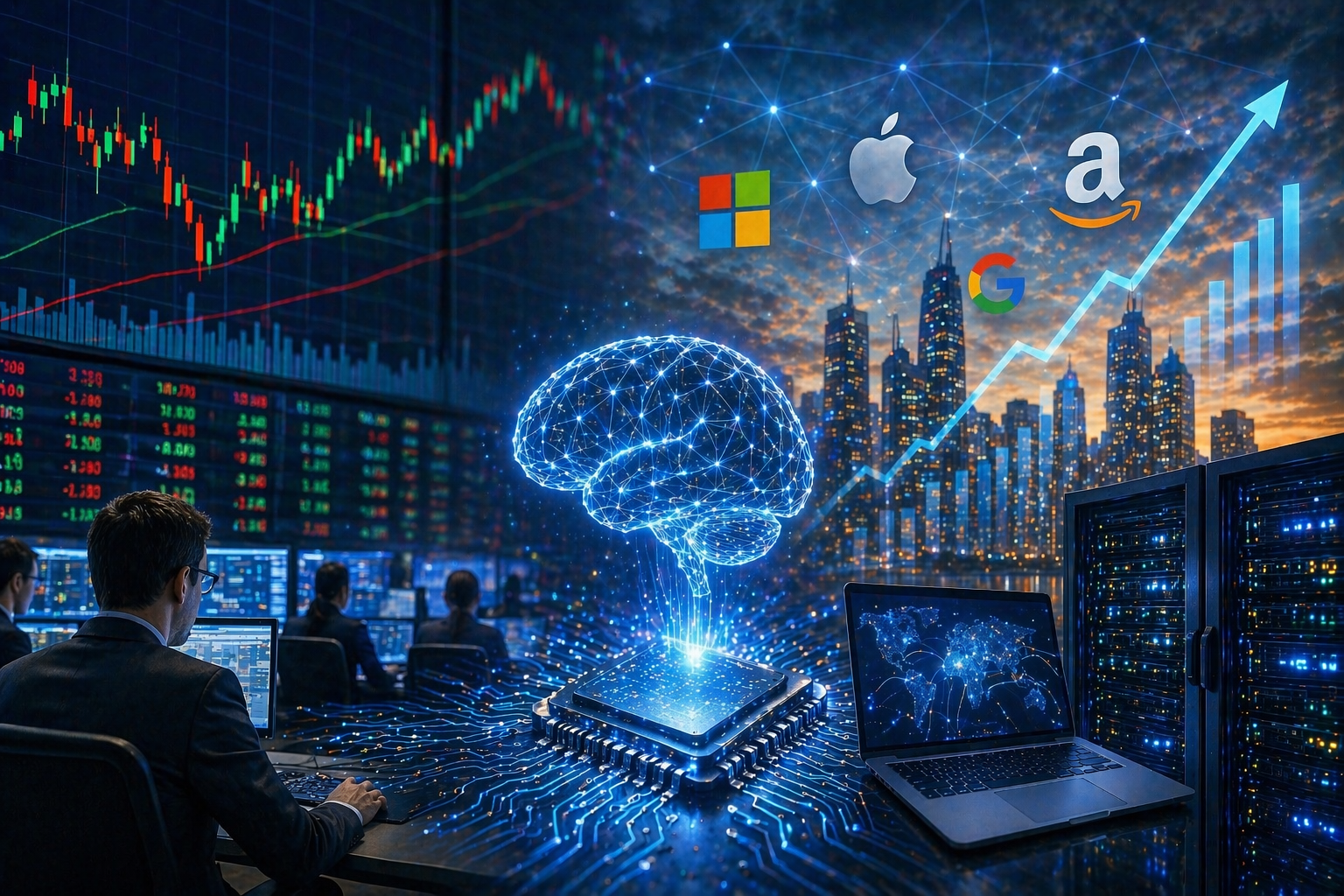
Global technology markets are once again proving their resilience. Despite rising geopolitical tensions and broader macro uncertainty, tech stocks are holding firm—supported by sustained optimism around artificial intelligence, continued enterprise spending, and structural innovation across the sector.
On April 21, 2026, reporting from Reuters and Bloomberg highlighted a striking divergence: while geopolitical risk is pressuring global sentiment, the technology sector remains a stabilizing force in equity markets. Leadership shifts at companies like Apple and ongoing AI-driven investment cycles are reinforcing tech’s central role in shaping market performance.
For investors, the message is increasingly clear: technology is no longer just a growth sector—it is the backbone of market resilience.
A Sector That Refuses to Break Under Pressure
In most market cycles, geopolitical uncertainty triggers broad-based selling, with high-growth sectors typically hit the hardest. However, the current environment is different.
Despite rising global tensions, tech equities have shown relative strength, driven by:
- Strong earnings from AI-exposed companies
- Continued enterprise adoption of cloud and automation tools
- Investor rotation into long-term growth narratives
According to Bloomberg, technology remains one of the few sectors attracting consistent capital inflows, even as other areas of the market experience volatility.
This resilience is not accidental—it reflects deep structural changes in how technology is embedded in the global economy.
AI Is the Anchor of Tech Stability
1. Artificial Intelligence Is Driving Capital Allocation
At the center of the tech sector’s strength is artificial intelligence. Companies like Microsoft, Alphabet, and Amazon continue to invest heavily in AI infrastructure, cloud computing, and enterprise solutions.
These investments are not speculative—they are revenue-generating engines. AI is now integrated into:
- Cloud services
- Enterprise software
- Search and advertising systems
- Productivity tools
As reported by Reuters, AI-related spending continues to outpace broader IT budgets, signaling that businesses view AI as a necessity rather than an option.
2. Enterprise Demand Is Providing Stability
One of the key reasons tech remains resilient is its increasing reliance on enterprise customers rather than purely consumer-driven demand.
Enterprises are using technology to:
- Automate workflows
- Reduce operational costs
- Improve decision-making efficiency
- Enhance cybersecurity
This shift creates recurring revenue streams, particularly for cloud and software providers, which helps cushion the sector during periods of macroeconomic uncertainty.
3. Leadership Transitions Signal Strategic Shifts
Recent leadership changes at Apple have also drawn investor attention. While Apple remains one of the most valuable companies globally, shifts in executive strategy often signal broader adjustments in product direction, AI integration, and long-term innovation priorities.
According to Bloomberg, Apple’s continued focus on integrating AI into its ecosystem—including devices, services, and software—underscores how deeply AI is reshaping even the most established technology firms.
Why Tech Is Holding Up in a Volatile Macro Environment
1. Structural Demand Over Cyclical Weakness
Unlike cyclical industries, technology is increasingly driven by structural demand. Even during periods of geopolitical uncertainty, companies still rely on:
- Cloud infrastructure
- Cybersecurity systems
- Data analytics platforms
- AI-driven automation
This creates a baseline level of demand that is less sensitive to short-term economic shocks.
2. AI Is Offsetting Macro Headwinds
While geopolitical tensions typically reduce risk appetite, AI is acting as a counterbalance. Investors continue to view AI as a multi-decade growth opportunity, which helps stabilize valuations in the tech sector.
As noted by Bloomberg analysts, AI-related optimism has become one of the most powerful forces supporting equity markets in 2026.
3. Strong Balance Sheets and Cash Flow
Many of the largest technology companies now operate with:
- Significant cash reserves
- Strong free cash flow generation
- High-margin business models
This financial strength allows them to continue investing through volatility, while also returning capital to shareholders.
Why This Matters for Investors
Tech Is Becoming a Defensive Growth Sector
Traditionally, technology has been viewed as a high-risk, high-reward segment. However, its increasing integration into global infrastructure is changing that perception.
Today, tech offers:
- Growth potential (via AI and innovation)
- Defensive characteristics (via recurring revenue and enterprise reliance)
This hybrid profile makes it uniquely positioned in uncertain markets.
Volatility Is Rising—but So Is Opportunity
While the sector is resilient, it is not immune to volatility. Geopolitical headlines, interest rate expectations, and regulatory developments can still trigger sharp short-term moves.
However, this volatility often creates opportunities for long-term investors to:
- Accumulate high-quality assets at lower valuations
- Rebalance portfolios toward structural winners
- Increase exposure to AI-driven growth themes
Market Leadership Is Narrowing
One important trend highlighted by Reuters is increasing market concentration. A small group of mega-cap tech companies now drives a significant portion of index performance.
This includes firms such as:
- Microsoft
- Apple
- Amazon
- Alphabet
For investors, this concentration means:
- Index performance is increasingly tech-dependent
- Stock selection within tech matters more than ever
- Diversification strategies need reassessment
Future Trends to Watch
1. AI Monetization Becomes Critical
The next phase of tech growth will depend on how effectively companies convert AI investment into revenue.
2. Regulatory Pressure Intensifies
Governments are increasingly scrutinizing big tech dominance, data privacy, and AI governance. Regulatory outcomes could reshape competitive dynamics.
3. Enterprise Digital Transformation Continues
Businesses are still in the early stages of digital transformation. Continued adoption of AI and cloud tools will support long-term demand.
4. Geopolitics Shapes Supply Chains
Global tensions are influencing semiconductor supply chains, cloud infrastructure expansion, and data sovereignty policies.
Actionable Investment Insights
1. Focus on Ecosystem Leaders
Companies with integrated ecosystems—spanning hardware, software, and services—are best positioned to maintain pricing power and customer retention.
2. Prioritize AI Integration Leaders
Investors should focus on firms that are successfully embedding AI into existing products and services, rather than those relying solely on AI narratives.
3. Use Volatility Strategically
Short-term pullbacks in strong tech names can provide attractive entry points for long-term investors.
4. Balance Growth With Quality
Not all tech companies are equal. Prioritize firms with:
- Strong cash flow
- Durable competitive advantages
- Proven monetization strategies
The Bigger Picture
The resilience of the technology sector in the face of geopolitical uncertainty underscores a broader reality: technology is now central to global economic stability.
From AI infrastructure to enterprise software to consumer ecosystems, tech is no longer just participating in the economy—it is shaping it.
For investors, this means the sector will continue to play a dual role:
- Driving long-term growth
- Acting as a stabilizer during periods of uncertainty
As markets navigate an increasingly complex global environment, staying informed is essential. Follow MoneyNews.Today for daily investor insights that help you understand where technology, markets, and global trends are heading next.




