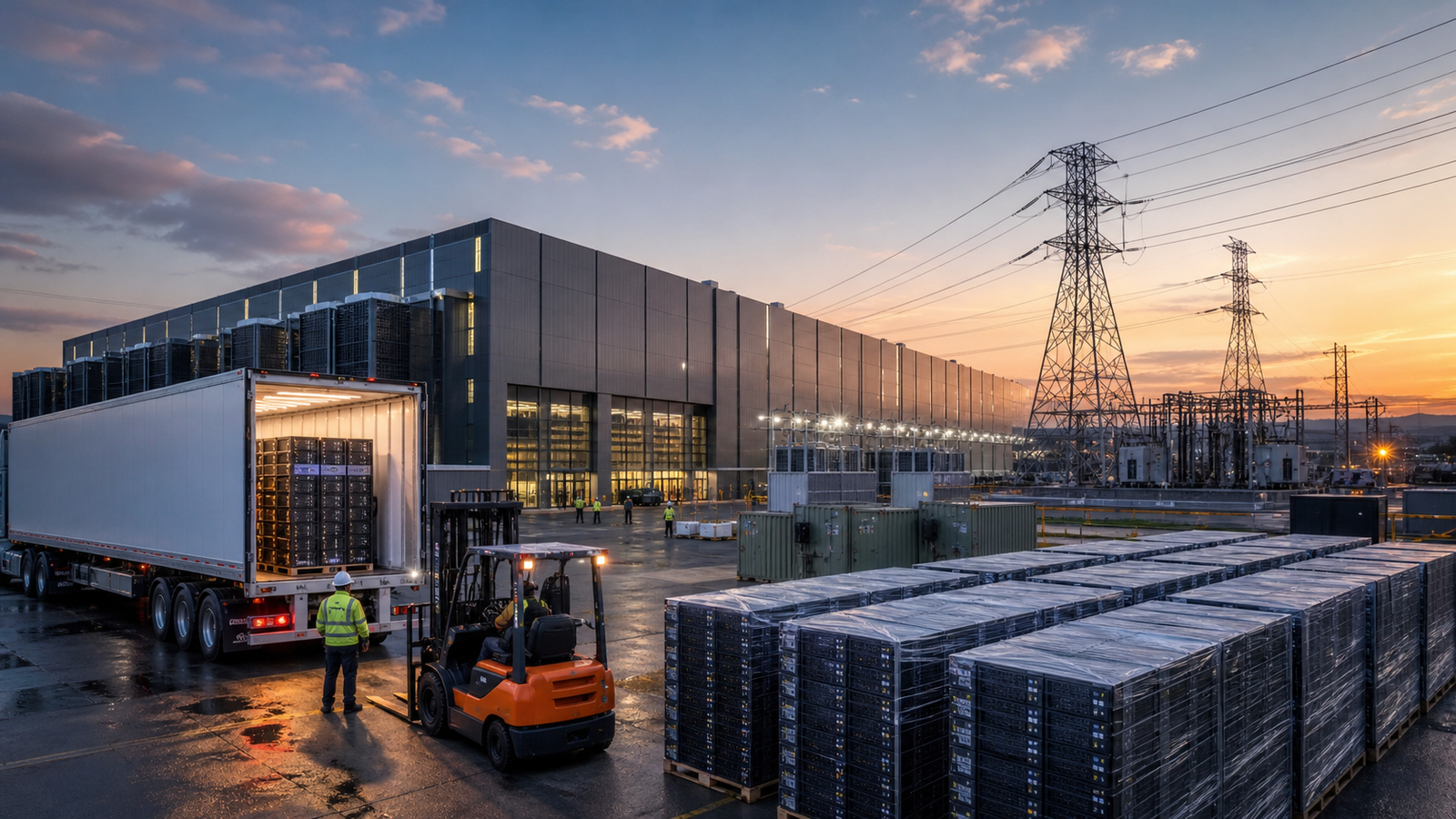
The artificial intelligence boom is no longer confined to data centers and software models—it’s rapidly reshaping the physical economy. From power grids to global supply chains, the ripple effects of AI demand are driving a new wave of investment across industries that, until recently, sat outside the spotlight. The latest signal came as Amazon announced it is opening its logistics network to third parties, a move reported by Reuters (May 4, 2026).
For investors, this is a critical inflection point. AI is no longer just a technology story—it’s becoming an infrastructure story, with second-order winners emerging in energy, logistics, and industrial systems.
The Shift From Software to Infrastructure
Over the past two years, the AI narrative has largely focused on breakthroughs in generative models and software applications. But beneath the surface, a more significant transformation has been taking place: the rapid expansion of the infrastructure required to support these technologies.
Training and deploying AI models requires:
- Massive computing power
- Continuous data processing
- Reliable, scalable energy supply
- Efficient physical logistics networks
According to analysis cited by Bloomberg, global spending on AI infrastructure—including data centers, chips, and supporting systems—is expected to grow at a double-digit annual rate through the decade. Meanwhile, McKinsey & Company estimates that AI-driven demand could significantly increase global electricity consumption over the next several years.
This surge is forcing companies to rethink not just their technology stacks, but their physical operations—and that’s where new investment opportunities are emerging.
Amazon’s Strategic Move: Logistics as Infrastructure
Amazon’s decision to open its logistics network to external businesses marks a notable shift in strategy. Traditionally, the company’s logistics capabilities were a competitive advantage designed to support its core e-commerce operations. Now, it is evolving into a platform—one that can serve a broader ecosystem.
This move reflects a deeper trend: logistics is becoming a critical component of AI infrastructure.
As AI adoption expands, companies need faster, more efficient ways to move hardware, manage supply chains, and support distributed computing environments. By monetizing its logistics network, Amazon is positioning itself as a key player in this emerging ecosystem.
For investors, this raises an important question:
Could logistics platforms become as valuable as cloud platforms in the AI era?
Why This Matters for Investors
The expansion of AI into energy and logistics is creating a new class of investment opportunities—ones that are often overlooked in traditional AI narratives.
1. Second-Order Winners Are Emerging
While AI software companies have captured most of the headlines, the infrastructure supporting them may offer more устойчивый (stable) and predictable growth. Energy providers, logistics firms, and industrial companies stand to benefit from sustained demand.
2. Diversification Within the AI Theme
Investors looking to gain exposure to AI are no longer limited to tech stocks. The theme now spans multiple sectors, including:
- Utilities and energy
- Transportation and logistics
- Industrial infrastructure
This diversification can help reduce risk while maintaining exposure to long-term growth trends.
3. Capital Intensity Creates Barriers to Entry
Building AI infrastructure requires significant investment. This creates high barriers to entry, which can lead to durable competitive advantages for established players.
Energy: The Hidden Backbone of AI
Perhaps the most critical—and underappreciated—component of AI infrastructure is energy.
Data centers powering AI models consume vast amounts of electricity. As workloads grow, so does the demand for reliable, scalable power sources. According to projections referenced by Bloomberg, AI-related energy consumption could become a major driver of electricity demand growth globally.
This has several implications:
- Utilities may see increased demand and pricing power
- Renewable energy projects could gain additional momentum
- Grid modernization becomes a critical investment theme
Governments are also taking notice. Policy initiatives aimed at strengthening energy security and supporting advanced technologies are likely to accelerate investment in this space.
For investors, the takeaway is clear:
AI growth is directly tied to energy availability.
Logistics: The Physical Layer of the Digital Economy
While energy powers AI, logistics enables it.
The expansion of AI infrastructure requires the movement of:
- Semiconductor components
- Data center equipment
- Cooling systems and hardware
- Raw materials and industrial inputs
This creates a growing need for efficient, scalable logistics networks.
Amazon’s strategy highlights how companies are adapting to this demand. By opening its logistics platform, it is not only creating a new revenue stream but also embedding itself deeper into the AI value chain.
Other logistics and transportation companies may follow suit, investing in capacity and technology to support this shift.
Industrial Infrastructure: The Overlooked Opportunity
Beyond energy and logistics, industrial infrastructure is emerging as another ключевой (key) beneficiary of the AI boom.
This includes:
- Construction firms building data centers
- Manufacturers producing specialized equipment
- Companies involved in cooling and thermal management systems
These sectors may not have the same visibility as AI software companies, but they play a crucial role in enabling growth.
According to McKinsey & Company, the buildout of digital infrastructure could represent one of the largest capital investment cycles of the decade.
Risks Investors Should Consider
While the opportunities are significant, there are also risks to keep in mind:
Overinvestment
Rapid expansion could lead to oversupply in certain segments, particularly if AI adoption slows or becomes more efficient.
Regulatory Challenges
Energy and infrastructure projects often face regulatory hurdles, which can delay development and increase costs.
Technological Shifts
Advancements in AI efficiency could reduce the need for certain types of infrastructure, impacting long-term demand.
Market Valuations
As investors rotate into these sectors, valuations may rise, reducing the margin of safety.
Future Trends to Watch
The intersection of AI, energy, and logistics is still in its early stages. Several trends are likely to shape the market in the coming years:
Convergence of Tech and Industrial Sectors
The traditional boundaries between technology and industrial companies are blurring, creating hybrid business models.
Increased Government Involvement
Governments are likely to play a larger role in supporting infrastructure development, particularly in areas related to energy and national security.
Focus on Sustainability
As energy demand rises, sustainability will become a key consideration, driving investment in renewable and efficient solutions.
Platform Expansion
Companies like Amazon may continue to expand their platforms, creating new ecosystems around infrastructure services.
Key Investment Insight
The AI boom is no longer just about algorithms—it’s about assets.
While high-growth AI software companies continue to attract attention, the infrastructure supporting them may offer a more balanced risk-reward profile. Energy providers, logistics platforms, and industrial firms are positioned to benefit from sustained, long-term demand.
Actionable Takeaways:
- Look beyond traditional AI stocks to identify second-order beneficiaries
- Monitor energy demand trends as a leading indicator of AI growth
- Consider logistics and industrial infrastructure as long-term plays
- Evaluate companies with scalable platforms and strong competitive advantages
In this evolving landscape, investors who recognize the broader impact of AI will be better positioned to capture opportunities.
The Bigger Picture
AI is transforming not just the digital world, but the physical one as well. The infrastructure required to support this transformation is creating new инвестиционные (investment) opportunities across multiple sectors.
As companies scale their operations and governments invest in supporting systems, the ripple effects of AI will continue to expand—reshaping industries and redefining market dynamics.
Stay ahead of these shifts with MoneyNews.Today—your trusted source for daily investor insights, market analysis, and the trends shaping the future of global markets.