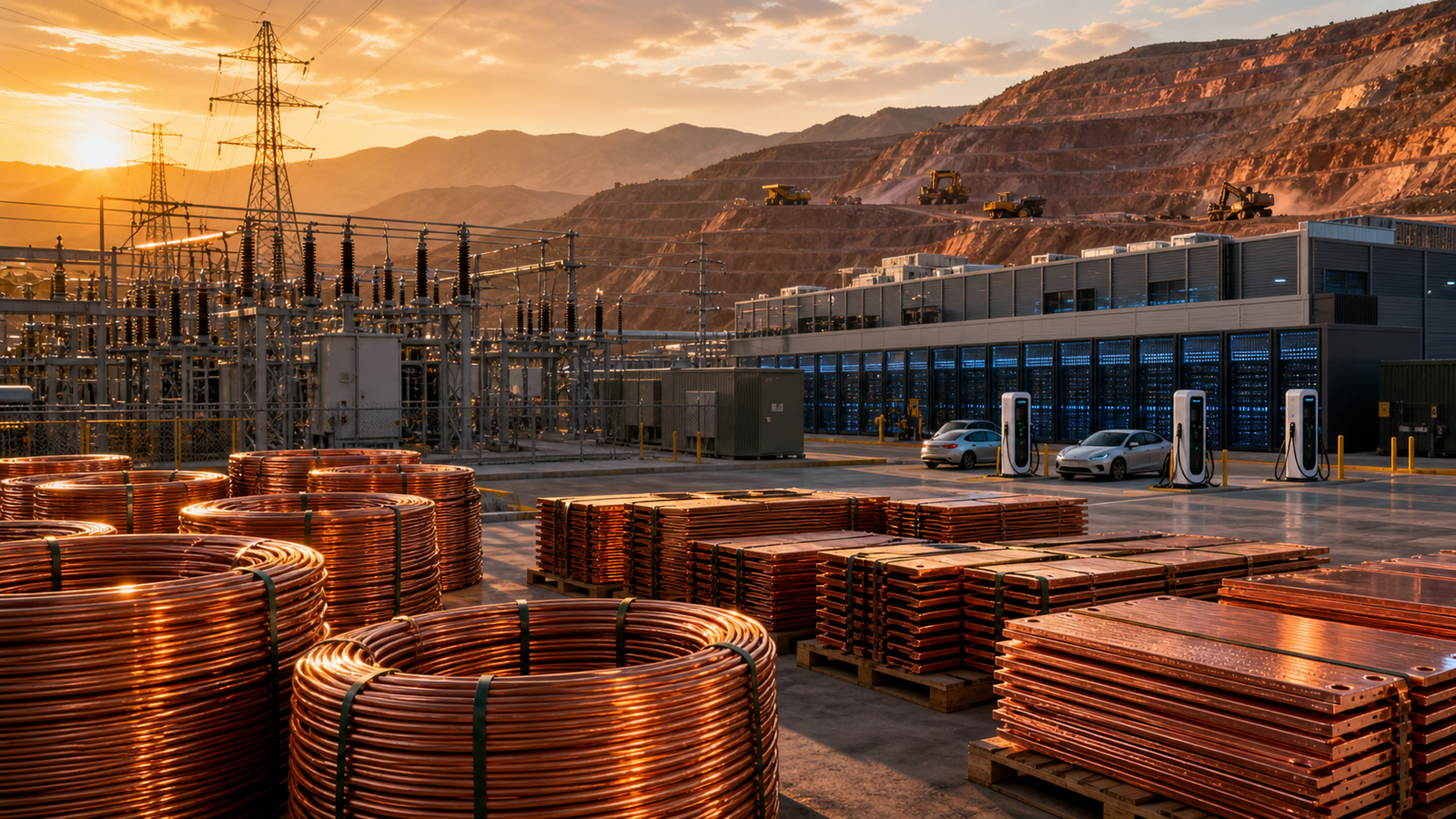
Copper is quietly becoming one of the most important commodities in the global economy—and the market is starting to take notice. As prices trend higher amid tightening supply and surging demand, investors are increasingly viewing copper not just as an industrial metal, but as a strategic asset tied to the future of electrification and artificial intelligence infrastructure. According to Bloomberg and Reuters (May 4, 2026), copper prices are climbing as demand accelerates while supply struggles to keep pace.
This dynamic is setting the stage for what could be a prolonged bullish cycle—one driven not by short-term speculation, but by structural shifts in the global economy.
The Demand Story: Electrification Meets AI
Copper has long been a cornerstone of industrial activity, but its importance is expanding rapidly in today’s economy. The global push toward electrification—spanning electric vehicles, renewable energy, and grid modernization—is significantly increasing demand.
At the same time, a newer driver is emerging: AI infrastructure.
Data centers, which are essential for training and deploying AI models, require vast amounts of electrical wiring, cooling systems, and power distribution—all of which rely heavily on copper. As AI adoption accelerates, so does the need for these facilities.
According to estimates referenced by McKinsey & Company, global demand for copper could rise sharply over the next decade, driven by both energy transition and digital infrastructure expansion.
This combination is powerful. Unlike previous cycles, where demand was tied primarily to construction and manufacturing, today’s demand is being fueled by long-term structural trends.
Supply Constraints: A Growing Challenge
While demand is rising, supply is facing increasing pressure.
Copper mining is a complex and capital-intensive process, often requiring years—if not decades—to bring new projects online. Several factors are contributing to supply constraints:
1. Geopolitical Risks
Many of the world’s largest copper reserves are located in regions with political and regulatory uncertainties. Changes in government policies, labor disputes, and nationalization risks can disrupt production.
2. Environmental Regulations
Stricter environmental standards are making it more challenging to develop new mining projects. While these regulations are essential for sustainability, they can slow supply growth.
3. Declining Ore Quality
Existing mines are facing declining ore grades, meaning more material must be processed to produce the same amount of copper. This increases costs and limits output.
4. Limited New Discoveries
The pipeline of new large-scale copper projects remains relatively thin, raising concerns about future supply.
According to analysis cited by Bloomberg, the copper market could face a significant supply deficit in the coming years if current trends continue.
Why This Matters for Investors
The imbalance between rising demand and constrained supply has important implications for investors.
1. Structural Bull Case
Unlike cyclical commodities, copper is increasingly tied to long-term trends such as electrification and AI. This creates a structural demand story that could support higher prices over time.
2. Strategic Importance
Copper is becoming a critical resource for modern economies. Governments and corporations are recognizing its importance, which could lead to increased investment and policy support.
3. Portfolio Diversification
Commodities like copper can provide diversification benefits, particularly in environments characterized by inflation and geopolitical uncertainty.
The Role of AI in Copper Demand
The connection between AI and copper may not be immediately obvious, but it is becoming increasingly significant.
AI infrastructure requires:
- High-performance data centers
- Advanced cooling systems
- Extensive electrical networks
All of these components rely heavily on copper.
As companies invest billions in AI infrastructure, the demand for copper is rising alongside it. This creates a feedback loop:
- More AI adoption → more data centers
- More data centers → higher copper demand
- Higher demand → upward pressure on prices
This relationship positions copper as a key beneficiary of the AI boom—making it one of the most interesting commodities for investors to watch.
Major Producers and Market Dynamics
The global copper market is dominated by a handful of major producers, but the landscape is evolving.
Large mining companies continue to play a central role, benefiting from economies of scale and established operations. However, junior miners are also gaining attention as potential sources of future supply.
For investors, this creates multiple avenues for exposure:
- Established producers with stable output
- Junior miners with higher growth potential
- ETFs and funds focused on commodities
Each comes with its own risk-reward profile, making careful selection critical.
Risks to Consider
Despite the bullish outlook, there are risks that investors should keep in mind:
Economic Slowdown
Copper demand is still linked to broader economic activity. A global slowdown could reduce industrial demand and pressure prices.
Technological Substitution
Advancements in materials science could lead to alternatives that reduce reliance on copper, though this risk is currently limited.
Market Volatility
Commodity markets are inherently volatile, influenced by a wide range of factors including currency movements and speculation.
Policy Changes
Government interventions, such as export restrictions or taxation changes, could impact supply and pricing dynamics.
Future Trends to Watch
The copper market is at the intersection of several major trends that are likely to shape its future:
Electrification Acceleration
The transition to renewable energy and electric vehicles will continue to drive demand.
AI Infrastructure Expansion
As AI becomes more integrated into the economy, the need for data centers and supporting infrastructure will grow.
Supply Chain Realignment
Countries may seek to secure domestic or allied sources of critical minerals, influencing global trade patterns.
Sustainability Focus
Environmental considerations will play a larger role in mining operations and investment decisions.
Key Investment Insight
Copper is evolving from a traditional industrial commodity into a strategic asset at the heart of the global economy.
The convergence of electrification and AI-driven infrastructure is creating sustained demand, while supply constraints limit the ability of the market to respond quickly.
Actionable Takeaways:
- Monitor copper prices as an indicator of broader economic and technological trends
- Consider exposure to both major producers and junior miners
- Evaluate the role of commodities in portfolio diversification
- Keep an eye on geopolitical and regulatory developments affecting supply
For investors, the key is to recognize that copper’s importance is growing—and that this trend is likely to persist.
The Bigger Picture
The rise in copper prices is not just a market event—it’s a reflection of deeper structural changes in the global economy. As the world moves toward electrification and digital transformation, copper is becoming indispensable.
This shift presents significant opportunities for investors who understand the underlying dynamics and are willing to take a long-term view.
Stay informed with MoneyNews.Today for daily insights, expert analysis, and the latest developments shaping global markets—your trusted source for investor-focused news.