
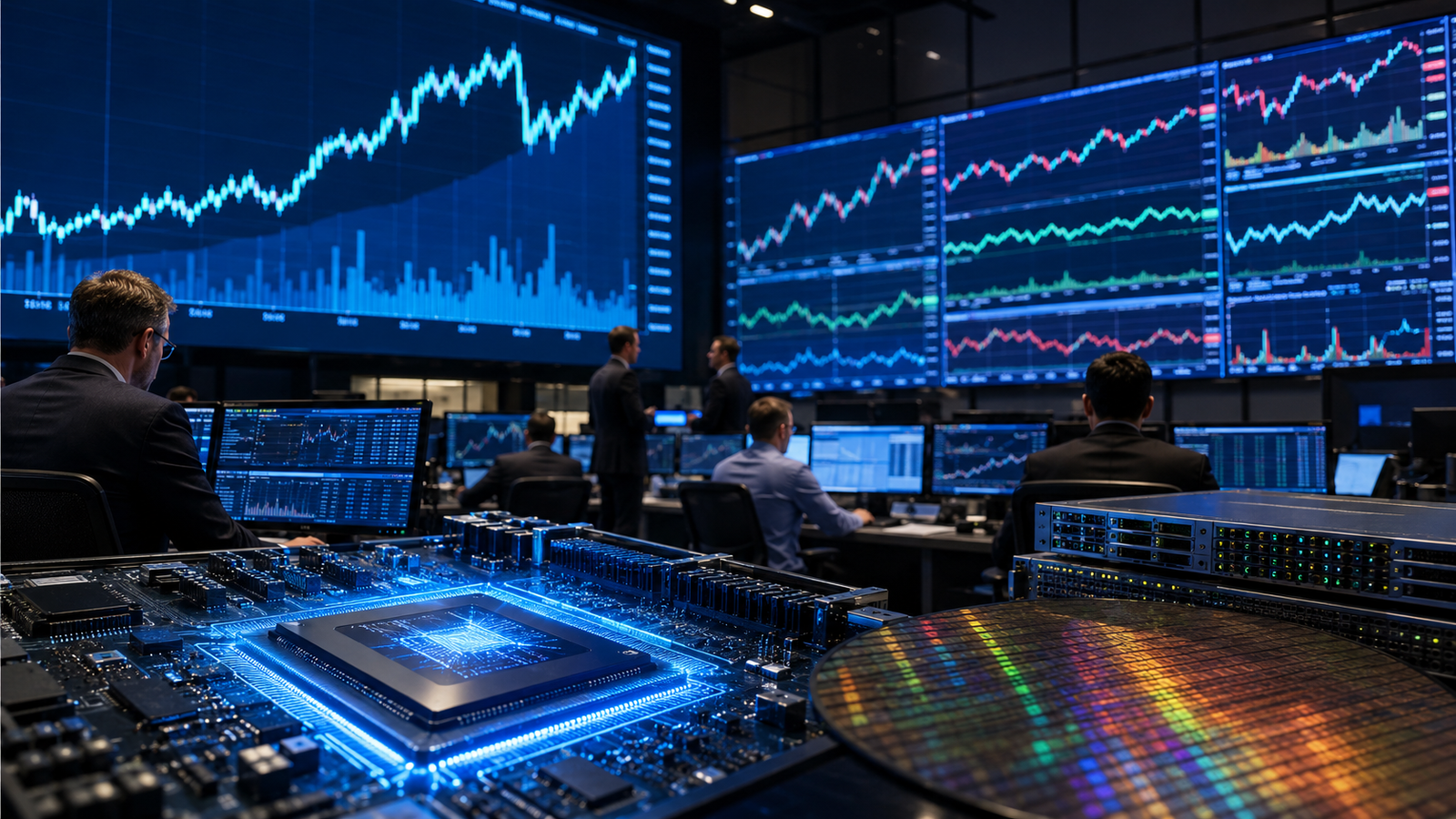
Artificial intelligence continues to dominate Wall Street, but investors are becoming increasingly selective about where they place their bets. While many of the world’s largest technology companies are spending unprecedented amounts on AI infrastructure, it is the companies supplying the essential hardware—not necessarily those funding the expansion—that are capturing the strongest investor enthusiasm.
Semiconductor manufacturers, advanced chip designers, networking companies, and data center infrastructure providers have significantly outperformed much of the broader technology sector during the first half of 2026. Meanwhile, several mega-cap technology firms have seen more muted share-price performance despite announcing massive capital expenditures aimed at accelerating AI development.
According to Reuters on June 30, this growing divergence reflects a clear market preference: investors are rewarding companies generating immediate revenue from AI infrastructure while demanding stronger proof that hyperscalers can convert enormous AI investments into sustainable earnings growth. As second-quarter earnings season approaches, the outlook for semiconductor companies and broader technology stocks may depend heavily on whether cloud giants maintain their aggressive spending plans.
The AI Infrastructure Boom Continues
Artificial intelligence has become the largest technology investment cycle in decades.
Major cloud providers continue investing hundreds of billions of dollars into expanding AI capabilities through:
- Advanced semiconductor purchases
- Large-scale data center construction
- High-speed networking infrastructure
- AI accelerators
- Cloud computing platforms
- Proprietary AI chip development
These investments are fueling demand across the semiconductor supply chain at a pace rarely seen in the technology industry.
Unlike previous computing cycles, generative AI requires enormous computing power for both training and inference, creating sustained demand for increasingly sophisticated hardware.
As a result, companies producing the essential building blocks of AI have become some of the strongest performers across global equity markets.
Why Semiconductor Stocks Are Leading
One reason semiconductor companies continue outperforming is the direct connection between AI investment and hardware demand.
Every new AI model requires:
- Graphics processing units (GPUs)
- High-bandwidth memory
- Advanced processors
- Networking equipment
- Storage infrastructure
- Power management systems
Before AI software can generate revenue, companies must first purchase the hardware that enables these systems to operate.
This creates immediate demand for chipmakers and infrastructure providers, allowing many semiconductor companies to benefit regardless of which AI platforms ultimately dominate the market.
For investors, this represents a relatively straightforward investment thesis.
As long as AI spending continues expanding, demand for semiconductor hardware is likely to remain strong.
Big Tech Faces Higher Expectations
While semiconductor companies continue benefiting from AI infrastructure spending, several mega-cap technology firms face growing investor scrutiny.
Companies such as Microsoft, Alphabet, Amazon, Meta Platforms, and other hyperscalers have dramatically increased capital expenditures over the past two years.
These investments support:
- AI cloud services
- Large language models
- Enterprise software
- Consumer AI applications
- Custom semiconductor development
- Data center expansion
However, investors increasingly want evidence that these expenditures are translating into measurable financial returns.
Wall Street is asking several critical questions:
- Are AI products generating meaningful revenue?
- Is enterprise adoption accelerating?
- Can operating margins remain strong despite higher spending?
- Will AI eventually justify current valuation multiples?
Unlike semiconductor companies, which often recognize revenue immediately from hardware sales, hyperscalers may require years before AI investments generate substantial returns.
That difference helps explain the current performance gap.
Investors Prefer Suppliers Over Spenders
The market’s current preference reflects a familiar pattern seen throughout previous technology investment cycles.
During periods of rapid infrastructure expansion, companies supplying the essential tools often outperform those making the investments.
Today’s AI cycle appears to follow a similar path.
Semiconductor manufacturers receive direct orders as cloud providers expand capacity.
Networking companies benefit from growing data traffic.
Equipment manufacturers support new fabrication facilities.
Memory producers experience rising demand as AI workloads become increasingly complex.
Meanwhile, cloud providers absorb much of the upfront capital expenditure while waiting for AI products to generate recurring revenue.
This difference in cash flow timing has become increasingly important for investors evaluating technology companies.
Capital Expenditure Will Remain the Key Indicator
One of the most closely watched metrics during the upcoming earnings season will be capital expenditure guidance.
Technology giants have collectively committed hundreds of billions of dollars toward AI infrastructure.
If management teams indicate continued investment, semiconductor companies may benefit from sustained hardware demand.
However, should executives begin signaling slower spending or more disciplined capital allocation, investors may reassess growth expectations across the entire AI supply chain.
For this reason, earnings calls from major cloud providers could prove just as important for semiconductor stocks as the chipmakers’ own financial results.
The relationship between suppliers and customers has become increasingly interconnected.
Valuation Differences Are Becoming More Important
Technology valuations remain elevated after the sector’s strong performance during the first half of 2026.
However, investors are becoming increasingly selective.
Companies demonstrating:
- Consistent revenue growth
- Strong order backlogs
- Expanding profit margins
- Clear AI demand visibility
continue attracting premium valuations.
Meanwhile, businesses investing heavily in AI without yet demonstrating measurable monetization face greater scrutiny.
This does not necessarily indicate weakness among hyperscalers.
Instead, it reflects Wall Street’s transition from rewarding AI ambition to rewarding AI execution.
The distinction may become even more important as the industry matures.
Why Earnings Season Could Shift Market Leadership
Second-quarter earnings reports may become one of the biggest catalysts for technology investors this year.
Analysts are expected to closely examine:
AI Revenue Growth
How much revenue is directly attributable to AI products and services?
Infrastructure Spending
Will hyperscalers maintain current capital expenditure levels?
Enterprise Adoption
Are corporate customers increasing AI spending?
Supply Chain Demand
Do semiconductor companies continue reporting robust customer orders?
Profitability
Can companies balance aggressive AI investment with expanding margins?
The answers could determine whether semiconductor leadership continues through the second half of 2026 or whether broader technology companies regain momentum.
Future Trends Investors Should Watch
Several developments may shape technology markets over the coming months.
Continued AI Infrastructure Expansion
Demand for AI computing power remains exceptionally strong, supporting semiconductor manufacturers and equipment suppliers.
Enterprise AI Adoption
Wider adoption across healthcare, finance, manufacturing, and cybersecurity could strengthen demand throughout the technology ecosystem.
Custom Chip Development
Large technology companies continue investing in proprietary AI processors, creating new competitive dynamics within the semiconductor industry.
Data Center Growth
Expanding cloud infrastructure remains one of the largest long-term investment themes supporting hardware demand.
Federal Reserve Policy
Interest rate expectations continue influencing technology valuations, particularly among high-growth companies.
Why This Matters for Investors
The current divergence between semiconductor companies and broader technology firms highlights an important evolution in the AI investment cycle.
Early-stage infrastructure providers are currently capturing the strongest financial benefits as hyperscalers continue building AI capacity.
Over time, however, leadership may broaden if software companies, cloud providers, and enterprise AI businesses successfully convert infrastructure spending into recurring revenue growth.
For investors, understanding where value is being created within the AI ecosystem may become increasingly important.
Rather than treating artificial intelligence as a single investment theme, evaluating individual segments—including semiconductors, networking, cloud computing, enterprise software, and cybersecurity—may offer more balanced portfolio opportunities.
Key Investment Insight
The AI investment landscape is entering a more selective phase where investors are increasingly distinguishing between companies supplying AI infrastructure and those financing its expansion. Semiconductor manufacturers currently benefit from immediate demand driven by unprecedented capital expenditures from hyperscalers, while large technology companies face growing pressure to demonstrate that those investments can generate sustainable earnings growth.
Looking ahead, capital expenditure guidance from Microsoft, Alphabet, Amazon, Meta Platforms, and other cloud leaders will likely serve as one of the most important indicators for the semiconductor sector. If AI infrastructure spending remains robust, chipmakers and related hardware suppliers could continue leading the market. However, any signs of slowing investment or weaker AI monetization could prompt a broader reassessment of technology valuations.
Stay informed with MoneyNews.Today for trusted daily investor news, in-depth technology analysis, and actionable insights into the trends shaping global financial markets.




