
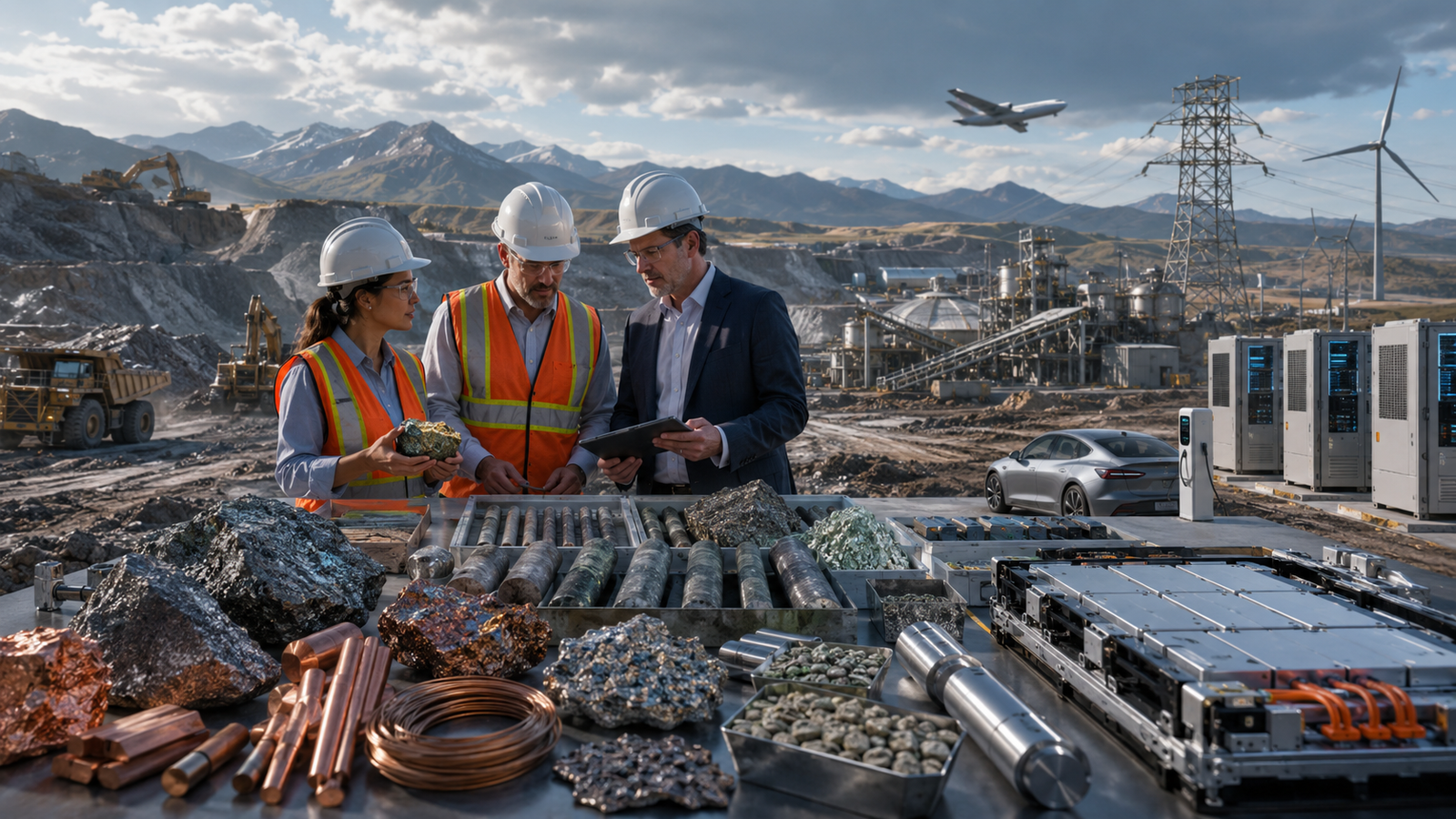
The race to secure critical mineral supply chains is rapidly becoming one of the defining investment themes of the decade. While artificial intelligence, clean energy, and defense technologies dominate headlines, the raw materials powering these industries are attracting growing attention from governments, institutional investors, and mining companies alike. Across North America, policymakers are accelerating efforts to reduce dependence on foreign suppliers of strategic minerals, creating new opportunities for companies positioned to support domestic and allied supply chains.
The latest example came from Canada, where recent government initiatives continue reinforcing investment in critical mineral development as part of a broader strategy to strengthen North American resource security. Reuters reported on June 30 that government support for critical minerals remains a major priority as Western nations seek reliable supplies of materials essential for aerospace, defense, clean energy infrastructure, advanced manufacturing, and next-generation technologies.
For investors, the trend extends well beyond commodity prices. It represents a long-term structural shift driven by geopolitics, industrial policy, and technological transformation—factors that could reshape mining investments for years to come.
Critical Minerals Are Becoming National Strategic Assets
Critical minerals have traditionally been viewed as industrial commodities. Today, they are increasingly considered strategic national assets.
Governments in the United States, Canada, and Europe are placing greater emphasis on securing reliable supplies of minerals required for:
- Electric vehicles
- Renewable energy infrastructure
- Artificial intelligence hardware
- Semiconductor manufacturing
- Defense systems
- Aerospace applications
- Power grids
- Advanced electronics
The urgency stems from concerns over concentrated global supply chains. Many strategic minerals are currently mined, processed, or refined in a limited number of countries, creating potential vulnerabilities for industries that depend on uninterrupted access.
As geopolitical competition intensifies, governments are prioritizing domestic production and partnerships with trusted allies.
This policy shift is creating a more supportive environment for mining companies operating across North America.
Government Policy Is Driving Investment
Unlike traditional commodity cycles that depend primarily on market prices, today’s critical mineral sector is increasingly influenced by government policy.
Federal and provincial governments in Canada, alongside U.S. initiatives supporting domestic mineral development, continue introducing funding programs, permitting reforms, tax incentives, and strategic partnerships designed to accelerate production.
Recent Canadian initiatives underscore this approach by supporting projects that strengthen North American supply chains for minerals considered essential to economic and national security.
The objective extends beyond increasing mining output.
Governments also seek to expand:
- Mineral processing capacity
- Refining infrastructure
- Battery supply chains
- Advanced manufacturing
- Strategic partnerships with allied nations
These investments are intended to reduce reliance on overseas suppliers while improving long-term economic resilience.
Which Minerals Matter Most?
Several commodities continue attracting the greatest investor interest due to their broad industrial applications.
Molybdenum
Molybdenum plays a critical role in strengthening steel used in pipelines, aerospace components, military equipment, and energy infrastructure.
Growing defense spending and infrastructure investment continue supporting long-term demand.
Copper
Copper remains one of the world’s most important industrial metals.
Its applications include:
- Electric vehicles
- Renewable energy projects
- Data centers
- Artificial intelligence infrastructure
- Power transmission
- Construction
As electrification accelerates globally, analysts continue projecting strong long-term copper demand.
Rare Earth Elements
Rare earth minerals are essential for permanent magnets used in electric motors, wind turbines, advanced electronics, and military technologies.
Because processing capacity remains geographically concentrated, governments increasingly view domestic rare earth development as strategically important.
Lithium
Although lithium markets have experienced price volatility, the metal remains central to battery manufacturing for electric vehicles and energy storage systems.
Long-term electrification trends continue supporting investment across the lithium supply chain.
Other strategic materials—including nickel, graphite, cobalt, and tungsten—also remain important components of North America’s evolving resource strategy.
Why Geopolitics Is Reshaping Mining Investments
The mining industry has become increasingly interconnected with international trade and national security.
Governments now recognize that secure access to strategic minerals is essential for maintaining industrial competitiveness.
Recent geopolitical tensions have accelerated efforts to diversify supply chains away from concentrated production regions.
This has led to increased cooperation among allied nations, particularly the United States, Canada, Australia, and European partners.
Rather than relying exclusively on global commodity markets, policymakers are encouraging domestic resource development through long-term industrial strategies.
For investors, this reduces the sector’s dependence on short-term commodity price fluctuations alone.
Policy support itself has become an important investment catalyst.
Artificial Intelligence Is Creating New Demand
Artificial intelligence is not only transforming software—it is also increasing demand for physical resources.
Modern AI infrastructure requires enormous quantities of:
- Copper wiring
- Power systems
- Semiconductor materials
- Advanced manufacturing equipment
- Data center construction materials
As hyperscale cloud providers continue expanding AI infrastructure, demand for industrial metals may continue rising.
The connection between AI and mining represents one of the emerging investment themes receiving increasing attention from institutional investors.
Rather than viewing mining separately from technology, markets are increasingly recognizing their close relationship.
Capital Investment Continues Expanding
Mining projects require significant long-term capital commitments.
Unlike software businesses, developing a new mine often involves years of exploration, environmental reviews, permitting, construction, and infrastructure development.
Government participation through grants, financing programs, and public-private partnerships can reduce investment risk while improving project economics.
Institutional investors increasingly favor projects located within politically stable jurisdictions supported by transparent regulatory frameworks.
Canada and the United States continue benefiting from this trend.
Their established legal systems, infrastructure, and growing policy support make North American projects increasingly attractive compared with higher-risk jurisdictions.
Future Trends Investors Should Watch
Several developments are likely to shape the critical minerals sector throughout the remainder of 2026 and beyond.
Government Funding
Additional financial support for domestic mining and processing projects could accelerate project development across North America.
Supply Chain Diversification
Manufacturers continue seeking multiple sources of strategic minerals, creating opportunities for new producers.
Artificial Intelligence Expansion
Growing AI infrastructure investment may increase demand for industrial metals required in data centers and electrical systems.
Clean Energy Investment
Renewable energy projects, battery manufacturing, and grid modernization continue supporting long-term mineral consumption.
Defense Spending
Expanding defense budgets across Western nations may further strengthen demand for strategic materials used in aerospace and military technologies.
Why This Matters for Investors
The critical minerals sector is evolving from a cyclical commodity industry into a strategically important component of national industrial policy.
Unlike previous mining cycles driven primarily by fluctuations in commodity prices, today’s investment environment is increasingly influenced by government initiatives, geopolitical priorities, and structural demand growth.
This creates opportunities across multiple areas of the mining value chain, including:
- Exploration companies
- Mine developers
- Established producers
- Mineral processors
- Infrastructure providers
- Equipment manufacturers
Investors who understand these long-term trends may benefit from exposure to companies positioned within strategically important supply chains.
Key Investment Insight
Critical minerals are becoming an increasingly important long-term investment theme as governments prioritize supply chain security alongside technological innovation. Continued policy support from Canada and the United States, combined with rising demand from artificial intelligence, clean energy, defense, and advanced manufacturing, could provide a favorable backdrop for producers of molybdenum, copper, lithium, rare earth elements, and other strategic minerals.
For investors, the most attractive opportunities may lie in companies with high-quality assets located in politically stable jurisdictions, strong balance sheets, and the ability to benefit from both rising industrial demand and government-backed initiatives. As geopolitical competition and industrial policy continue reshaping global supply chains, critical minerals are likely to remain at the center of long-term investment strategies.
Stay informed with MoneyNews.Today for trusted daily investor news, in-depth market analysis, and actionable insights into the industries shaping the future of global investing.




