
The artificial intelligence investment boom is entering a new phase—and investors are beginning to look beyond the companies that have dominated headlines over the past two years.
South Korean memory chip giant SK Hynix’s planned $28 billion U.S. American Depositary Receipt (ADR) listing is one of the clearest signs yet that institutional investors remain highly confident in the long-term growth of AI infrastructure. According to Reuters, early indications show institutional demand approaching $7 billion, suggesting that investor appetite for companies powering the AI revolution remains robust despite recent volatility across semiconductor stocks.
The proposed listing arrives at a pivotal moment for global markets. Technology investors are increasingly asking whether AI spending can continue at its current pace and, more importantly, which companies stand to benefit beyond the well-known names that have fueled the sector’s remarkable rally.
For investors, SK Hynix’s listing isn’t simply another IPO. It represents an opportunity to evaluate the next generation of AI infrastructure leaders and highlights how the semiconductor investment story continues to evolve.
AI Infrastructure Is Expanding Beyond GPUs
For much of the AI boom, investor attention has centered on graphics processing units (GPUs), particularly those developed by Nvidia. These chips remain the backbone of large language models, generative AI applications, and hyperscale data centers.
However, GPUs are only one component of the AI ecosystem.
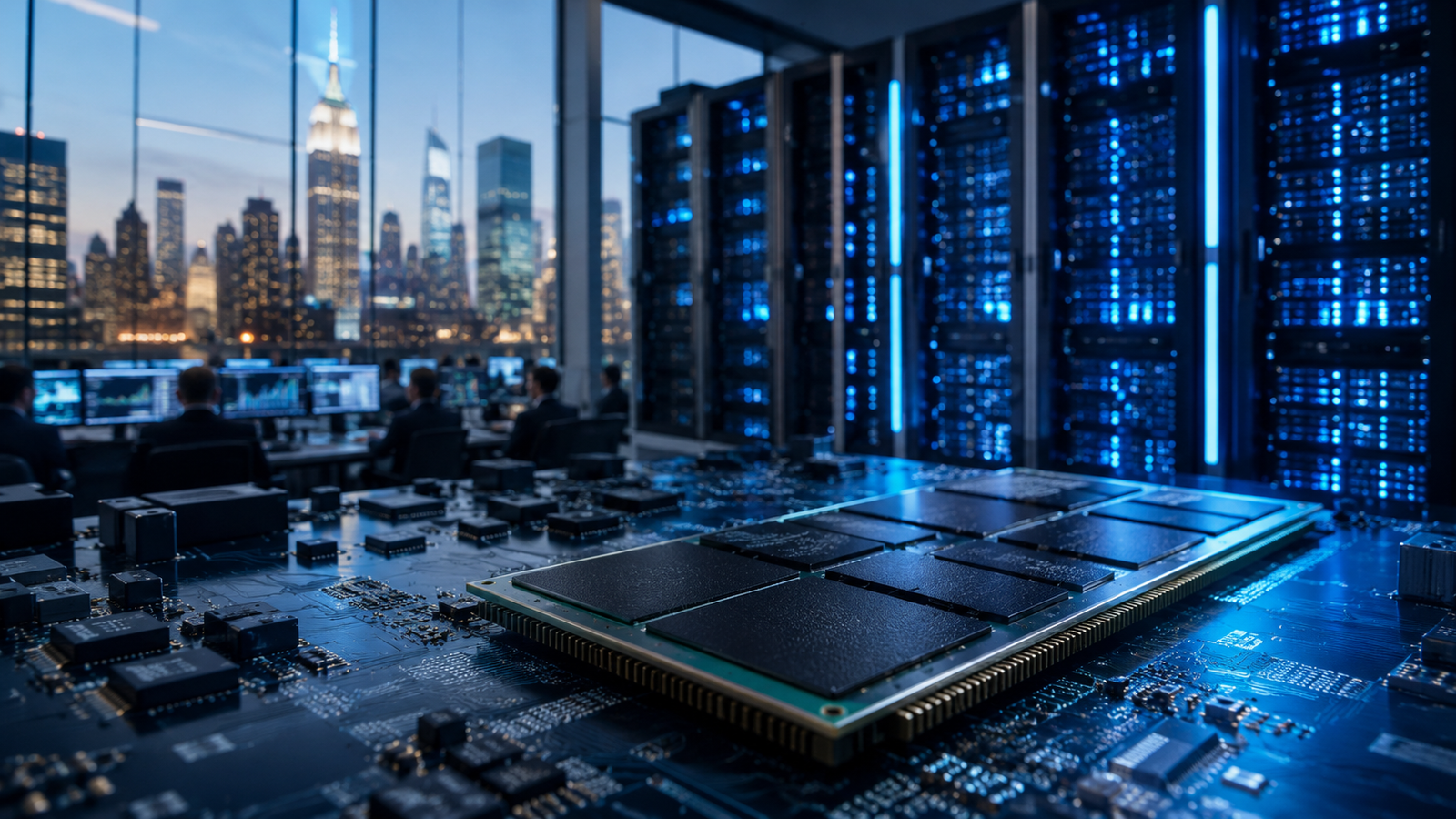
High-bandwidth memory (HBM), advanced DRAM, NAND flash storage, networking hardware, and custom AI accelerators have become equally essential for training and deploying increasingly sophisticated AI models.
This is where SK Hynix has emerged as one of the industry’s most important players.
The company has become a leading supplier of high-bandwidth memory used alongside advanced AI processors. Major AI chip manufacturers—including Nvidia—depend heavily on HBM to maximize processing performance inside AI servers.
As AI models continue to increase in size and complexity, demand for advanced memory is expected to grow alongside GPU demand rather than compete with it.
Industry research from McKinsey & Company and Gartner has consistently highlighted memory bandwidth as one of the critical bottlenecks in AI computing, making companies that specialize in advanced memory increasingly valuable participants in the AI supply chain.
Why the Timing Matters
The timing of SK Hynix’s U.S. listing is particularly notable.
Technology stocks have experienced periods of increased volatility in recent months as investors reassess lofty valuations and await evidence that massive AI investments are translating into sustainable revenue growth.
Upcoming quarterly earnings from major technology companies are expected to provide the next major catalyst for markets.
Against this backdrop, a successful $28 billion U.S. listing sends a strong signal that institutional investors remain willing to allocate capital toward companies with direct exposure to AI infrastructure.
According to Reuters, the proposed offering has already generated approximately $7 billion in institutional interest before trading begins, suggesting that large investors continue to see significant long-term opportunities in AI hardware despite short-term market fluctuations.
Strong demand could also encourage additional semiconductor companies to consider U.S. listings, expanding investment opportunities within one of the market’s fastest-growing sectors.
Memory Has Become One of AI’s Most Valuable Assets
Artificial intelligence workloads require enormous amounts of data to move rapidly between processors.
That process depends heavily on high-bandwidth memory.
While GPUs perform the calculations, HBM enables those processors to access information quickly enough to maintain performance.
Without sufficient memory bandwidth, even the most powerful AI processors cannot operate efficiently.
This dynamic has fundamentally changed how investors evaluate semiconductor companies.
Instead of viewing memory manufacturers as cyclical commodity businesses, markets increasingly recognize advanced memory as a strategic technology essential for AI infrastructure.
Analysts across the semiconductor industry expect demand for HBM to remain exceptionally strong over the next several years as cloud providers—including Microsoft, Amazon, Alphabet, and Meta Platforms—continue expanding AI data centers.
Those capital expenditures are creating sustained demand throughout the semiconductor supply chain rather than concentrating gains solely among GPU manufacturers.
Institutional Investors Are Broadening Their AI Exposure
One of the most significant themes emerging in 2026 is portfolio diversification within AI investing.
Many institutional investors have generated substantial returns from large AI leaders over the past two years.
Now, attention is shifting toward identifying the second wave of beneficiaries.
Rather than focusing exclusively on GPU manufacturers, investors are increasingly evaluating companies involved in:
- Advanced memory
- Semiconductor manufacturing equipment
- AI networking infrastructure
- Optical communications
- Data center cooling technologies
- Power management systems
- Enterprise AI software
This broader investment approach reflects growing confidence that AI infrastructure spending will remain elevated for years rather than quarters.
Research from McKinsey projects that generative AI could contribute trillions of dollars annually to the global economy, while Gartner continues forecasting rapid enterprise AI adoption across industries.
Those long-term trends support continued investment across multiple segments of the semiconductor ecosystem.
Potential Risks Investors Should Monitor
Despite the enthusiasm surrounding AI infrastructure, investors should remain mindful of several risks.
First, semiconductor valuations remain elevated following significant gains over the past two years.
Any slowdown in enterprise AI spending or weaker-than-expected guidance during earnings season could trigger increased volatility.
Second, geopolitical tensions continue affecting semiconductor supply chains.
Export restrictions, trade policies, and government regulations involving advanced AI chips remain important variables for companies operating globally.
Third, execution risk always accompanies major public listings.
Although early institutional demand appears strong, long-term performance will ultimately depend on revenue growth, margins, technological leadership, and continued customer demand.
Finally, competition within advanced memory continues to intensify as manufacturers race to increase production capacity while maintaining technological advantages.
What Investors Should Watch Next
Several developments could shape investor sentiment over the coming months.
The upcoming earnings season will provide valuable insight into AI capital expenditures across major hyperscale cloud providers.
Management commentary from companies including Microsoft, Alphabet, Amazon, Meta Platforms, and Nvidia will likely determine whether enterprise AI investment remains on its current trajectory.
Investors should also monitor:
- Growth in high-bandwidth memory demand
- AI data center construction
- Semiconductor equipment orders
- Cloud infrastructure spending
- Additional AI-related IPOs and public listings
- Government policies affecting semiconductor manufacturing
If these indicators remain positive, companies throughout the AI supply chain—including memory manufacturers—could continue benefiting from one of the strongest structural investment themes in global markets.
Key Investment Insight
SK Hynix’s planned $28 billion U.S. listing demonstrates that investor enthusiasm for artificial intelligence extends well beyond GPUs and headline technology companies.
As AI infrastructure expands, advanced memory has become one of the industry’s most strategic technologies, positioning companies like SK Hynix to play an increasingly important role in the next phase of AI growth.
For investors, the key takeaway is clear: the AI investment opportunity is broadening. While market leaders continue to command attention, companies supplying the essential infrastructure behind AI—including memory, networking, storage, and semiconductor equipment—may offer compelling long-term opportunities as enterprise AI adoption accelerates.
According to Reuters’ July 6 reporting, the strong institutional interest surrounding SK Hynix’s planned listing reinforces confidence that capital continues flowing toward AI infrastructure despite periodic market volatility. Combined with industry forecasts from McKinsey and Gartner highlighting sustained AI investment, the broader outlook for semiconductor suppliers remains constructive.
Stay informed with MoneyNews.Today for daily investor-focused analysis, breaking market developments, and actionable insights that help you navigate the rapidly evolving world of investing.




