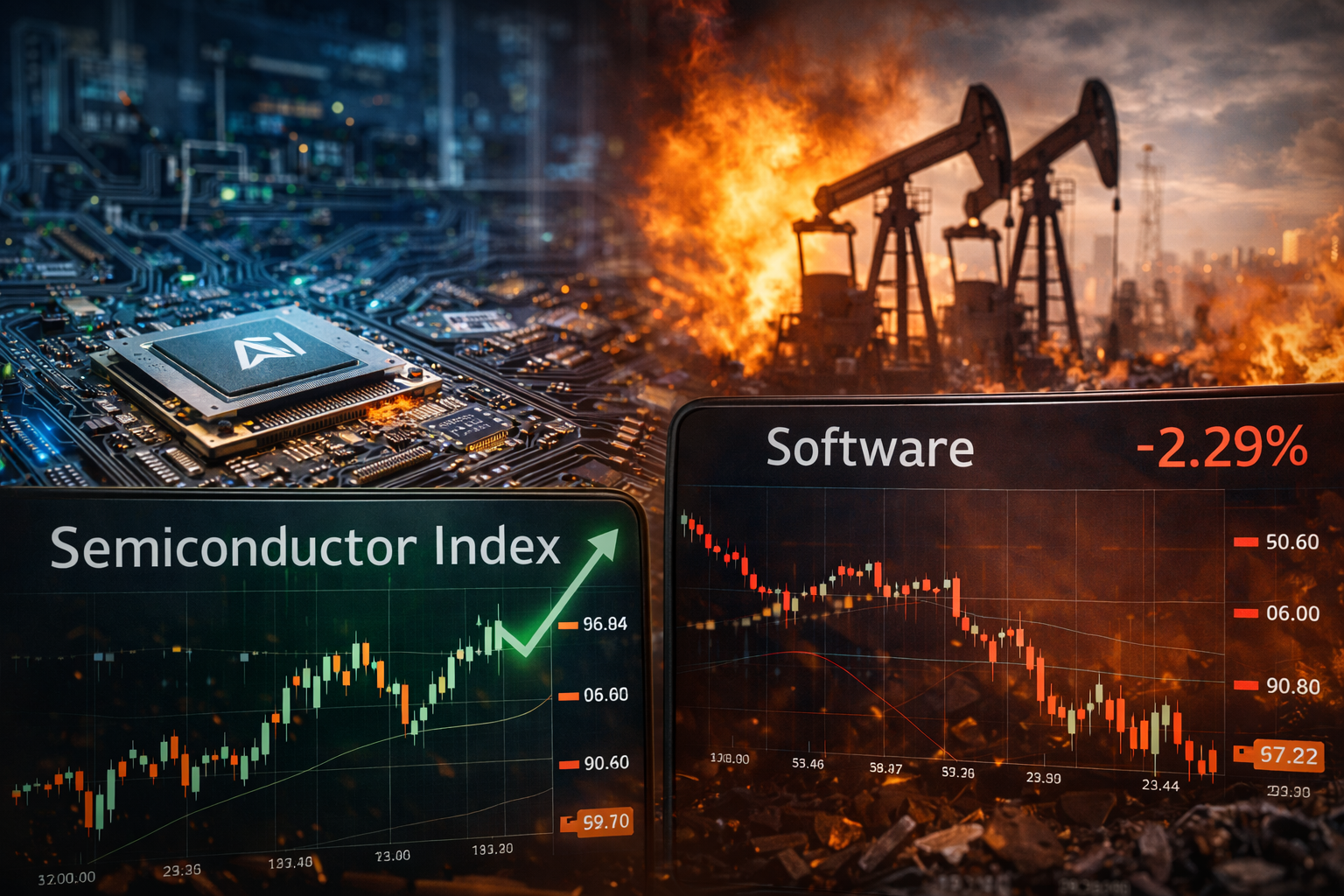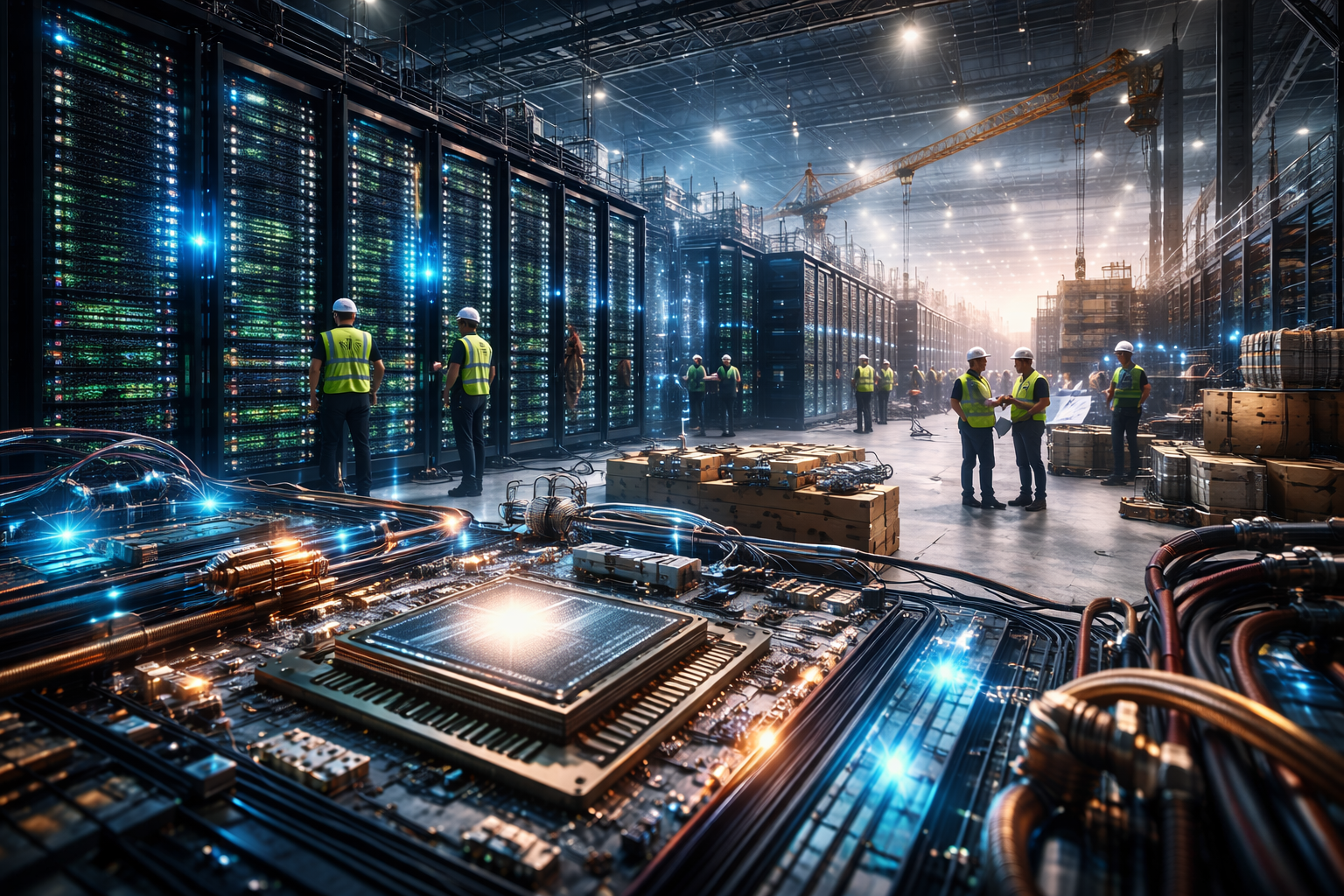
The artificial intelligence boom is entering a new phase—and investors are starting to notice a critical shift beneath the surface. What began as a race to launch generative AI products is now evolving into a full-scale infrastructure arms race, with billions of dollars pouring into data centers, chips, and energy systems.
In the latest wave of developments, tech giants like Microsoft and Alphabet are significantly increasing their capital expenditures tied to AI infrastructure—well beyond earlier projections. According to reporting from Reuters and Bloomberg (April 13, 2026), this surge reflects not just optimism, but necessity: the demand for AI compute is outpacing existing capacity.
For investors, this marks a pivotal turning point. The AI narrative is no longer just about innovation—it’s about monetization through infrastructure.
The Shift From AI Hype to Hard Assets
Over the past two years, markets have rewarded companies leading in AI software—chatbots, copilots, and enterprise automation tools. But as adoption accelerates across industries, a bottleneck has emerged: the physical infrastructure required to power AI models is scarce, expensive, and increasingly strategic.
Recent reports indicate that hyperscalers are ramping up spending on:
- Advanced GPUs and AI accelerators
- Massive data center expansions
- Energy procurement (including renewables and nuclear partnerships)
- High-performance networking and cooling systems
Microsoft alone has committed tens of billions toward AI data center buildouts, while Alphabet continues to scale its cloud and AI infrastructure footprint globally.
This isn’t discretionary spending—it’s survival. As generative AI becomes embedded into enterprise workflows, uptime, latency, and compute availability are becoming competitive differentiators.
Why This Matters for Investors
The implications of this CapEx surge go far beyond Big Tech balance sheets. It signals the emergence of a multi-layered investment cycle, where value is being created across the entire AI supply chain.
1. Semiconductors Become the Core Bottleneck
At the heart of the AI infrastructure boom lies the semiconductor industry. High-performance chips—particularly those used for training and inference—remain in tight supply.
This has created:
- Sustained pricing power for chipmakers
- Long lead times for advanced nodes
- Increased demand for specialized packaging technologies
While much of the early AI rally focused on flagship names, the next phase may reward second-tier suppliers involved in memory, interconnects, and fabrication equipment.
2. Data Centers Emerge as Strategic Assets
Data centers are no longer just real estate—they are becoming mission-critical infrastructure for the digital economy.
The surge in AI workloads is driving:
- Higher occupancy rates
- Premium pricing for high-density compute facilities
- Increased investment in edge computing
Data center REITs, often overlooked in earlier AI narratives, are now positioned as key beneficiaries of this structural demand shift.
3. Energy Demand Becomes a Constraint—and an Opportunity
One of the most underappreciated aspects of the AI boom is its massive energy footprint.
Training large-scale AI models requires enormous electricity consumption, and as deployment scales, so does ongoing power demand. This is pushing tech companies to secure long-term energy contracts and explore alternative sources, including:
- Renewable energy projects
- Nuclear power partnerships
- Grid modernization investments
For investors, this creates a compelling crossover between technology and energy markets—a dynamic rarely seen at this scale.
The Numbers Behind the Surge
According to recent estimates cited by Bloomberg, global AI-related capital expenditures are expected to exceed $300 billion annually within the next few years, with a significant portion concentrated among U.S.-based hyperscalers.
Meanwhile, Reuters reporting highlights that enterprise adoption of generative AI tools has accelerated sharply in 2026, with sectors like finance, healthcare, and manufacturing integrating AI into core operations—not just experimentation.
This combination of rising demand and constrained supply is what’s driving the current CapEx escalation.
Future Trends to Watch
As this infrastructure cycle unfolds, several key trends are likely to shape the next phase of the AI investment landscape:
AI Becomes a Utility-Like Service
Much like cloud computing before it, AI is transitioning into a utility model—where access to compute becomes as important as the software itself.
This favors companies with:
- Scalable infrastructure
- Strong balance sheets
- Long-term energy access
Vertical Integration Gains Importance
Tech giants are increasingly moving toward vertical integration, controlling everything from chips to data centers to software ecosystems.
This could create:
- Higher barriers to entry
- Increased consolidation
- Margin expansion for integrated players
Secondary Winners Gain Momentum
While early gains were concentrated in mega-cap tech, the next wave may broaden to include:
- Industrial suppliers
- Construction and engineering firms
- Cooling and thermal management providers
These “picks and shovels” plays often offer more stable, long-duration revenue streams.
Risks Investors Should Not Ignore
Despite the bullish outlook, the AI infrastructure boom is not without risks:
- Overinvestment: If demand projections fall short, excess capacity could pressure returns
- Regulatory scrutiny: Governments may impose restrictions on energy usage or data center expansion
- Technological disruption: Breakthroughs in efficiency could reduce infrastructure needs
Investors should balance enthusiasm with discipline, focusing on companies with strong fundamentals and clear demand visibility.
Key Investment Insight
The AI trade is evolving—and so should investor positioning.
The real opportunity is shifting toward infrastructure monetization, where revenue is tied to long-term usage rather than short-term hype. This includes:
- Semiconductor supply chains
- Power generation and utilities
- Data center operators and REITs
These segments offer more predictable cash flows and are less vulnerable to the rapid product cycles that define software markets.
Stay Ahead of the AI Investment Curve
The acceleration of AI capital expenditures marks a defining moment for global markets. What we’re witnessing is not just a technology trend—it’s the buildout of a new digital and energy backbone for the global economy.
For investors, the winners of this cycle will not only be those building the smartest algorithms, but those controlling the infrastructure that powers them.
Stay with MoneyNews.Today for daily, actionable insights as we track the evolving intersection of AI, capital markets, and global investment trends.