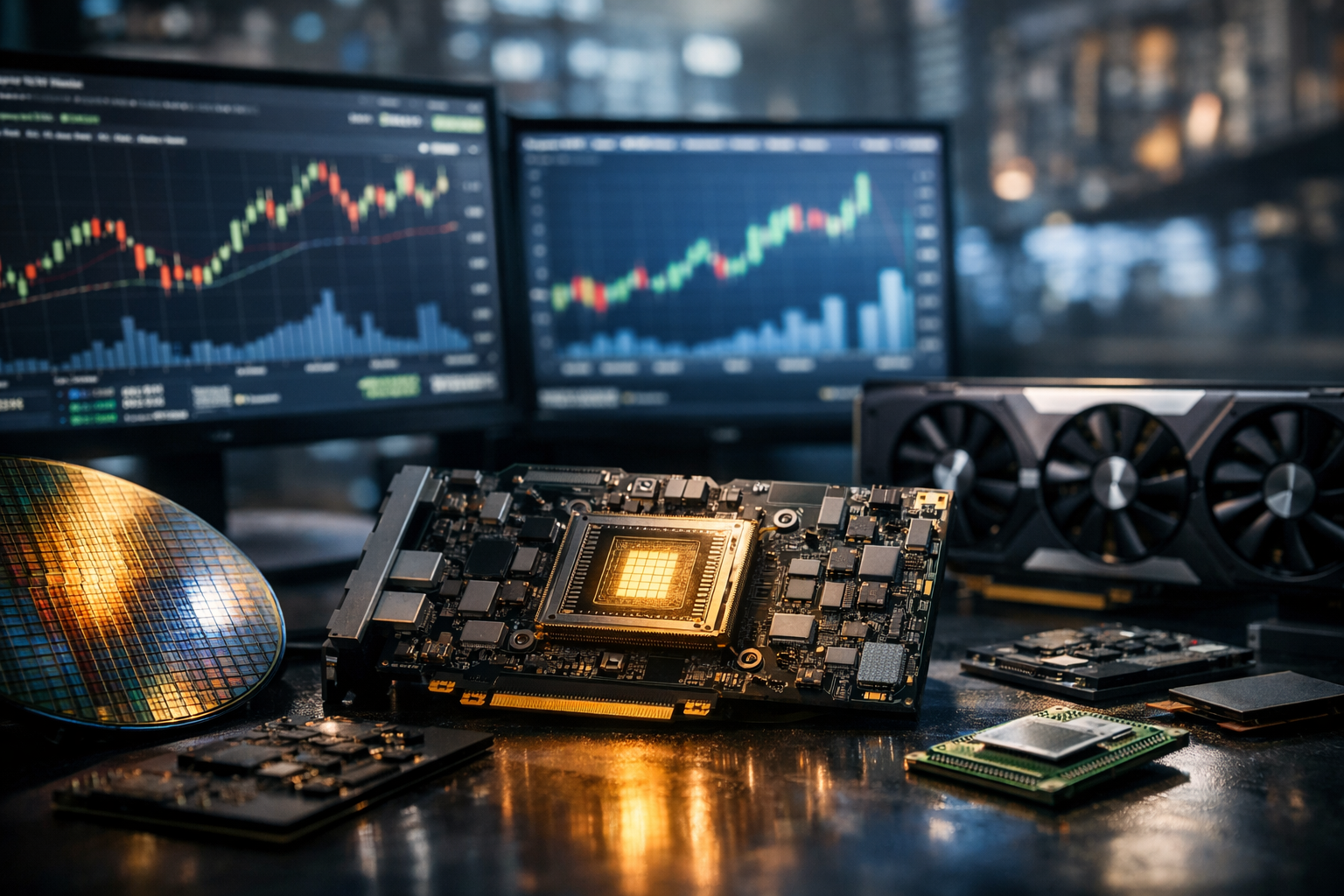
Global equity markets are riding a powerful wave of optimism as artificial intelligence once again takes center stage in investor portfolios. From Tokyo to Seoul and across the broader Asia-Pacific region, stocks have surged to fresh highs, propelled by expectations that AI-driven productivity gains will translate into stronger corporate earnings and long-term economic growth. The rally comes at a time when investors are selectively embracing risk, even as geopolitical tensions and monetary policy uncertainty continue to shape market sentiment.
According to Reuters and the Associated Press, Japan’s Nikkei index climbed to record levels this week, buoyed by heavyweight technology and semiconductor names with direct exposure to AI infrastructure and automation demand. Similar momentum was seen across regional benchmarks, underscoring the growing conviction that AI is not merely a theme, but a structural driver of global equity performance.
Why AI Is Powering Markets Higher
At the heart of the rally is a renewed belief that artificial intelligence represents a multi-year investment cycle, comparable to the rise of the internet or mobile computing. Analysts note that AI spending is no longer confined to experimental projects. Instead, it is being embedded across enterprise software, cloud computing, manufacturing automation, and consumer technology.
Major corporations have signaled plans to increase capital expenditures on AI-related infrastructure, including data centers, advanced chips, and cloud services. This has created a ripple effect across supply chains, benefiting not only U.S. mega-cap technology firms but also Asian hardware manufacturers and software providers.
Reuters reports that strong earnings guidance from export-oriented technology companies in Japan and South Korea has reinforced the view that AI demand is translating into real revenue growth. For investors, this earnings visibility is a critical factor supporting higher equity valuations.
Asia’s Central Role in the AI Investment Cycle
Asia’s outsized role in the current AI rally is no coincidence. The region is home to key semiconductor producers, precision equipment manufacturers, and advanced robotics firms that underpin global AI development. Japan’s market, in particular, has attracted international inflows as foreign investors seek exposure to AI-linked industrial and technology leaders while benefiting from a relatively weak yen.
In addition, policy support has played a role. Several Asian governments have outlined national AI strategies aimed at boosting productivity, strengthening supply chains, and maintaining competitiveness against the U.S. and China. These initiatives have further fueled investor confidence in the region’s long-term growth prospects.
However, market participants are also aware that valuations in some AI-exposed equities are becoming stretched. As a result, stock selection is increasingly important, with investors favoring companies that can demonstrate sustainable margins and defensible market positions rather than speculative narratives alone.
Balancing Risk: AI Optimism vs. Global Uncertainty
Despite the bullish tone, investors are not ignoring macro risks. Geopolitical tensions, particularly in Eastern Europe and the Middle East, continue to support demand for traditional safe-haven assets such as gold and government bonds. At the same time, uncertainty around U.S. Federal Reserve policy remains a key variable for global markets.
Any indication that interest rates will remain higher for longer could pressure high-growth technology valuations, which are sensitive to discount rates. Reuters notes that recent market gains have occurred alongside increased hedging activity, suggesting that institutional investors are participating in the AI rally while maintaining downside protection.
This dynamic highlights a key feature of today’s market: enthusiasm for AI-driven growth is coexisting with caution rather than outright risk-on behavior.
Future Trends Investors Should Watch
Looking ahead, several developments will determine whether the AI-led rally can be sustained. First, earnings reports over the coming quarters will need to confirm that AI investments are delivering measurable productivity and revenue gains. Second, capital spending trends among hyperscalers and large enterprises will serve as an important barometer of long-term demand.
Investors should also monitor regulatory developments, particularly around data usage, competition, and cross-border technology trade. Any shift in policy could have significant implications for global AI supply chains and market leadership.
Finally, the evolution of AI beyond hardware — into software, healthcare, finance, and industrial applications — may broaden the opportunity set and reduce concentration risk currently centered on a narrow group of tech giants.
Key Investment Insight
Artificial intelligence remains one of the most powerful forces shaping global equity markets, especially across Asia’s technology-heavy indices. For investors, maintaining strategic exposure to AI and related sectors continues to make sense, but discipline is essential. Diversification, valuation awareness, and sensitivity to macro and geopolitical risks will be critical in navigating what is likely to be a volatile, yet opportunity-rich, investment landscape.
Stay informed with MoneyNews.Today for daily, investor-focused insights on global markets, emerging trends, and the forces shaping tomorrow’s investment opportunities.