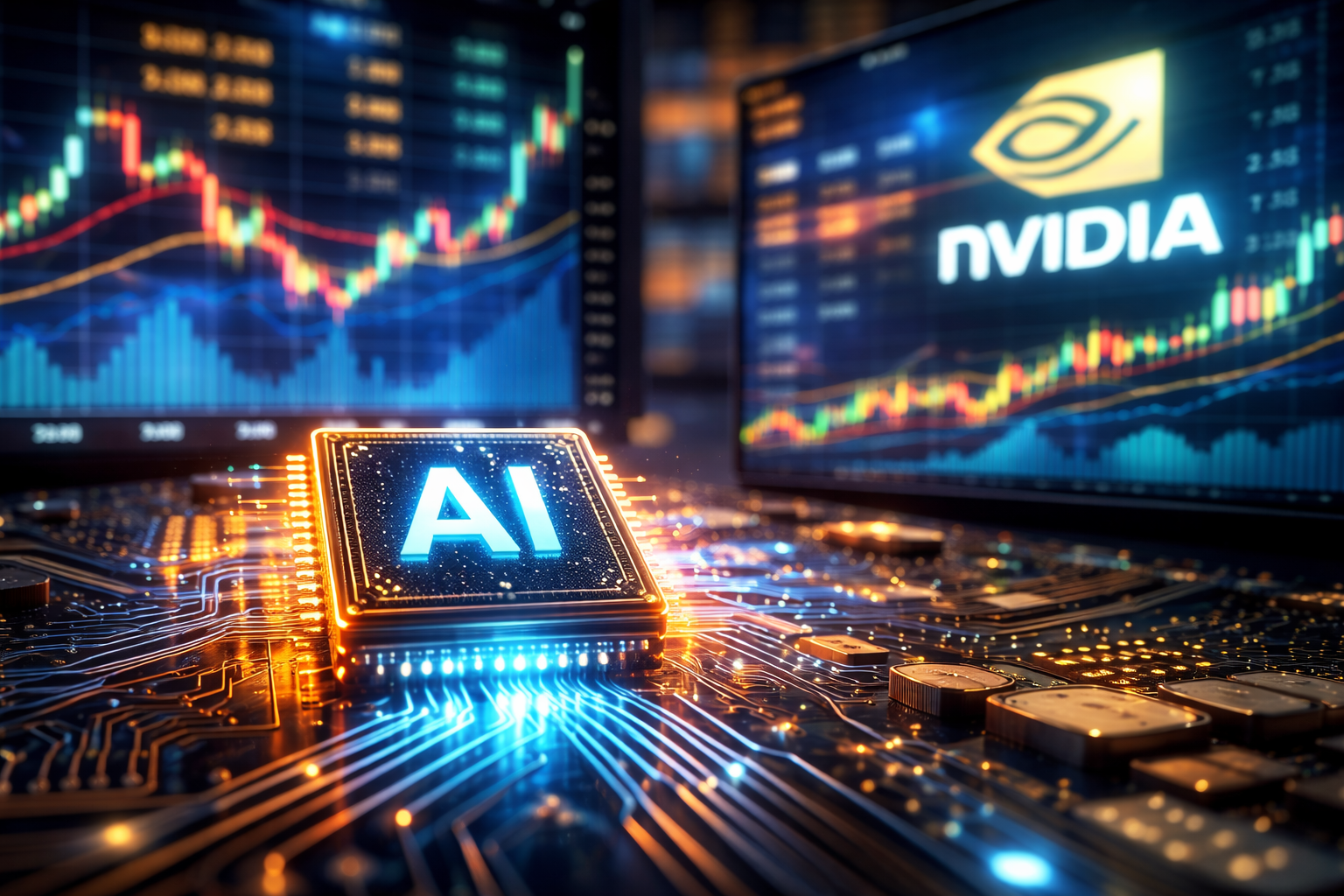
Artificial intelligence is once again steering global market sentiment — and investors are positioning ahead of what could be a pivotal earnings catalyst. After weeks of volatility tied to trade policy uncertainty and concerns about stretched valuations, global equities found their footing on Wednesday, with technology stocks leading a modest rebound. At the center of the narrative: the upcoming earnings report from Nvidia — a bellwether for the AI trade that has powered markets over the past two years.
U.S. index futures were little changed in early trading, but Asian markets rallied as optimism around AI demand helped lift semiconductor and chip-equipment shares. According to reporting from Reuters and the Associated Press, renewed buying in AI-linked equities tempered broader macroeconomic concerns, signaling that investors are not ready to abandon one of the market’s strongest structural growth themes.
AI Sentiment Regains Momentum
The recent pullback in technology stocks had raised questions about whether the AI rally was overheating. However, dip-buying in semiconductor and select software names suggests that institutional investors remain constructive on the long-term AI opportunity.
Analysts cited by Bloomberg note that AI infrastructure spending — including data centers, advanced GPUs, and networking equipment — continues to expand despite macro headwinds. Meanwhile, research from McKinsey projects that generative AI could contribute trillions of dollars annually to the global economy over the next decade, reinforcing the secular growth case.
Nvidia’s earnings report is widely seen as a litmus test. As one of the largest beneficiaries of AI-driven demand for high-performance chips, the company’s forward guidance will likely influence not only semiconductor stocks but also broader equity indices such as the Nasdaq and S&P 500.
Why This Matters for Investors
The AI trade is no longer a niche theme — it is shaping global capital flows. Over the past year, semiconductor and AI-infrastructure names have accounted for a disproportionate share of major index gains. When AI sentiment strengthens, risk appetite improves. When it weakens, markets often wobble.
This week’s rebound suggests investors are willing to re-enter high-growth names ahead of confirmation from earnings data. The key question: Is AI spending accelerating fast enough to justify current valuations?
Recent commentary from industry analysts indicates that hyperscale cloud providers and enterprise customers continue expanding AI deployments. However, broader macro pressures — including elevated interest rates and geopolitical tensions — remain part of the equation. Investors are weighing whether AI growth can offset these macro risks.
Divergence Within Technology
One emerging trend is performance divergence within the tech sector. Semiconductor manufacturers and AI hardware suppliers have shown resilience, while some legacy software names face concerns about competitive disruption from AI tools.
Market strategists interviewed by Reuters emphasize that hardware-oriented AI plays may outperform in the near term as companies invest heavily in infrastructure build-out. Meanwhile, software firms are under pressure to demonstrate monetization strategies tied directly to AI integration.
This split creates selective opportunities rather than broad-based exposure. Investors may need to differentiate between companies driving AI deployment and those adapting to it.
Macro Backdrop Still in Play
Despite AI enthusiasm, macroeconomic factors continue to influence positioning. Treasury yields remain elevated, and global trade tensions have resurfaced in headlines. These dynamics can cap upside momentum in growth equities.
Yet the current bounce indicates that structural themes can temporarily override macro caution. Historically, transformative technology cycles — from cloud computing to mobile adoption — have sustained investment flows even during periods of economic uncertainty.
The coming earnings season may clarify whether AI demand is resilient enough to power the next leg of the rally.
Key Investment Insight
For investors, this is a moment of strategic assessment rather than blind momentum chasing.
- Watch Forward Guidance Closely: Nvidia’s outlook on AI demand, margins, and customer spending will likely set the tone for the broader semiconductor space.
- Focus on Infrastructure Leaders: Companies supplying GPUs, networking hardware, and advanced chips may continue benefiting from AI capital expenditures.
- Assess Valuation Risk: While AI growth prospects remain compelling, elevated valuations mean earnings must justify expectations.
- Consider Diversification: Balancing AI exposure with defensive sectors or commodities may help manage volatility if macro risks resurface.
The AI theme remains intact — but selectivity is becoming increasingly important.
Future Trends to Watch
Beyond this earnings cycle, several developments could shape the trajectory of AI-driven markets:
- Increased government investment in AI infrastructure and national competitiveness initiatives
- Enterprise AI adoption translating into measurable productivity gains
- Expanding AI applications across healthcare, finance, and manufacturing
- Regulatory frameworks governing AI deployment and data security
Each of these factors will influence capital allocation decisions across global markets.
For now, optimism has returned — cautiously. Markets are signaling that AI remains a core structural driver, even as investors brace for hard data from earnings reports.
Stay ahead of the trends moving global markets. Follow MoneyNews.Today for daily, actionable insights on AI, technology, and the forces shaping tomorrow’s investment landscape.