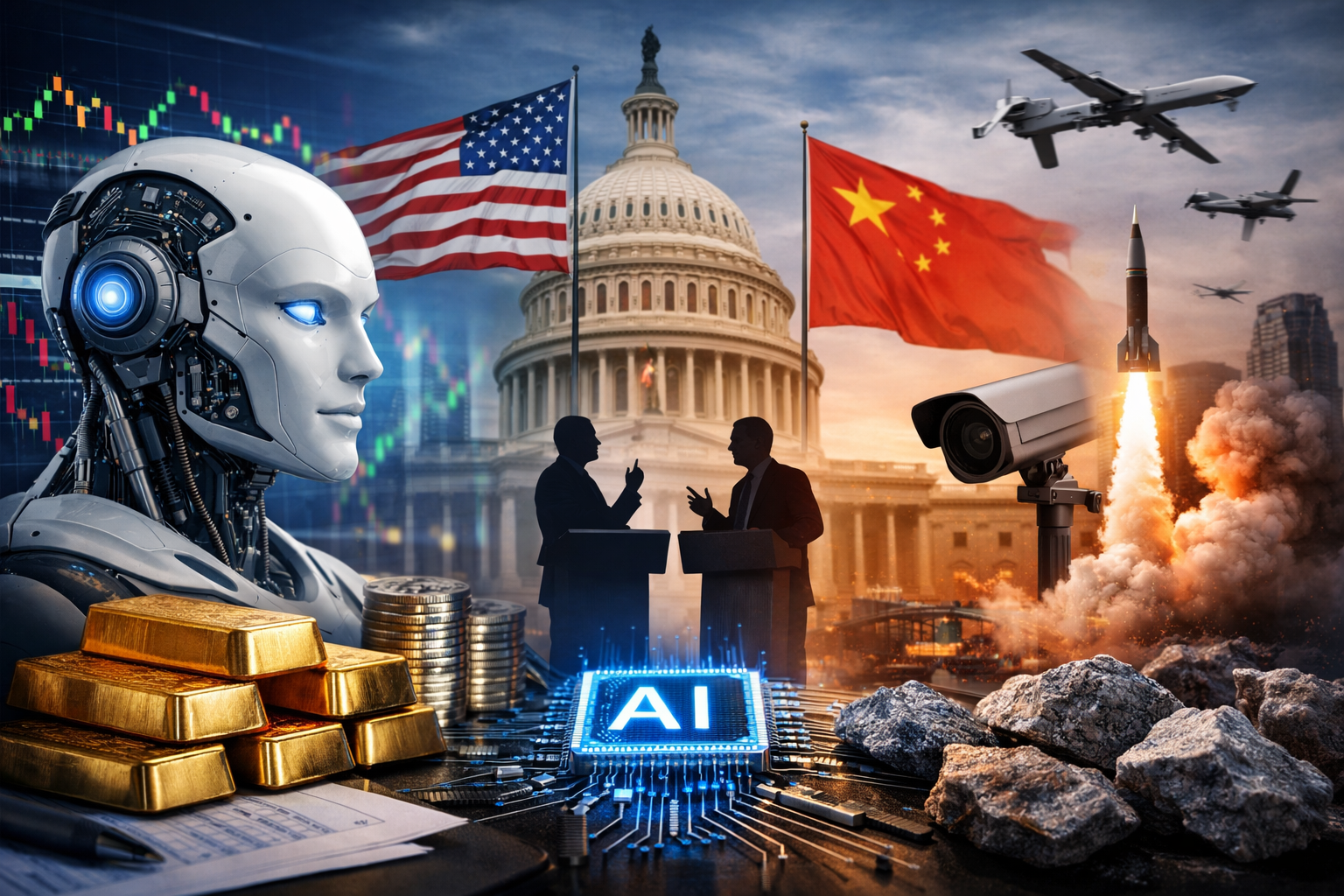
Artificial intelligence is no longer a distant frontier—it has become a central factor in economic strategy, regulatory debate, and political influence in North America. As policymakers grapple with how to govern this transformational technology, corporations pivot to integrate AI into critical infrastructure and public services, and geopolitical competition escalates, investors are facing a rapidly shifting landscape that stretches far beyond earnings reports and product launches.
In the span of just a week, federal regulatory tensions, election‑cycle AI controversies, and shifts in tech policy have converged to reshape the risk‑reward calculus for portfolios exposed to the AI and broader technology sectors. What was once a tech‑centric narrative is now a macro‑political story with direct implications for valuation, capital allocation, and long‑term growth prospects.
AI Governance Takes Center Stage in National Politics
Investors should pay close attention to how Washington is handling AI regulation because political decisions this year will play a pivotal role in technology valuations and long‑term adoption curves.
A prominent opinion piece published today by The Washington Post underscores a growing political argument: U.S. leadership in AI may depend more on cooperation between government and industry than on adversarial regulation. The article highlights the administration’s appointment of leaders from major technology companies—such as Nvidia, Meta, Dell, and Google—to a presidential science advisory council aimed at steering AI policy. This collaborative approach contrasts sharply with hardline regulatory proposals that have emerged over the past month.
The stakes couldn’t be higher. Bipartisan energy in Congress, particularly from progressive lawmakers like Sen. Bernie Sanders and Rep. Alexandria Ocasio‑Cortez, has coalesced around legislation to impose a temporary moratorium on AI data center construction until comprehensive federal AI regulations are established. These proposals, backed by community concerns about energy usage, environmental impact, and labor disruption, reflect the broader public unease about AI’s societal impact.
Such political friction has immediate implications for markets:
- Regulatory uncertainty increases risk premiums in tech stocks.
- Delayed infrastructure growth could slow AI deployment timelines.
- Sector rotation may occur as investors reassess capital intensity risks.
Deepfakes, Elections and Investor Risk
Artificial intelligence isn’t just influencing economic policy — it has also emerged as a flashpoint in the 2026 U.S. midterm elections.
AI‑generated deepfakes have surfaced in campaign advertising and political messaging, blurring the line between real and synthetic content at an unprecedented scale. Major news outlets, including Reuters, have documented this trend, noting that AI‑driven political media remains largely unregulated and could amplify misinformation risks as political advertising ramps up.
From an investment perspective, this raises several important considerations:
- Platforms that host political content (e.g., social media, video networks) may face greater regulatory scrutiny or liability.
- Technology companies developing generative AI may encounter legal and reputational risks.
- Increased scrutiny on trust, safety, and content moderation frameworks could reshape monetization models.
Tech Policy Strategy: Competing for Global Dominance
Beyond domestic debates, the U.S. is framing technology policy within a global context of strategic competition—particularly with China.
A new report released today by the Information Technology and Innovation Foundation (ITIF) outlines detailed policy recommendations aimed at limiting China’s progress in key “national economic power industries,” including semiconductors, AI, and aerospace. The report argues that without sustained strategic policy action, China could outpace the U.S. across industries that are foundational to economic and geopolitical influence.
Key takeaways include:
- Limiting foreign access to core research and critical technologies
- Reducing dependency on global supply chains dominated by competitors
- Strengthening domestic R&D and innovation ecosystems
For investors, this geopolitical lens matters because industrial policy increasingly influences:
- Capital flows — government incentives versus regulatory barriers
- Valuation multiples — geopolitical risk premiums in certain sectors
- Supply chain resilience and competitive advantage — especially in semiconductors and advanced computing
AI in Everyday Life: Technology Adoption Persists Despite Skepticism
Despite political pushback and regulatory uncertainty, AI’s integration into everyday life and industrial use cases continues at pace. Surveys and studies have shown that while public opinion may be skeptical—many Americans report distrust of AI—usage remains high across both consumer and enterprise applications.
In the transportation sector, for example, technology companies and government agencies are experimenting with AI‑powered safety systems for air traffic control and logistics management, with early pilots showing promise for reducing accidents and optimizing operations. Such developments highlight the dual nature of AI as both a business enabler and a public goods technology, underscoring the importance of measuring adoption risk, regulation, and reward.
Why This Matters for Investors Today
This complex confluence of politics, regulation, and technology has real investment implications:
1. Regulatory Risk Is Rising
Federal and state policy stances on AI infrastructure, data governance, and ethical AI could materially impact technology sector revenue growth and cost forecasts.
2. Geopolitical Competition Is a Key Value Driver
Policy reports like ITIF’s suggest that governments view AI leadership as both economic and strategic, shifting investor focus from pure earnings growth to national security‑aligned technology value chains.
3. Public Sentiment and Political Cycles Can Affect Adoption
Social pushback against data centers and other AI infrastructure projects could influence municipal and state approval timelines, particularly for energy‑intensive technology builds.
4. Strategic Winners May Emerge in Adjacencies
Companies that provide AI governance tools, compliance frameworks, or secure deployment platforms could benefit as regulatory expectations evolve.
Top Investment Insights
Here’s how investors can position in this environment:
🔹 Diversify Across the AI Ecosystem
Exposure to hardware (e.g., chips, sensors), software (enterprise AI platforms), and services (integration, cybersecurity) can mitigate concentrated exposure to regulatory uncertainty.
🔹 Track Policy Milestones Closely
Federal AI frameworks, congressional actions, and state regulations will all act as catalysts or headwinds for tech valuations.
🔹 Favor Resilient Business Models
Companies with strong revenue diversification and the ability to adapt to shifting regulatory environments tend to outperform in uncertain markets.
🔹 Consider Global Tech Supremacy Themes
Geopolitical lens investments—such as semiconductor independence, secure cloud infrastructure, and allied technology initiatives—may offer strategic upside.
Artificial intelligence is no longer just an innovation story—it’s a macro‑economic and political force. Investors who understand not just the technology but the regulatory and geopolitical contours shaping its adoption will be better positioned to capture sustainable long‑term value.
Stay updated with MoneyNews.Today for insights that span markets, innovation, and the evolving policy landscape that defines tomorrow’s winners.