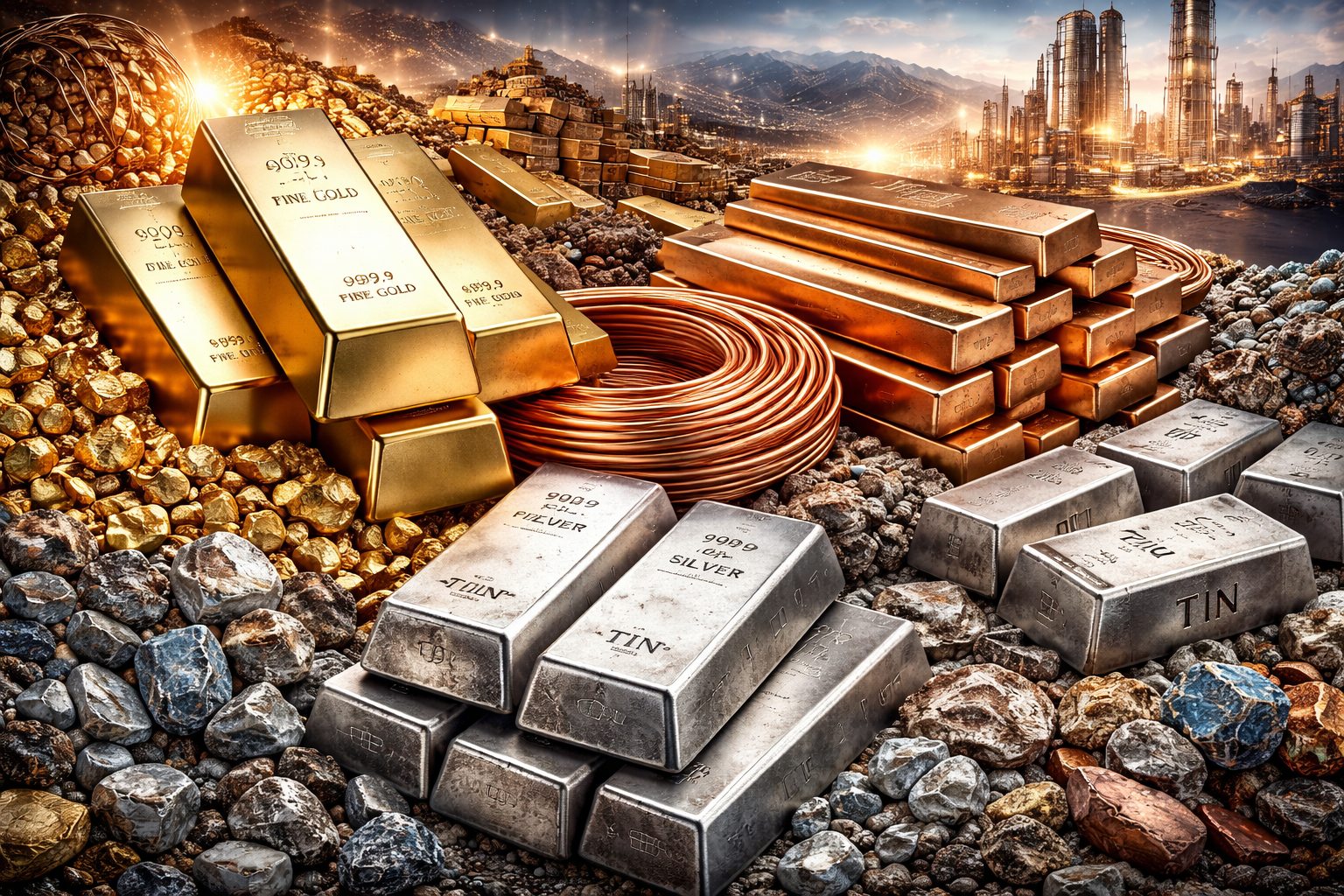
Commodity markets are flashing one of the strongest signals investors have seen in years: a synchronized rally across base and precious metals. Tin prices have surged past $51,000 per metric ton, while copper, gold, and silver are trading near or at record highs, according to Bloomberg. What’s driving the move is not a single factor, but a powerful convergence of industrial demand, supply constraints, and shifting global monetary expectations.
For investors, this metals surge is more than a short-term price spike—it reflects structural forces that could reshape performance across mining equities, materials ETFs, and resource-linked currencies throughout 2026.
A Broad-Based Metals Breakout
Bloomberg reports that tin’s rally has been fueled by tight global inventories and renewed demand from electronics and industrial manufacturing, where tin is essential for soldering and circuit board production. At the same time, copper prices have been supported by expectations of rising consumption tied to electric vehicles, renewable energy infrastructure, and data center expansion.
Precious metals are moving in tandem. Gold and silver are benefiting from safe-haven flows as investors hedge against geopolitical risk and the prospect of easier monetary policy later in the year. Analysts note that when industrial and precious metals rally simultaneously, it often signals confidence in global growth alongside heightened macro uncertainty—a rare but powerful combination.
Why This Matters for Investors
Historically, broad metals rallies tend to favor materials stocks and mining companies, particularly those with exposure to copper, battery metals, and diversified production portfolios. When commodity prices rise faster than operating costs, miners often experience margin expansion, which can translate into outsized equity returns.
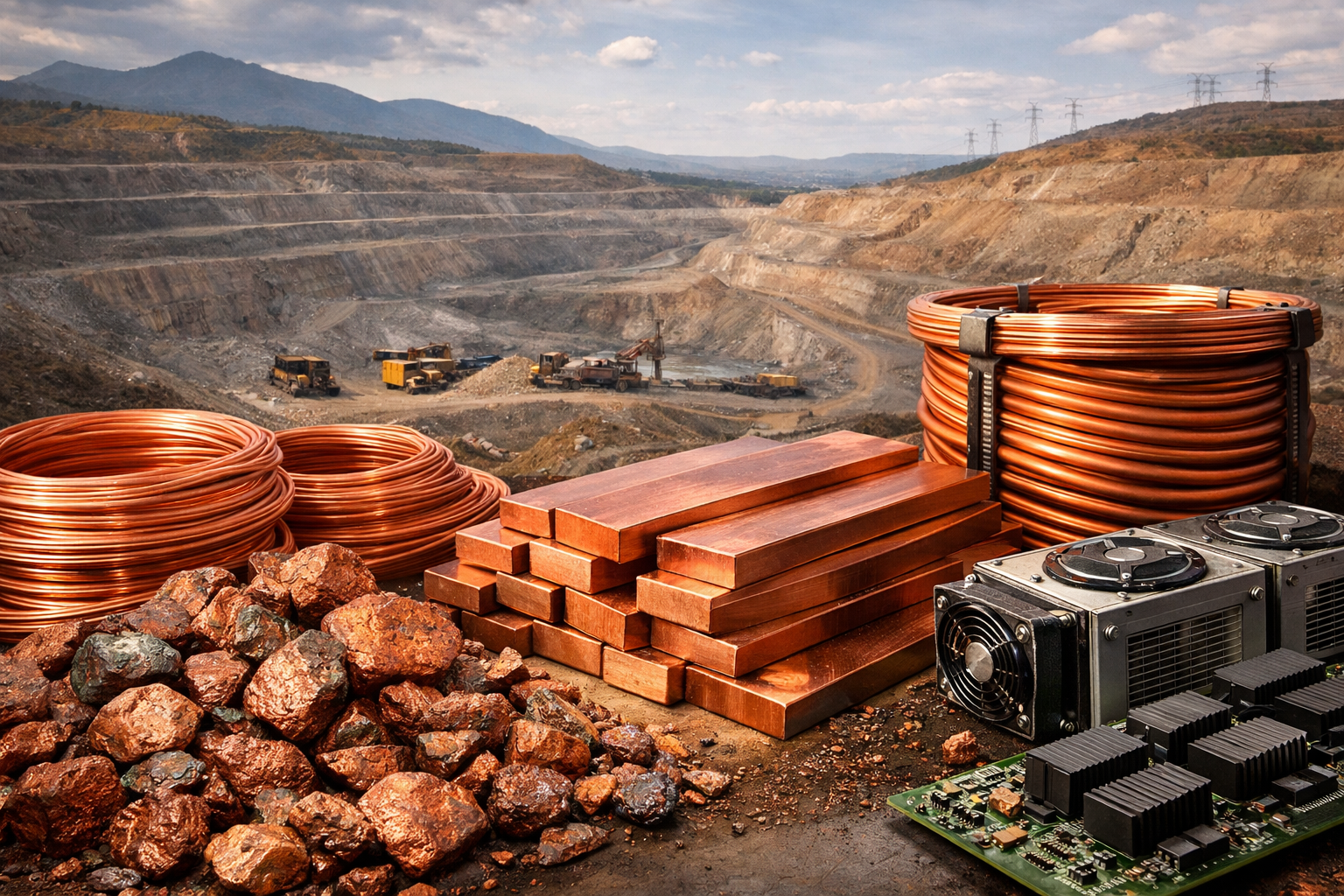
Copper stands out as a central theme. Frequently described as a “bellwether for global growth,” copper demand is increasingly tied to long-term structural trends. According to industry estimates cited by Bloomberg and other analysts, global copper demand from clean energy technologies alone could double over the next decade, while new supply remains constrained by long permitting timelines and declining ore grades.
For investors, this imbalance between supply and demand reinforces the bullish case for copper-focused miners and developers.
Supply Constraints Add Fuel to the Rally
On the supply side, the metals market faces persistent challenges. Tin production is highly concentrated, with disruptions in Southeast Asia and limited new projects exacerbating tight supply conditions. Copper supply growth has also lagged demand, with major mining jurisdictions facing regulatory scrutiny, labor disputes, and rising capital costs.
According to Bloomberg data, global copper inventories remain near multi-year lows, leaving the market vulnerable to price spikes during periods of demand acceleration. These supply-side constraints help explain why even modest improvements in economic outlook can trigger sharp upward price movements.
For precious metals, central bank buying continues to provide a strong floor. Several official sector institutions have increased gold reserves in recent years as part of broader diversification strategies, reinforcing gold’s role as a monetary hedge.
Monetary Policy and the Macro Backdrop
Another key driver behind the metals rally is shifting expectations around interest rates. With inflation showing signs of moderation in major economies, markets are increasingly pricing in easing monetary policy later in 2026. Lower real interest rates tend to support both industrial and precious metals by reducing the opportunity cost of holding non-yielding assets and stimulating capital investment.
Silver, which straddles the line between industrial and precious metal, has been a notable beneficiary of this dynamic. Its dual role makes it particularly sensitive to both manufacturing demand and investor sentiment.
Future Trends to Watch
Several trends could extend—or challenge—the metals rally in the months ahead:
- Green energy and electrification spending, which remains a key demand driver for copper, nickel, and lithium
- Geopolitical risk and currency volatility, which often boost safe-haven demand for gold and silver
- Mining capital expenditure trends, as higher prices may eventually incentivize new supply
- China and U.S. industrial activity, which heavily influence global metals consumption
Investors should also monitor policy developments tied to infrastructure spending and climate initiatives, as these can materially impact long-term metals demand.
Key Investment Insight
With metals prices breaking out across the board, materials stocks and mining equities are positioned to outperform broader markets, particularly those leveraged to copper and battery metals. While commodity cycles can be volatile, the current rally is underpinned by structural demand trends rather than purely speculative flows.
For diversified portfolios, selective exposure to high-quality miners, royalty companies, or materials-focused ETFs may offer both growth potential and inflation protection as global economic dynamics evolve.
For continued coverage of commodity markets, sector trends, and actionable investor analysis, stay connected with MoneyNews.Today, your trusted source for daily financial insights shaping global markets.