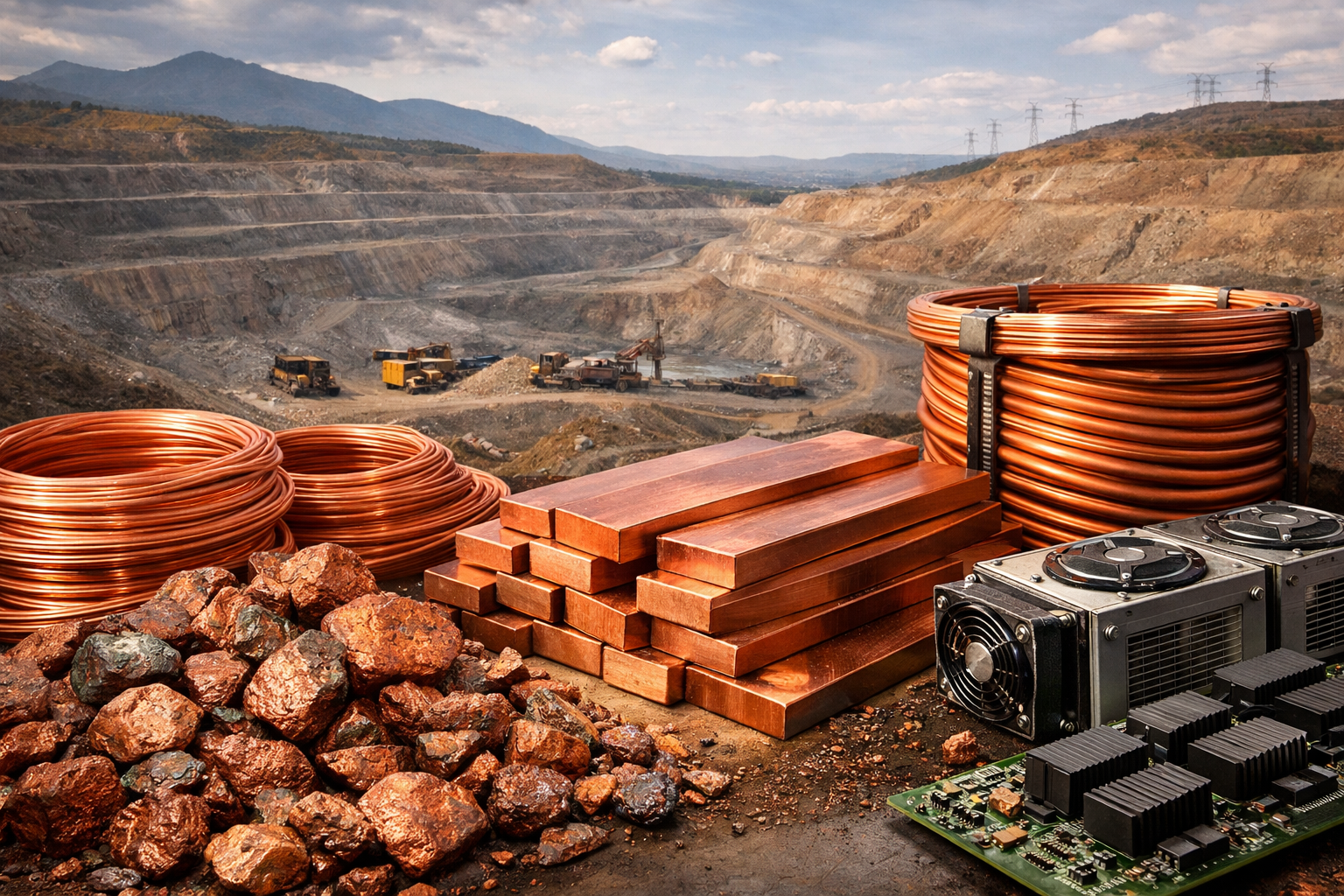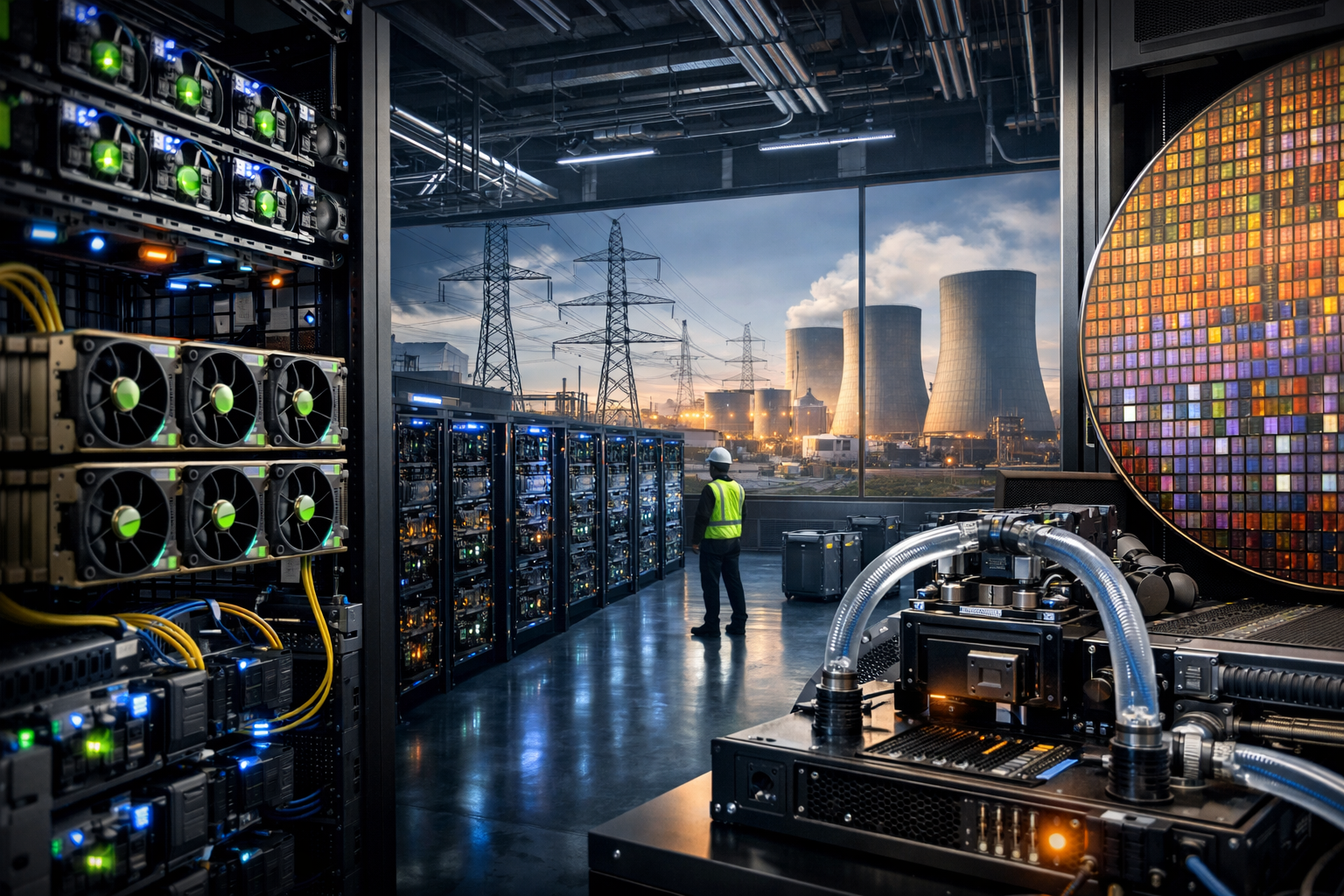
The artificial intelligence boom has entered a new phase—and it’s no longer just about algorithms or applications. It’s about infrastructure.
Over the past few weeks, investor conversations across Wall Street and social platforms have increasingly shifted toward a critical question: Can the physical world keep up with AI’s digital ambitions?
From surging capital expenditures by hyperscalers to warnings about power shortages and chip constraints, the AI trade is evolving rapidly. According to recent reporting from Bloomberg and Reuters, major U.S. technology companies are ramping up spending on data centers, GPUs, and supporting infrastructure at an unprecedented pace. Yet, supply bottlenecks—particularly in energy, advanced semiconductors, and cooling systems—are beginning to reshape the investment landscape.
For investors, this shift could mark a turning point: the next winners in AI may not be the obvious ones.
The New AI Arms Race: Capital Meets Constraint
The scale of AI investment is staggering. Companies like Microsoft, Amazon, Alphabet, and Meta are collectively committing tens of billions of dollars annually to expand AI capabilities. This includes building hyperscale data centers, securing advanced GPUs, and integrating AI into core business operations.
According to Bloomberg, hyperscalers are increasing capital expenditures at rates not seen since the early days of cloud computing. Meanwhile, Reuters highlights that demand for AI compute—especially for training large language models—is outpacing supply across multiple layers of the stack.
At the center of this surge is the growing reliance on high-performance chips, particularly those produced by companies like Nvidia. However, even as semiconductor production ramps up, supply remains tight due to complex manufacturing processes, limited foundry capacity, and geopolitical considerations affecting supply chains.
But chips are only one part of the equation.
The Hidden Bottlenecks: Power, Cooling, and Real Estate
While much of the market’s attention has been on GPUs, a quieter but equally critical constraint is emerging: energy availability.
AI data centers consume enormous amounts of electricity—far more than traditional cloud infrastructure. Training a single large AI model can require as much energy as thousands of households consume annually. As a result, tech companies are increasingly competing not just for chips, but for power capacity.
Reuters reports that utilities in key U.S. regions are struggling to keep up with demand from new data center projects. This has led to delays in project timelines and forced companies to explore alternative solutions, including:
- Long-term power purchase agreements (PPAs)
- Investments in renewable energy (solar, wind)
- Exploration of nuclear energy, particularly small modular reactors (SMRs)
Cooling is another growing challenge. Advanced AI chips generate significant heat, requiring sophisticated cooling systems such as liquid cooling—technology that is still scaling and requires additional infrastructure investment.
Finally, physical space itself is becoming a constraint. Data center real estate, especially in regions with reliable power and connectivity, is increasingly scarce. This has driven up costs and intensified competition among hyperscalers.
Why This Matters for Investors
The immediate implication is clear: AI growth is no longer unconstrained.
While demand remains exceptionally strong, the pace at which companies can deploy AI capabilities is increasingly tied to physical infrastructure limitations. This introduces a new dynamic into the market—one where second-order effects may drive outsized returns.
Historically, early-stage technology booms tend to reward platform leaders first. But as industries mature, infrastructure providers and enablers often capture significant value. The AI cycle appears to be entering that transition.
Investors who focus solely on high-profile AI companies may miss opportunities emerging across adjacent sectors.
Second-Order Winners: The Rise of AI Infrastructure Plays
As bottlenecks intensify, capital is flowing into areas that were previously overlooked in the AI narrative. These include:
1. Energy and Utilities
With data centers consuming massive amounts of power, utilities are becoming critical partners for tech companies. Firms that can provide reliable, scalable, and preferably renewable energy are seeing increased demand and long-term contract opportunities.
This trend is particularly evident in regions with aggressive clean energy initiatives, where tech companies are aligning AI expansion with sustainability goals.
2. Data Center REITs and Infrastructure Providers
Real estate investment trusts (REITs) focused on data centers are benefiting from rising demand and limited supply. These companies provide the physical backbone for AI workloads, including server space, connectivity, and cooling systems.
As hyperscalers look to scale quickly, partnerships with established infrastructure providers are becoming more attractive than building entirely new facilities from scratch.
3. Cooling and Thermal Management Technologies
The shift toward liquid cooling and advanced thermal solutions is creating opportunities for specialized engineering firms. As AI chips become more powerful, efficient heat management will be essential to maintaining performance and reducing operational risks.
4. Semiconductor Equipment and Materials
While chipmakers remain central to the AI story, companies that supply the tools and materials needed to manufacture advanced semiconductors may offer more stable, long-term growth exposure. These firms benefit from sustained capital investment across the entire semiconductor ecosystem.
Future Trends to Watch
Looking ahead, several key trends are likely to shape the next phase of AI-driven investment:
AI-Energy Convergence
The intersection of AI and energy is becoming a defining theme. Expect increased collaboration between tech companies and energy providers, as well as growing interest in alternative energy sources, including nuclear.
Geographic Shifts in Data Center Development
Regions with abundant power and favorable regulatory environments are likely to attract new data center investments. This could lead to a geographic rebalancing of AI infrastructure, both within North America and globally.
Vertical Integration by Tech Giants
To mitigate bottlenecks, major tech companies may increasingly invest directly in infrastructure—ranging from energy generation to chip design. This vertical integration could reshape competitive dynamics across multiple industries.
Policy and Regulatory Influence
Government policies around energy, infrastructure, and semiconductor manufacturing will play a crucial role in determining how quickly AI capacity can expand. Initiatives aimed at strengthening domestic supply chains could create additional investment opportunities.
Credible Signals from the Market
Recent reporting from Bloomberg underscores the scale of capital being deployed, with hyperscalers accelerating spending despite macroeconomic uncertainty. At the same time, Reuters highlights the growing strain on energy grids and infrastructure systems, pointing to a widening gap between demand and supply.
Analysts are increasingly emphasizing that AI’s growth trajectory is not in question—but the timeline and distribution of value creation may be shifting.
This aligns with broader industry insights from consulting firms like McKinsey, which have noted that infrastructure constraints can act as both a bottleneck and an investment catalyst in high-growth sectors.
Key Investment Insight
The AI trade is evolving from a pure technology play into a full-stack infrastructure story.
While leading AI companies remain well-positioned for long-term growth, near-term returns may increasingly favor enablers of AI expansion—including energy providers, data center operators, and semiconductor supply chain companies.
For investors, this suggests a more diversified approach:
- Maintain exposure to core AI leaders
- Increase allocation to infrastructure and industrial beneficiaries
- Monitor supply constraints as a leading indicator of opportunity
In many ways, the next phase of AI investing may look less like Silicon Valley—and more like energy, industrials, and real assets.
AI is not slowing down. If anything, demand is accelerating faster than the systems built to support it.
For investors willing to look beyond the obvious, this moment offers a rare opportunity to position ahead of the next wave of value creation. Stay ahead of these shifts with MoneyNews.Today, your trusted source for daily investor insights and market-moving trends.