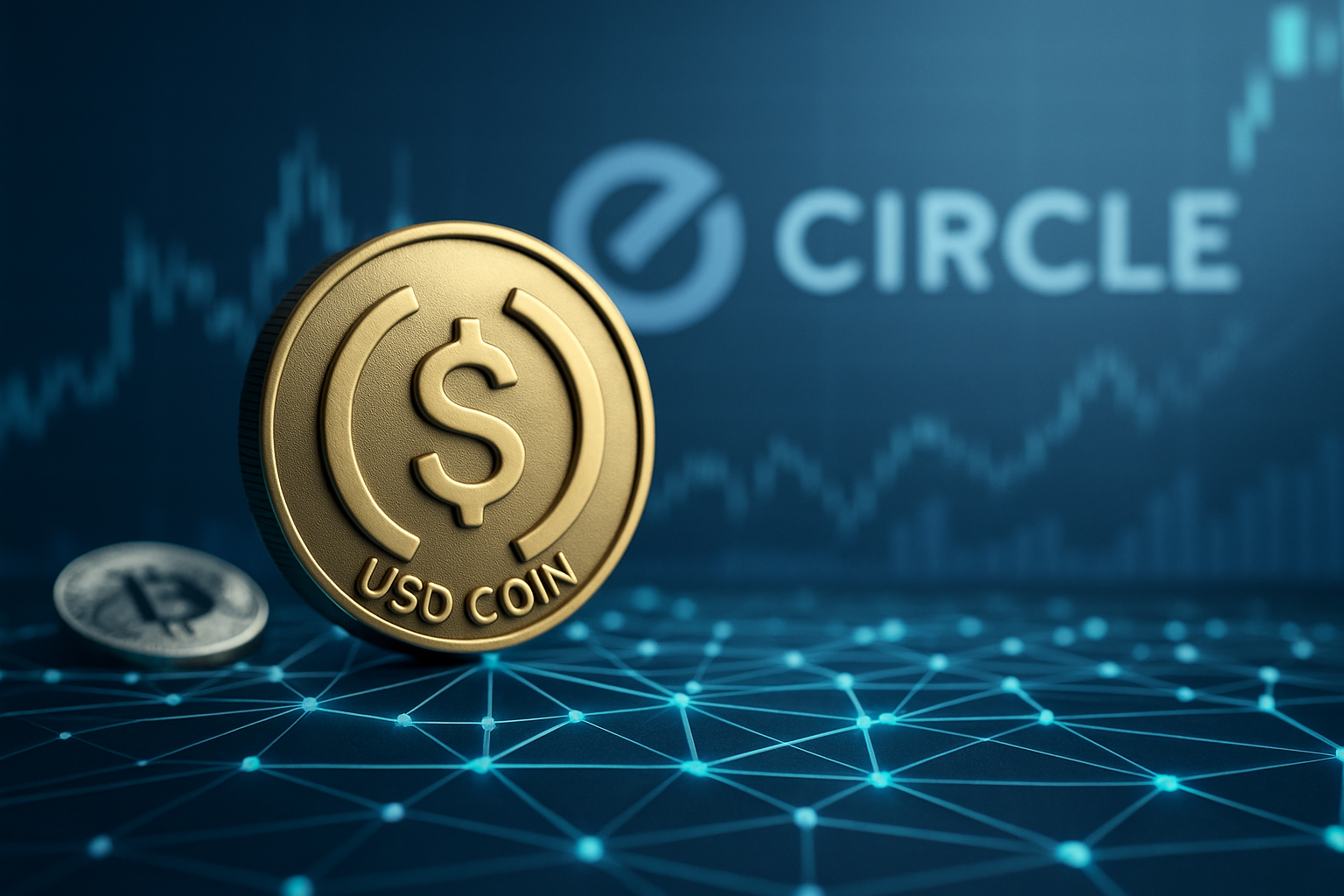
The global digital-asset market is shifting once again as stablecoins move back into the spotlight. With institutional investors increasing their exposure to tokenized assets and exchanges competing for deeper liquidity, the latest partnership between Bybit and Circle has become one of the most discussed developments in crypto markets this week. On December 8, 2025, Bybit announced a strategic collaboration with Circle — the issuer of the regulated stablecoin USDC — aiming to expand access, improve liquidity, and enhance interoperability across Bybit’s trading ecosystem. For investors, this deal arrives at a time when stablecoins are not just a convenience tool but a critical backbone of crypto market structure.
Expanding USDC Access at a Critical Time for Crypto Markets
The partnership targets one of the most important pillars of digital-asset trading: liquidity consistency. According to Circle’s latest industry updates and Bybit’s announcement via Newswire, the integration will strengthen support for USDC across spot, derivatives, and cross-border payment rails on the Bybit platform. The move also promises more streamlined fiat on- and off-ramps — historically one of the biggest bottlenecks for both retail and institutional participants.
In a year marked by fluctuating liquidity conditions across centralized exchanges, partnerships that fortify stablecoin accessibility are drawing increased attention. USDC, often viewed as one of the more transparent and well-regulated stablecoins due to its monthly attestation reports and compliance structure, stands to benefit from expanded global integration. This aligns with broader market themes: tokenization growth, the rise of stablecoin-settled derivatives, and traditional finance’s increasing reliance on digital dollars for operations.
Why This Matters for Investors
Stablecoins are no longer merely the “cash equivalents” of the crypto world — they have evolved into essential infrastructure supporting everything from on-chain settlement to institutional trading strategies. Deep and reliable liquidity in USDC enables:
- More stable price discovery across exchanges
- Efficient arbitrage and lower slippage in volatile markets
- Improved hedging strategies for institutional desks
- Faster cross-border settlement compared to traditional rails
Bybit’s global footprint, combined with Circle’s regulatory credibility, provides a meaningful tailwind for traders seeking secure dollar-denominated liquidity. The timing is also noteworthy: with macro conditions tightening and demand for transparent stablecoins increasing, firms like Circle have become integral to mitigating systemic risks in crypto market structure.
For investors watching stablecoin flows as a proxy for market sentiment, the expansion of USDC utility may serve as a bullish indicator of renewed institutional engagement — particularly in derivatives markets where volume concentration is highest.
Market Structure Implications and Strategic Positioning
Crypto exchanges have increasingly centered their product offerings around stablecoins, particularly USDC, due to its regulatory posture and interoperability across chains such as Ethereum, Solana, and Base. Bybit’s move reinforces a broader industry pivot toward cleaner liquidity and away from opaque synthetic dollar products.
Data from Kaiko and Bloomberg Intelligence throughout 2025 shows that stablecoin market share dynamics often correlate with risk appetite in crypto markets. When stablecoin flows rise, liquidity deepens — usually preceding increased trading activity in Bitcoin, Ethereum, and high-cap altcoins. Bybit’s integration may therefore attract arbitrage firms, market makers, and institutional accounts searching for tighter spreads and more reliable settlement.
However, investors should also recognize the competitive element: exchanges continue to differentiate by partnering with fiat-backed stablecoin issuers. Bybit’s alignment with Circle signals an intent to compete aggressively for institutional capital, particularly in Asia and Europe.
Future Trends to Watch
As stablecoins gain global regulatory attention, several trends bear monitoring:
1. Tokenization of Real-World Assets (RWAs)
USDC is increasingly used in tokenized treasury products — an area projected by McKinsey to exceed $3–4 trillion by 2030. Stronger USDC liquidity on exchanges may accelerate adoption.
2. Global Regulatory Frameworks for Digital Dollars
The U.S. and Canada are advancing clearer rules around fiat-backed stablecoins. Circle’s compliance-first model positions USDC favorably in this landscape.
3. Exchange Market Structure Consolidation
Partnerships like this may strengthen Bybit’s institutional standing as exchanges race to secure trusted on-ramp partners.
4. Yield & Hedging Strategies Centered on Stablecoins
From liquidity pools to derivatives margining, stablecoins are increasingly pivotal in generating predictable yield — attractive in a high-rate environment.
Key Investment Insight
Investors should watch for changes in stablecoin market share, exchange volume flows, and institutional adoption of USDC-settled instruments. Enhanced USDC liquidity historically correlates with higher derivatives activity — often preceding market expansion phases. While this partnership strengthens structural foundations, investors should remain aware of counterparty risks and monitor regulatory developments affecting stablecoin issuers and exchanges.
Staying ahead of stablecoin liquidity trends can offer a significant edge in identifying shifts in market momentum, risk appetite, and capital rotation within the digital-asset ecosystem.
Stay connected with MoneyNews.Today for timely coverage of developments shaping global markets, digital assets, and institutional investment trends.