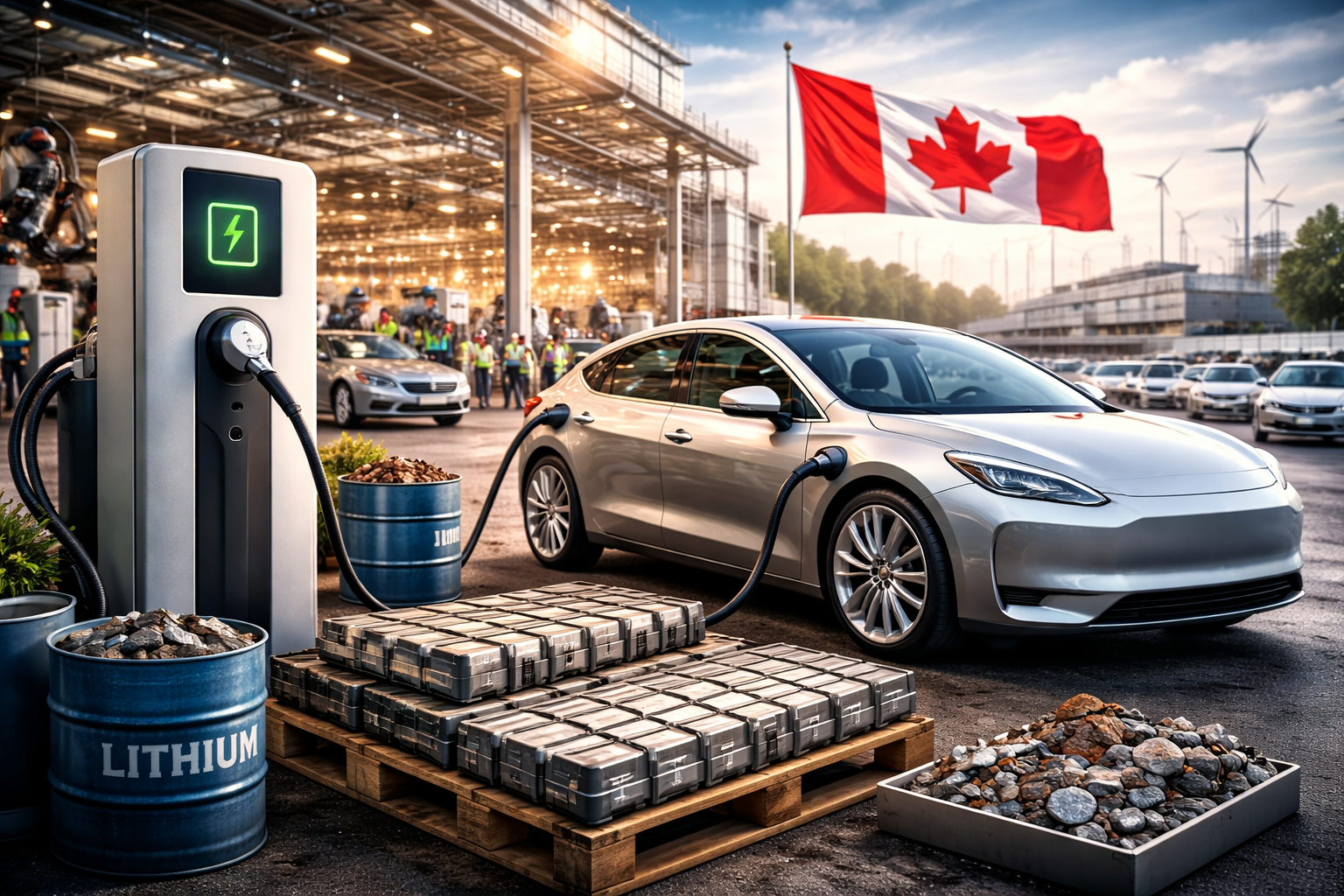
The Canadian government’s latest automotive plan could reshape the future of clean transportation and industrial investment across North America. On February 5, Ottawa unveiled a C$2.3 billion electric vehicle (EV) affordability initiative, part of a broader strategy designed to transform Canada’s auto industry into a global EV hub. The announcement comes at a critical moment for investors watching how policy direction influences industrial growth trajectories and emerging sectors.
Prime Minister Mark Carney’s office outlined the new policy — including consumer incentives and tax advantages for EV manufacturing — as a way to accelerate domestic EV adoption and attract investment to the battery supply chain, clean technology, and advanced manufacturing sectors.
For investors, Canada’s strategic pivot signals fresh opportunities beyond traditional energy and resource plays — into emerging industries supported by public policy and structural demand.
Why This Policy Shift Matters Now
Canada’s automotive sector is a cornerstone of the national economy, contributing over $16 billion annually to GDP and supporting more than 500,000 jobs. But the industry has faced headwinds recently, including declining EV sales in 2025 even as global EV investment climbed and competitive pressures from U.S. markets intensified.
The new strategy aims to address these challenges by:
- Reintroducing a federal rebate program offering up to $5,000 off battery‑electric and fuel‑cell vehicles and up to $2,500 for plug‑in hybrids — incentives that will decline over time through 2030.
- Investing $1.5 billion in charging and hydrogen refueling infrastructure to expand Canada’s EV ecosystem.
- Offering tax deductions and strategic funding to encourage auto manufacturers and clean tech firms to produce and innovate within Canada.
Together, these measures signal that Ottawa isn’t just subsidizing consumers — it’s actively fostering industrial competitiveness and supply‑chain localization.
Investor Focus: Emerging Industrial Opportunities
For investors, this strategy ties directly into several high‑growth emerging sectors:
1. EV Manufacturing and Advanced Mobility
Canada’s incentive structure and tax treatment aim to attract manufacturers and OEM investment. Domestic production — particularly of vehicles and key components like battery packs — may benefit meaningfully if firms respond by establishing or expanding facilities in Canada.
2. Battery Supply Chains and Clean Tech
Battery technology and critical minerals underpin the electric transition. Strategic funding to enhance domestic battery development, coupled with broader EV policy support, could catalyze a vertically integrated North American battery ecosystem.
3. Clean Energy Infrastructure
The commitment to electrical and charging networks means sustained demand for grid upgrades, renewable energy supported charging assets, and hydrogen fueling stations — adding depth to Canada’s infrastructure buildout.
4. Skilled Workforce and Tech Innovation Hubs
Talent pipelines and technology clusters linked to EV and industrial automation present long‑term value creation for companies involved in software, AI, and robotics applications tailored to manufacturing and mobility.
Policy Nuances Worth Noting
While the strategy expands support, it also makes policy shifts that have implications for market expectations:
- Canada scrapped a strict EV sales mandate that would have required 100 % zero‑emission vehicles by mid‑decade, replacing it with more attainable emissions standards through 2032.
- Eligibility for EV incentives is tied to price caps and origin rules — vehicles must be priced under $50,000 or be Canadian‑built to qualify for maximum rebates.
- Trade policy and tariff environments matter. New free‑trade partnerships and strategic export diversification are components of the broader plan to make Canadian EV output globally competitive.
These nuances mean investors need to watch not just headline spending totals, but implementation details and market responses from OEMs and suppliers.
Future Trends to Watch
Several indicators will help investors gauge the strategy’s impact:
- Auto OEM announcements regarding new factories or production lines in Canada.
- Capital flows into battery and critical mineral ventures linked to EV supply chains.
- Job creation statistics and export data related to EV and parts manufacturing.
- Infrastructure buildout metrics for charging and clean energy networks.
Monitoring these signals can reveal whether this policy catalyzes lasting industrial transformation or simply provides short‑term demand stimulus.
Key Investment Insight
Canada’s new EV strategy marks a policy‑driven inflection point for emerging industrial sectors. Investors may want to consider opportunities in clean tech, advanced manufacturing, and mobility‑related supply chains — industries that stand to benefit from structural demand backed by government incentives.
At the same time, evaluating corporate fundamentals, balance sheet strength, and global competitive positioning remains essential. Despite broad policy support, company‑specific execution risk and global demand dynamics will ultimately shape returns.
As government policy increasingly intersects with industrial innovation and market direction, staying informed is critical. Follow MoneyNews.Today for timely, data‑driven investor insights shaping Canada’s emerging industries and beyond.