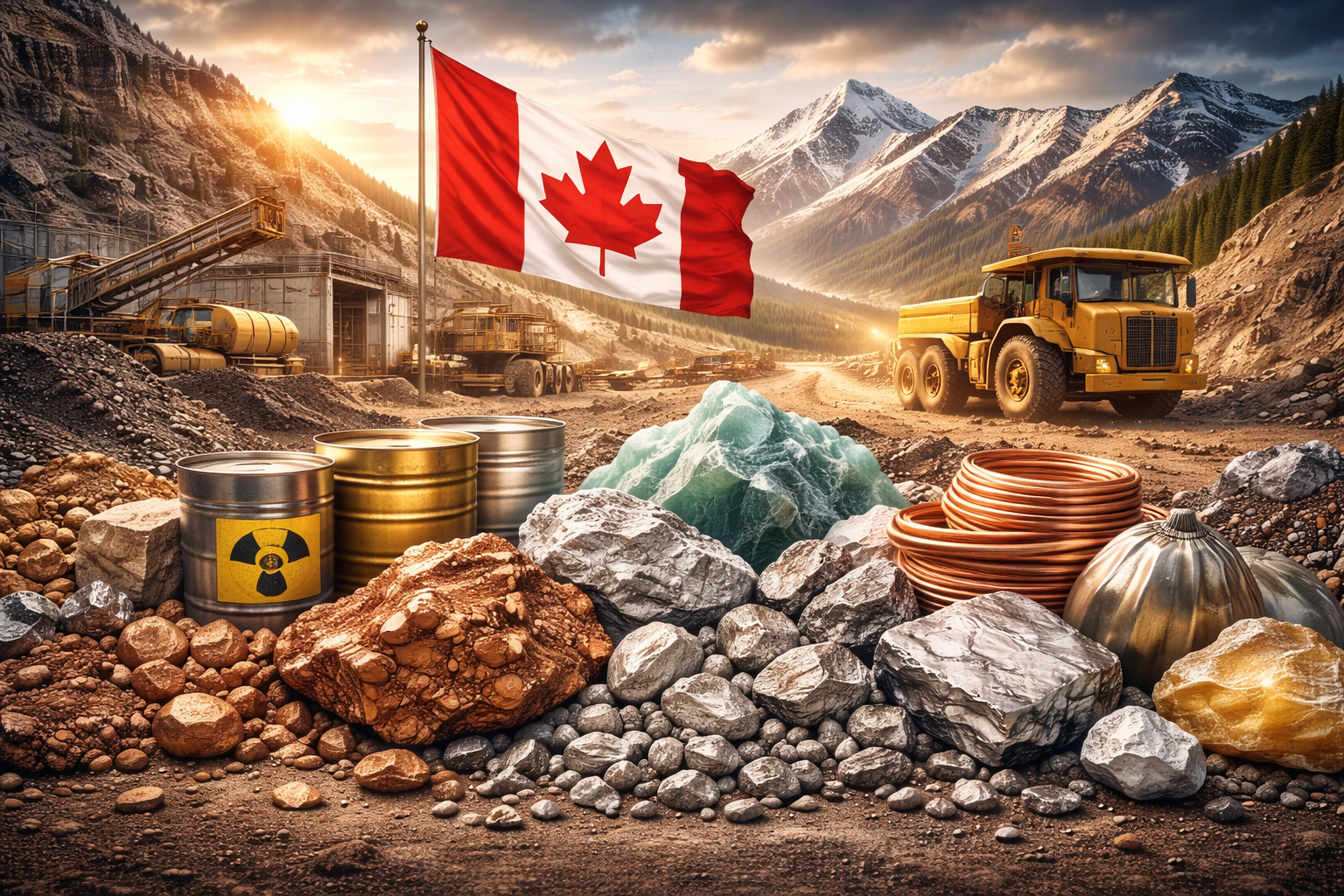
As global markets race to secure the raw materials powering artificial intelligence, electric vehicles, and clean energy systems, Canada is emerging as a strategic focal point for investors. A new wave of analysis underscores how the country’s vast reserves of critical minerals — including copper, lithium, silver, and uranium — are becoming increasingly vital amid intensifying supply constraints and accelerating demand.
Recent market commentary from Canada Weekly Market Recap and S&P Global (Jan. 9, 2026) points to a growing imbalance between supply and demand that could reshape commodity pricing and investment flows for years to come. For investors, critical minerals are no longer a niche resource play — they are a foundational pillar of the next industrial cycle.
Why Critical Minerals Are Back in the Spotlight
Demand for critical minerals is being driven by multiple structural forces converging at once. AI data centers require massive amounts of copper for power infrastructure, while EV adoption is boosting demand for lithium, nickel, and other battery metals. At the same time, energy storage systems and grid modernization projects are increasing consumption of silver and uranium.
S&P Global analysis highlights that while demand is accelerating, new supply remains constrained by long permitting timelines, capital intensity, and environmental considerations. Canada’s established mining expertise and political stability position it as a preferred jurisdiction for long-term development — a factor increasingly valued by institutional investors.
These dynamics are pushing critical minerals from the periphery of commodity markets to the center of strategic investment discussions.
Canada’s Strategic Advantage
Canada holds some of the world’s most significant untapped reserves of key critical minerals and has been actively positioning itself as a reliable supplier to global markets. Government-backed initiatives and partnerships with allies aim to strengthen domestic production and reduce reliance on geopolitically sensitive regions.
According to industry data cited by S&P Global, global copper demand alone could outpace supply growth through the end of the decade, even under conservative assumptions. Lithium markets face similar challenges, with EV penetration rates exceeding earlier forecasts while new projects struggle to come online fast enough.
For investors, Canada’s combination of resource abundance, regulatory transparency, and infrastructure makes it a compelling base for both upstream mining and downstream processing investments.
Supply Constraints and Pricing Power
One of the most important implications of these trends is pricing power. When supply struggles to keep pace with structurally rising demand, prices tend to remain elevated — benefiting producers with existing assets and near-term development pipelines.
Analysts note that copper and uranium markets are particularly sensitive to supply disruptions, given their critical role in electrification and energy security. Silver, often overlooked, is increasingly essential for solar technology and advanced electronics, adding another layer of demand.
Bloomberg commodity research has previously shown that sustained deficits in critical minerals can lead to prolonged bull cycles, especially when demand is policy-driven rather than cyclical. This dynamic is now playing out as governments and corporations commit to long-term decarbonization and digital infrastructure goals.
The Role of AI and Clean Technology
Artificial intelligence is amplifying these pressures. Data centers require not only advanced chips but also extensive power and cooling infrastructure, dramatically increasing copper and energy-related metal consumption. As AI adoption scales, so does the physical footprint required to support it.
Similarly, the EV and energy storage sectors continue to expand globally, reinforcing demand visibility for battery metals. McKinsey research suggests that demand for certain critical minerals could grow several-fold over the next decade, even under moderate adoption scenarios.
For investors, this creates an opportunity to gain exposure to long-duration growth themes tied to technology and energy transitions — but through tangible, resource-based assets.
Where Investors May Find Opportunity
Critical minerals investing is not limited to large-cap miners. Opportunities span the value chain, from early-stage developers and royalty companies to refiners and processing specialists. Canadian-listed firms, in particular, may benefit from supportive policy frameworks and access to capital markets.
That said, risks remain. Commodity markets are inherently volatile, and project execution timelines can stretch. Environmental, social, and governance considerations also play an increasingly important role in project approvals and investor sentiment.
Diversification across commodities and stages of development can help mitigate these risks while maintaining exposure to the broader theme.
Key Investment Insight
Critical minerals represent a powerful emerging industry play, supported by long-term demand drivers tied to AI infrastructure, electric vehicles, and energy storage. Canada’s strategic position in this market highlights opportunities for miners and downstream processors to benefit from sustained supply-demand imbalances.
Investors should focus on asset quality, jurisdictional stability, and balance sheet strength when evaluating exposure — and recognize that critical minerals are becoming a core component of the global growth story.
Stay connected with MoneyNews.Today for daily investor-focused insights on emerging industries, commodities, and the structural trends shaping global markets.