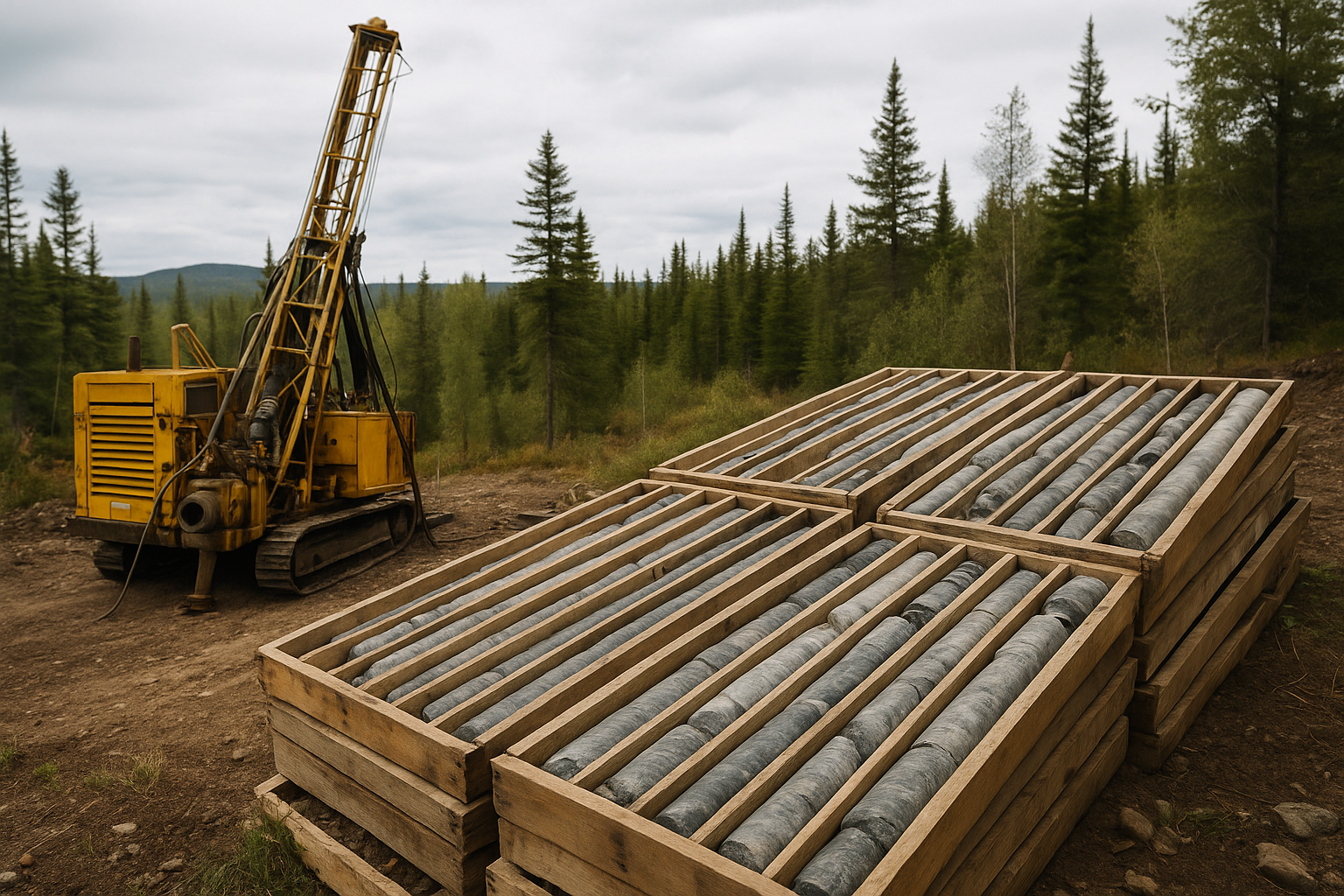
Investors across the junior mining space are watching New Brunswick closely this week as Canadian Metals Inc. (CSE: CME) begins a 3,200-metre drill program across five wholly owned properties in the historic Bathurst Mining Camp—one of Canada’s most prolific districts for base and precious metals. With commodity markets tightening and exploration capital flowing back into early-stage projects, the move positions Canadian Metals squarely in the spotlight at a time when investors are increasingly searching for undervalued mineral assets.
The announcement follows a comprehensive technical re-evaluation of the company’s Bathurst portfolio, signalling not just routine drilling, but a targeted program built around renewed geological modeling and predictive analysis. In a market where exploration budgets remain selective, data-driven drilling is often what separates value-creating juniors from speculative noise.
A Strategic Push Into One of Canada’s Most Proven Mining Districts
The Bathurst Mining Camp (BMC) has long been recognized as one of the richest volcanogenic massive sulphide (VMS) districts in North America—host to world-class deposits containing lead, zinc, copper, silver, and gold. According to Natural Resources Canada, the region has produced more than 130 million tonnes of ore historically, cementing its status as a high-value exploration corridor.
Canadian Metals’ new drill program targets high-priority zones identified after what the company calls a “full technical re-evaluation.” For investors, such language matters: it suggests the company is refining its geological thesis, integrating modern exploration data with historical results, and potentially vectoring in on new mineralized zones that earlier explorers may have missed.
In an environment where junior miners face rising operating costs, tightening capital markets, and heightened expectations for drill efficiency, the ability to deploy rigs with precision is increasingly viewed as a competitive advantage.
Why This Matters for Investors
The timing of this drilling effort aligns with rising momentum in global metals markets. Zinc inventories on the London Metal Exchange (LME) recently fell to multi-year lows, while copper supply remains constrained due to declining ore grades at major global operations. Bloomberg Intelligence has repeatedly emphasized the structural undersupply in copper and the tightening outlook for key industrial metals—both bullish indicators for exploration-stage companies in resource-rich jurisdictions.
If Canadian Metals reports promising grades or confirms new mineralized extensions, the company could attract:
1. Upgraded Resource Potential
Early-stage drilling can materially shift valuation multiples if assays reveal continuity or expansion of known zones.
2. Increased Institutional Attention
Funds and strategic investors often monitor emerging drill results across the BMC, given its track record of producing commercially viable deposits.
3. Potential M&A Interest
The Bathurst region has long drawn the interest of major and mid-tier miners seeking accretive acquisitions to expand their base-metal portfolios.
That said, this remains a high-risk/high-reward segment. Exploration outcomes are inherently unpredictable, and investors should evaluate drill results alongside geological context, corporate cash runway, and regional competitive dynamics.
Future Trends to Watch
A Broader Re-Rating of Canadian Juniors
Analysts at S&P Global recently noted that North American junior miners could be entering a cyclical upswing, supported by rising demand for battery metals and ongoing supply chain reshoring across the U.S. and Canada.
Growing Strategic Importance of Zinc and Copper
Both metals—historically associated with Bathurst—are now critical to electric grid upgrades, EV infrastructure, renewables, and AI-related data-center power systems. Any exploration success in these categories positions Canadian Metals within a macro trend that continues to strengthen.
Government Support for Critical Minerals
The Government of Canada has expanded funding streams for critical-mineral exploration, including the Critical Minerals Infrastructure Fund and exploration tax incentives. Companies operating in stable, mining-friendly jurisdictions like New Brunswick may receive both direct and indirect tailwinds from these policy frameworks.
Key Investment Insight
For speculative investors with an appetite for early-stage exploration plays, Canadian Metals’ drill program represents an opportunity to gain exposure to a potential re-rating catalyst. While not without risk, the company’s decision to drill across multiple high-priority targets—combined with a refreshed geological model—suggests upside potential if results meet or exceed expectations.
Monitoring assay timelines, cash position, drilling updates, and technical commentary will be essential over the coming months. Investors should also compare Canadian Metals’ progress with peer activity across the BMC to evaluate its relative competitive positioning.
As the drill rigs turn in one of Canada’s most storied mining districts, MoneyNews.Today will continue tracking results, market reaction, and any early indications of resource expansion. Stay connected for daily insights that help you navigate the fast-evolving metals & mining landscape.