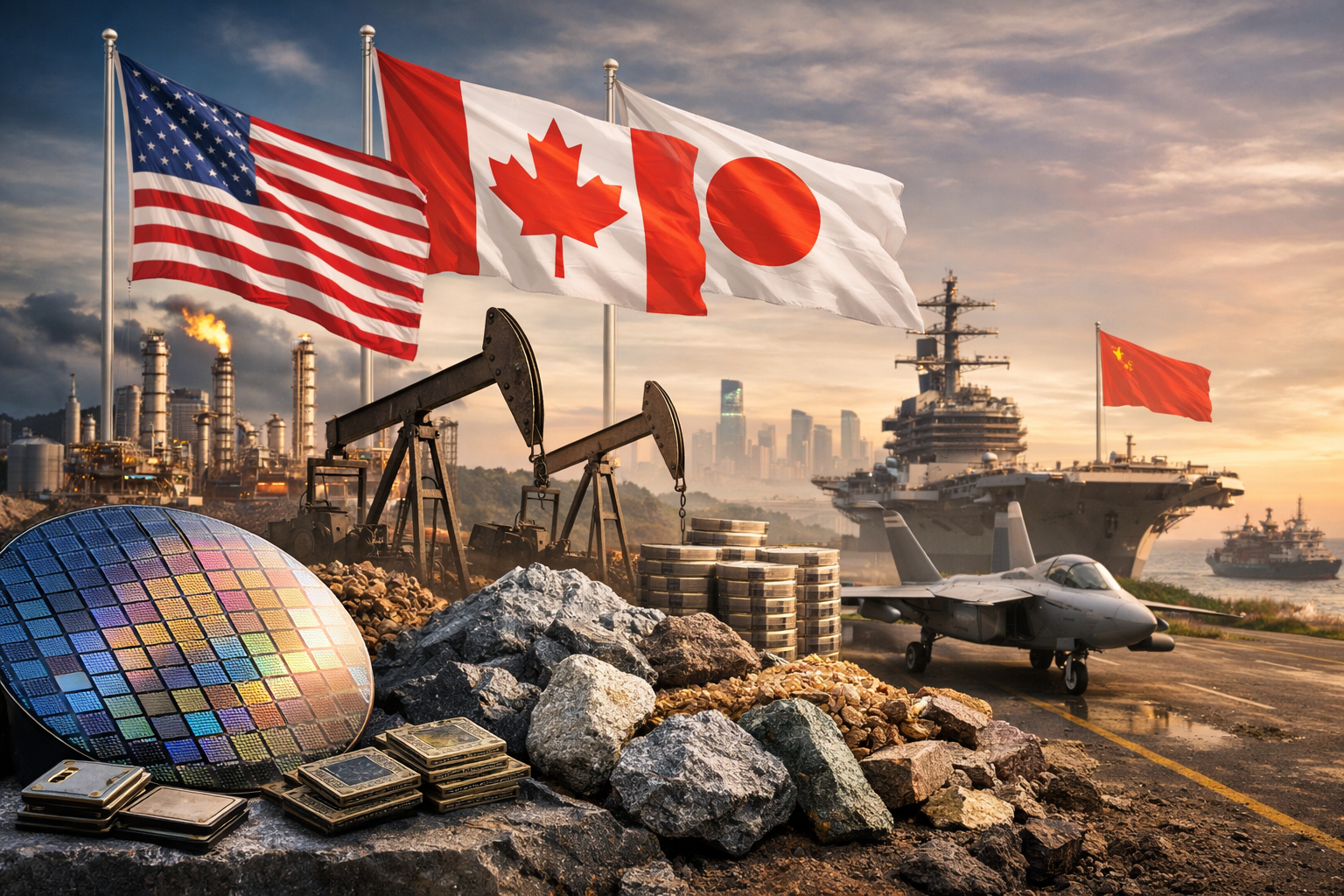
Markets are once again being shaped as much by politics as by profits. This week, investor attention turned to Ottawa and Washington as Canadian Prime Minister Mark Carney touted a renewed trade framework with China as delivering “historic gains,” while the United States grappled with rising political and policy uncertainty. According to Reuters, the diverging political narratives are already influencing market sentiment, currency expectations, and sector-level allocations across North American equities.
For investors, the message is clear: geopolitical clarity can unlock risk appetite, while uncertainty can quickly redirect capital toward defensive positions.
Canada’s Trade Reset Sends a Market Signal
Canada’s recalibrated trade approach toward China marks a notable shift after years of strained relations. The agreement, framed by Prime Minister Carney as a pragmatic economic reset, aims to ease barriers, stabilize trade flows, and improve access for Canadian exporters—particularly in energy, clean technology, and advanced manufacturing.
Reuters reports that markets welcomed the announcement, viewing it as a step toward reducing uncertainty for Canadian companies with global supply chains. Trade clarity tends to translate into improved earnings visibility, which is often rewarded by investors.
Analysts at Bloomberg note that Canada’s economy is especially sensitive to external trade dynamics. Any move that enhances access to large export markets, particularly China, can support corporate investment plans and strengthen confidence in growth-oriented sectors.
Why This Matters for Investors
Trade policy is a powerful driver of capital flows. Clearer rules and improved diplomatic relations lower risk premiums, encourage foreign investment, and support equity valuations. In Canada’s case, renewed engagement with China may benefit sectors tied to commodities, infrastructure, and clean technology—areas where Canadian firms hold competitive advantages.
Market strategists point out that Canadian equities have historically performed well during periods of trade stability. With energy prices stabilizing and global demand gradually improving, reduced geopolitical friction could amplify positive momentum in select TSX-listed stocks.
From an asset allocation perspective, policy clarity often favors risk assets, while uncertainty pushes investors toward hedges.
U.S. Political Pressure Clouds the Outlook
South of the border, the narrative is more complex. While U.S. markets remain supported by strong corporate earnings and AI-driven optimism, political and policy uncertainty continues to simmer beneath the surface.
Reuters highlights growing investor focus on developments surrounding Federal Reserve Chair Jerome Powell, including legal and political scrutiny that has reignited debates about central bank independence. Although the Fed’s policy framework remains intact, even the perception of political pressure can unsettle markets.
According to Bloomberg Economics, central bank credibility is a cornerstone of financial stability. Any erosion—real or perceived—can influence bond yields, currency markets, and equity risk premiums.
Diverging Signals, Diverging Strategies
The contrast between Canada’s trade clarity and U.S. political uncertainty underscores how regional policy differences can shape market behavior. While Canadian assets may benefit from improved diplomatic visibility, U.S. investors are weighing whether political noise could introduce volatility into rates and equity markets.
That does not imply an immediate shift away from U.S. assets. Instead, investors appear to be differentiating by sector. Growth-oriented areas such as technology continue to attract capital, while defensive sectors—utilities, healthcare, and consumer staples—are seeing renewed interest as hedges against political risk.
McKinsey research on geopolitical risk and capital markets suggests that investors increasingly price political uncertainty at the sector level rather than the index level, reinforcing the importance of selective positioning.
Future Trends Investors Should Watch
Several developments could shape how markets digest these political dynamics:
- Implementation details of Canada’s China trade reset and sector-level benefits
- U.S. political developments, particularly those affecting monetary policy independence
- Currency movements, as trade and policy expectations shift
- Investor sentiment indicators, signaling risk-on or risk-off behavior
Markets may remain sensitive to headlines, especially as global elections and policy debates intensify.
Key Investment Insight
Geopolitics and trade policy are once again central to market performance. Investors may find opportunities in Canadian equities positioned to benefit from improved trade relations, particularly in export-driven and clean-tech sectors. At the same time, ongoing U.S. political uncertainty suggests maintaining balanced exposure, with selective allocations to defensive sectors that tend to perform well during periods of policy-driven volatility.
As global politics continue to influence capital flows and market leadership, staying informed is essential. Follow MoneyNews.Today for clear, timely investor insights that help you navigate political risk and uncover opportunities in a rapidly changing global landscape.