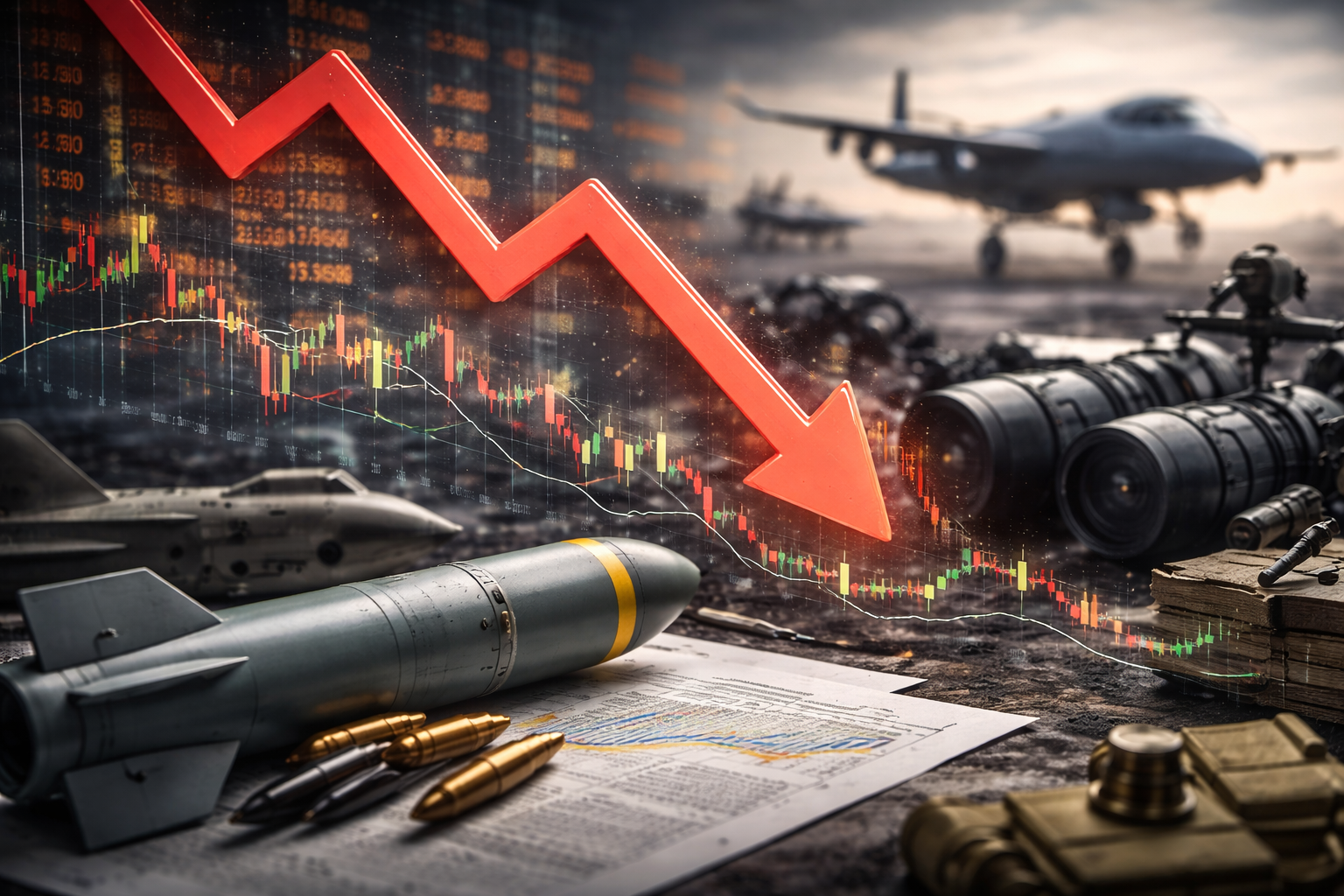
U.S. defense technology stocks are showing signs of fatigue despite ongoing geopolitical conflicts that traditionally boost investor demand for the sector. As of April 2, 2026, shares in major defense contractors have retreated from earlier highs, according to reporting from Reuters, signaling that the “buy-on-conflict” trade may have already peaked.
Market participants appear to be rotating out of defense names after substantial gains over the past year, suggesting that geopolitical risk alone is no longer sufficient to sustain momentum in the sector. For investors, this marks a critical moment to reassess exposure, evaluate overbought positions, and consider underpriced opportunities elsewhere.
Defense Tech Under Pressure
Defense stocks had previously benefited from heightened tensions in Eastern Europe and the Asia-Pacific, where renewed conflicts and military escalations drove expectations for higher government procurement and contract growth. Companies such as Lockheed Martin, Raytheon Technologies, and Northrop Grumman saw robust gains as investors positioned for sustained defense spending.
However, Reuters (April 2, 2026) notes that recent trading indicates a plateau in enthusiasm. Investors are questioning whether valuations reflect the true growth potential of the sector, particularly given rising interest rates and macroeconomic pressures that influence government budgets.
The rotation away from defense tech stocks highlights a shift in market psychology: geopolitical headlines are no longer an automatic catalyst for sector rallies. Instead, investors are evaluating fundamentals, cash flow sustainability, and pipeline execution as primary drivers of stock performance.
Why This Matters for Investors
Investors must now balance geopolitical awareness with market discipline:
- Valuation Sensitivity: Defense stocks are currently trading at elevated multiples after months of gains. Analysts caution that forward-looking growth assumptions must be weighed against potential procurement delays or budget constraints.
- Government Budget Cycles: Federal defense spending remains robust, but funding allocations are increasingly scrutinized amid macroeconomic pressures. Any delays or reductions could impact projected earnings.
- Market Rotation Dynamics: The shift away from defense reflects broader market rotations into technology, AI, and green energy sectors, which offer higher growth potential relative to risk-adjusted returns in the defense space.
Reuters reports that investors are increasingly evaluating the defense sector not just on geopolitical events but on tangible revenue drivers, contract pipelines, and order fulfillment timelines.
Supply and Contract Considerations
Defense contractors’ earnings are closely tied to government procurement cycles. Contracts often have multi-year timelines, and delivery schedules can significantly affect quarterly performance. Analysts from Bloomberg Intelligence suggest that the combination of saturated investor positioning and potential delays in contract execution is pressuring stock momentum.
Key considerations include:
- Backlog Management: How effectively companies convert backlog orders into revenue.
- Operational Efficiency: Ability to manage labor and supply chains amidst rising costs.
- Innovation Pipeline: Investment in emerging defense technologies, including hypersonics, cyber defense, and AI-enabled platforms.
Future Trends to Watch
1. Geopolitical Developments
While tensions persist globally, the market is increasingly discerning between headline-driven fear and sustainable earnings growth. Investors should track how specific geopolitical events translate into contract awards and procurement budgets.
2. Government Policy and Spending
Shifts in defense budget allocations, congressional approvals, and regulatory oversight will directly influence sector performance. Analysts emphasize monitoring the Federal Defense Budget for FY 2027 for early indicators of spending trends.
3. Sector Rotation and Investor Psychology
Markets are responding to relative value across sectors. With AI, renewable energy, and infrastructure sectors gaining favor, defense equities may continue to face headwinds unless new catalysts emerge.
4. Technological Advancements
Defense contractors investing in next-generation technologies, such as autonomous systems, AI-based defense platforms, and advanced cybersecurity, may differentiate themselves from peers in both growth potential and market sentiment.
Actionable Takeaways for Investors
- Reassess Crowded Trades: Investors should evaluate exposure to defense stocks and consider trimming positions if valuations are stretched.
- Look Beyond Headlines: Focus on fundamentals, backlog execution, and contract pipelines rather than reacting to geopolitical fear cycles.
- Explore Underpriced Opportunities: Sectors that have underperformed or are receiving less investor attention may present attractive risk-adjusted opportunities.
- Monitor Policy and Budget Signals: Tracking government defense budget releases and procurement decisions can provide actionable insight into sector earnings potential.
By emphasizing disciplined evaluation over headline-driven investing, investors can reduce downside risk while maintaining selective exposure to defense companies poised for sustainable growth.
Credible Sources and Insights
- Reuters (April 2, 2026): Real-time coverage of U.S. defense sector trading trends amid geopolitical tensions.
- Bloomberg Intelligence: Analytical insights on defense company order backlogs, valuation metrics, and growth potential.
- Official Government Sources: Department of Defense budget allocations, contract announcements, and procurement updates.
These verified sources provide a robust framework for informed investment decision-making in a sector historically sensitive to geopolitical and macroeconomic developments.
Key Investment Insight
The performance of defense technology stocks is increasingly determined by fundamentals rather than headlines. Investors should focus on:
- Earnings sustainability and backlog conversion
- Contract pipeline health
- Valuation versus growth potential
- Sector rotation dynamics
Adopting this approach allows investors to navigate volatility while identifying companies that can thrive even as headline-driven momentum fades.
Stay updated with MoneyNews.Today for daily market insights, sector analysis, and strategic investment guidance tailored to both seasoned and emerging investors navigating evolving geopolitical and economic landscapes.