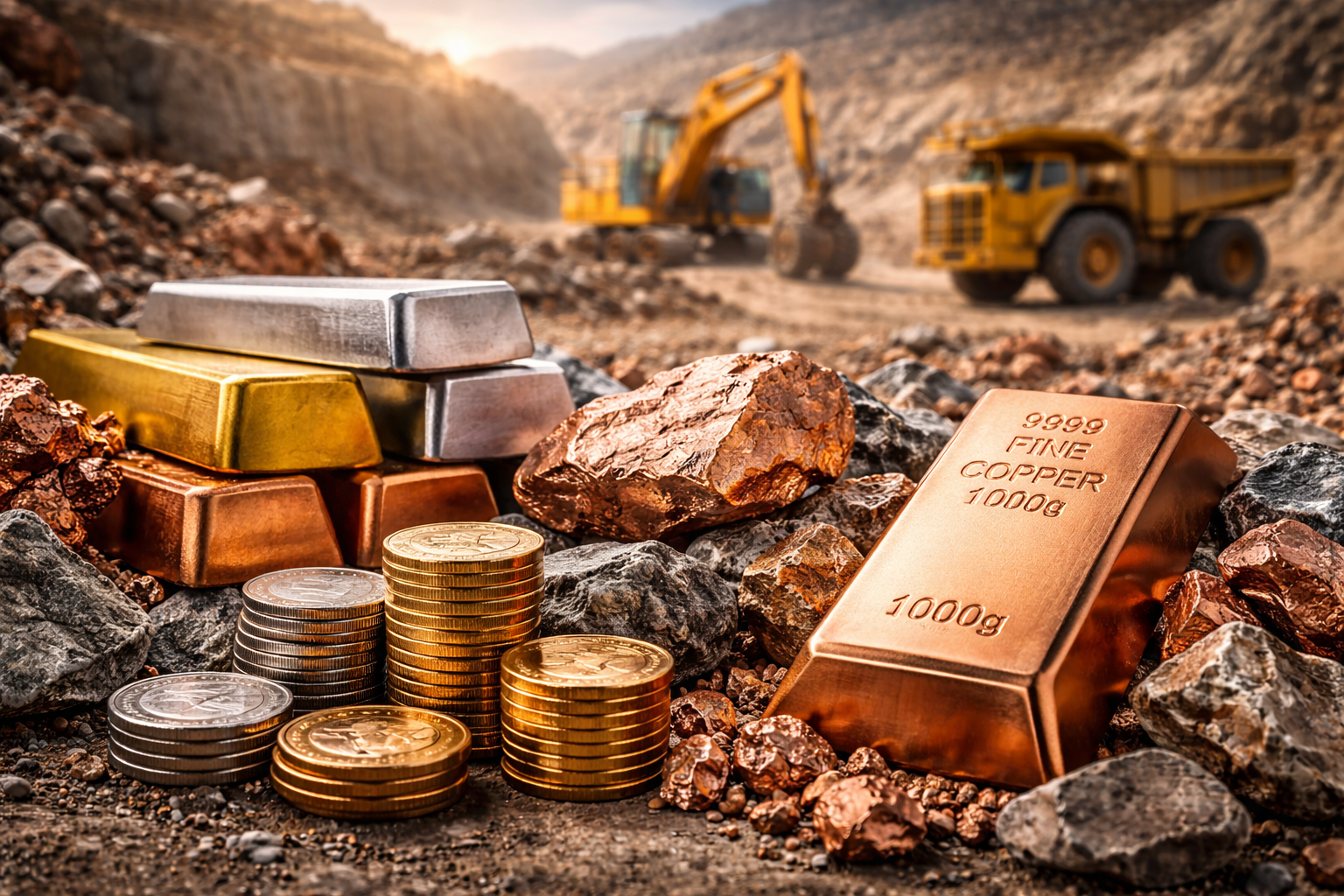
After months of AI-driven volatility dominating market headlines, investor capital is rotating — and the metals & mining sector is emerging as a clear beneficiary.
Fresh fund flow data reported by Reuters shows that equity funds have recorded their strongest inflows in weeks, with cyclical sectors such as metals and mining attracting renewed interest. As concerns around AI spending and stretched tech valuations cool, investors appear to be reallocating toward tangible asset plays tied to commodities, infrastructure, and industrial expansion.
For market participants watching sector rotation closely, this shift could mark an important change in leadership.
Capital Rotation Signals a Broader Rebalancing
Throughout the past year, artificial intelligence stocks captured outsized investor attention — and capital. However, elevated valuations and questions surrounding return on AI infrastructure spending triggered volatility in early 2026.
Now, as fund inflows stabilize and broader risk appetite improves, investors are diversifying exposure. According to Reuters’ coverage of global equity fund flows, metals and mining stocks are benefiting from this reallocation.
Historically, commodity-linked sectors tend to outperform during periods of economic stabilization, infrastructure expansion, and rising inflation expectations. The current environment — characterized by resilient industrial activity and potential monetary easing later in the year — creates a supportive backdrop.
This is not merely a defensive move. Instead, it reflects strategic positioning toward sectors leveraged to real-economy growth.
Why This Matters for Investors
1. Commodities as Inflation Hedges
Metals and mining companies are often viewed as natural hedges against inflation. Should input costs rise or fiscal spending accelerate, commodity prices can strengthen, supporting earnings for producers of copper, iron ore, aluminum, and precious metals.
With markets debating the path of monetary policy from the Federal Reserve, investors are reassessing exposure to sectors that can perform well across multiple macro scenarios.
Industrial metals such as copper — widely considered a barometer of global growth — are particularly sensitive to infrastructure and electrification trends.
2. Infrastructure & Energy Transition Tailwinds
Beyond short-term fund flows, structural demand drivers are in place. Government-backed infrastructure projects, renewable energy buildouts, electric vehicle adoption, and grid modernization all require significant volumes of base metals.
Research from institutions including the International Energy Agency has previously highlighted that energy transition technologies are far more metal-intensive than traditional systems. That dynamic supports long-term demand visibility for miners supplying critical materials.
As AI infrastructure expands — including data centers and power grids — it also indirectly supports industrial metal demand, reinforcing the interconnected nature of these themes.
3. Diversification Away from Mega-Cap Concentration
Earlier this year, market gains were heavily concentrated in a handful of mega-cap technology stocks. The recent rotation into metals and other cyclicals suggests investors are broadening exposure.
This shift could reduce concentration risk in portfolios and improve overall market breadth — a historically positive sign for equity sustainability.
For institutional investors, diversification into resource sectors also balances growth exposure with real-asset positioning.
Global Dynamics at Play
Commodity markets are inherently global. China’s industrial demand, North American infrastructure spending, and European energy transition policies all influence pricing trends.
Reuters’ reporting indicates that global equity inflows are not limited to U.S. markets, underscoring that this rotation reflects a broader rebalancing of risk appetite.
Additionally, geopolitical factors — including supply chain realignment and resource security concerns — are increasing the strategic importance of domestic mining production in North America.
Investors should monitor not only price trends in key metals, but also policy developments affecting mining permits, environmental standards, and trade flows.
Future Trends to Watch
Copper & Battery Metals: Continued electrification efforts could keep demand elevated for copper, lithium, and nickel.
Gold as a Dual Hedge: If economic uncertainty rises, gold producers may benefit from safe-haven flows alongside industrial demand dynamics.
M&A Activity: Strong balance sheets among major miners may drive consolidation or strategic acquisitions to secure future supply.
Capital Discipline: Investors will reward companies that prioritize shareholder returns and cost control over aggressive expansion.
Key Investment Insight
Rising fund flows into metals and mining signal renewed confidence in cyclical sectors and tangible asset exposure.
Investors may consider:
- Evaluating diversified mining companies with strong balance sheets.
- Monitoring commodity price trends as indicators of industrial momentum.
- Balancing growth-oriented technology holdings with real-asset sectors to reduce concentration risk.
While volatility remains a feature of commodity markets, the current rotation suggests that investors are positioning for broader economic participation rather than narrow thematic leadership.
As sector dynamics evolve and capital flows shift, staying ahead of rotation trends is essential for portfolio positioning.
For timely, data-driven analysis across emerging industries, commodities, and global markets, rely on MoneyNews.Today — your trusted destination for daily investor intelligence.