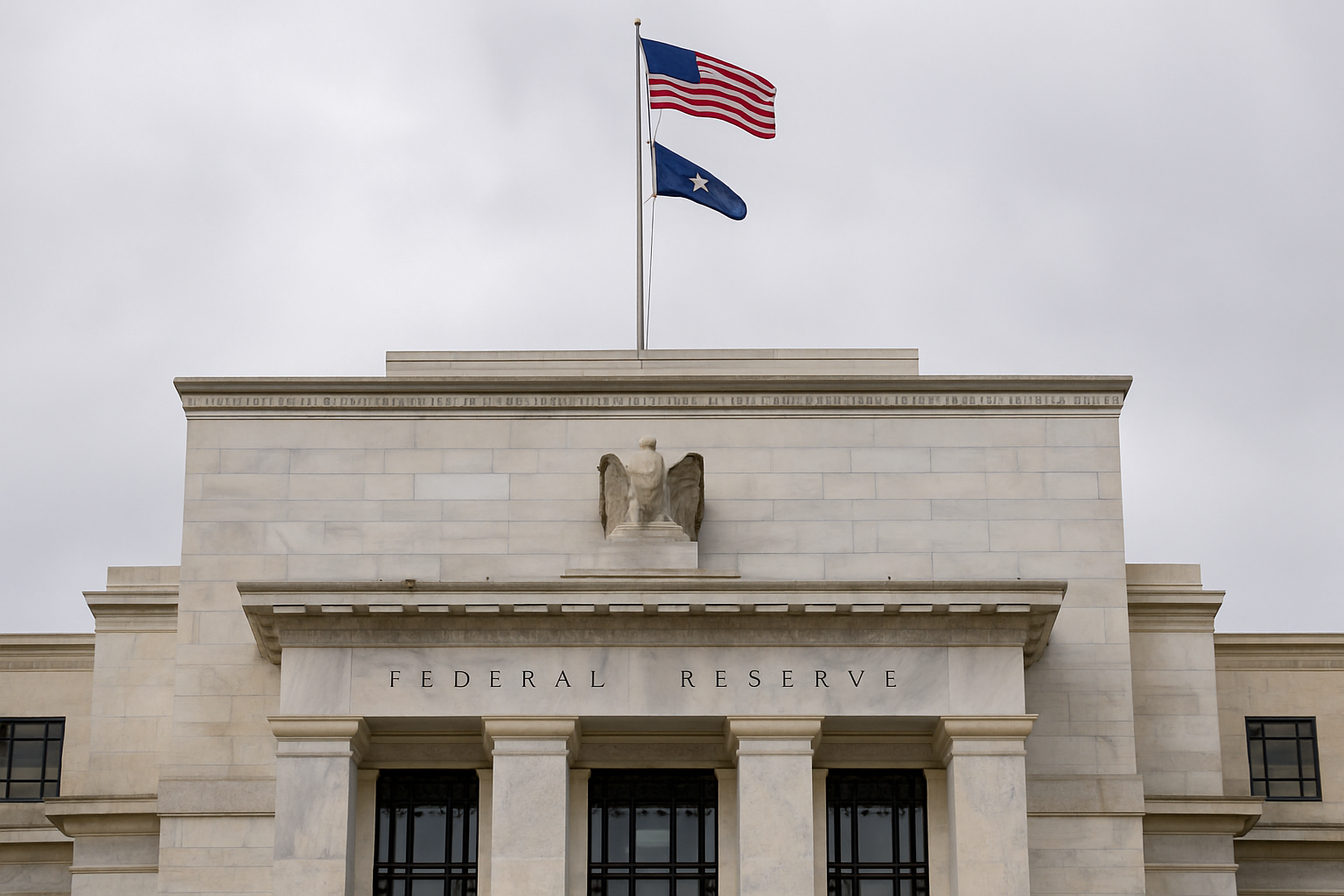
Markets across the U.S. and Canada are once again recalibrating expectations after the Federal Reserve delivered its third consecutive interest rate cut, while at the same time adopting a noticeably cautious tone on future easing. The latest move, highlighted in Reuters’ Morning Bid, underscores growing concerns that monetary policy may be entering a more delicate phase—one where rate cuts are no longer interpreted as straightforward growth catalysts but rather as signals of a shifting economic landscape.
Investors on financial forums and institutional channels alike are dissecting the Fed’s message: although the central bank aims to support economic resilience, mixed macro data and evolving inflation patterns suggest policymakers are preparing for a slower, more uncertain path forward. This tension has become a dominant theme in today’s cross-asset sentiment.
A Market at an Inflection Point
The rate cut itself was widely anticipated by traders, yet its immediate impact revealed a more nuanced market reaction. U.S. equity futures dipped as traders interpreted the Fed’s caution as a sign that underlying economic conditions may not be as stable as previously hoped. Bond yields fluctuated intraday, reflecting the tug-of-war between easing policy and persistent inflation variability.
Economic indicators released earlier in the week added complexity. Labor market data showed continued cooling, while consumer spending proved uneven across categories. According to Bloomberg Economics, these inconsistencies reflect a transition period in the business cycle—one where rate cuts may help stabilize momentum but cannot fully offset structural economic pressures.
Investors in Canada are also watching closely. The Bank of Canada has taken a more gradual approach to easing, but cross-border economic integration means that U.S. monetary shifts ripple immediately into Canadian markets, influencing currency performance, asset flows, and risk-taking appetite.
Why This Matters for Investors
The Fed’s latest decision highlights three critical realities for investors:
1. Rate Cuts Are No Longer Purely Risk-On Signals
Historically, easing cycles boosted equities, particularly growth stocks. But with inflation not fully contained and corporate earnings mixed, markets are responding with greater uncertainty. The reaction suggests investors are wary of what the Fed’s cautious tone might imply about 2026 economic trajectory.
2. Inflation and Labor Metrics Are Now the Market’s Compass
As policymakers emphasized in recent statements, future rate movements will depend heavily on inflation’s glide path and labor market resilience. McKinsey’s latest macro outlook stresses that transitional periods—where inflation stabilizes but wage pressures persist—often lead to heightened market sensitivity.
3. Cross-Asset Allocation Is Shifting
Sectors tied to defensive strategies, such as utilities and staples, saw stronger inflows, while rate-sensitive industries—like real estate and certain technology segments—showed more volatility. Commodity-linked markets in Canada also responded as traders reassessed economic activity forecasts.
In short, monetary policy is back at the center of asset pricing, but the signals are far more complex than in previous cycles.
Core Analysis: The Fed’s Balancing Act
Behind the rate cut lies a broader policy dilemma: the Fed must support slowing economic momentum without reigniting inflationary pressures. Policymakers indicated that additional cuts remain possible but will likely be contingent on:
- Continued moderation in inflation
- Stable employment trends
- Clearer signs that consumer demand is not deteriorating too sharply
Reuters noted that market expectations for future rate cuts have softened, with futures pricing reflecting fewer anticipated moves in early 2026. Meanwhile, corporate guidance across several sectors has trended conservative, amplifying the sense that the Fed’s easing path may not translate quickly into stronger earnings.
For equity investors, this creates a dynamic where policy clarity, not just policy change, drives valuation expansion.
Future Trends to Watch
As 2025 draws to a close, several key indicators will shape how markets respond to the Fed’s evolving stance:
• Inflation’s Trajectory
Investors should monitor core inflation measures closely. Even slight deviations may influence expectations for early 2026 rate decisions.
• Corporate Earnings Guidance
Companies with stable margins and flexible pricing power may outperform as markets grow more selective.
• U.S.–Canada Currency Dynamics
Rate divergence between central banks could influence the USD/CAD exchange rate, impacting exporters and commodity-linked equities.
• Treasury Market Behavior
Bond market movements may provide clearer insights into long-term economic sentiment.
• Consumer Confidence Trends
A strengthening or weakening consumer could determine whether the Fed continues easing or pauses to reassess.
Key Investment Insight
The Fed’s latest rate cut confirms that monetary policy remains a key driver of asset pricing, but investors should not mistake easing for automatic upside. A disciplined approach—focused on inflation trends, labor data, and earnings stability—can provide a strategic edge in a period marked by policy caution and economic uncertainty. Diversifying across defensive sectors, high-quality dividend payers, and companies with strong pricing power may offer resilience into 2026.
Stay informed with MoneyNews.Today, your trusted source for timely insights into monetary policy, market shifts, and the economic forces shaping tomorrow’s investment landscape.