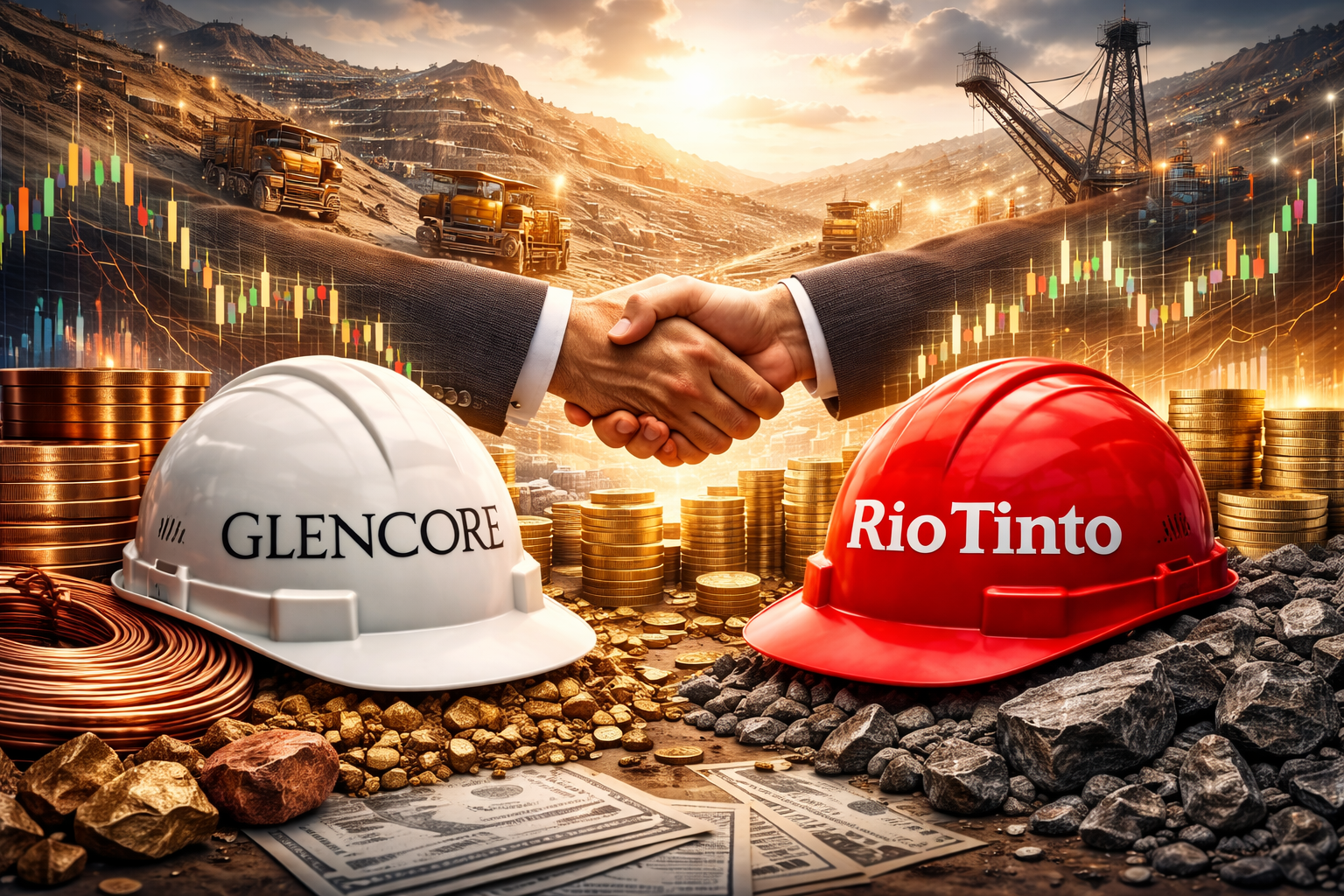
Speculation of a potential mega-merger between Glencore and Rio Tinto has reignited investor interest across the global mining sector, sending Glencore shares sharply higher and stirring debate about what could become the most transformative consolidation in commodities in decades. At a time when demand for critical minerals is accelerating and supply constraints remain front and center, the possibility of creating the world’s largest mining company has major implications for investors.
According to reporting from Reuters and Global Banking & Finance on January 9, 2026, discussions between the two mining giants — while still preliminary — have captured market attention amid a broader wave of consolidation across natural resources.
Why This Merger Talk Matters for Investors
The mining sector sits at the crossroads of several powerful global trends: electrification, energy transition, artificial intelligence infrastructure, and geopolitical competition for raw materials. Copper, nickel, iron ore, and other base metals are increasingly viewed as strategic assets rather than simple commodities.
A Glencore–Rio Tinto combination would bring together complementary portfolios spanning copper, iron ore, coal, zinc, and critical battery metals. Analysts cited by Reuters suggest such scale could materially shift pricing power in key markets while improving operational efficiency and bargaining leverage with customers.
For investors, the rally in Glencore shares reflects expectations that consolidation could unlock value through synergies, cost rationalization, and improved capital discipline — themes that have driven re-ratings across other resource sectors in recent years.
A Changing Competitive Landscape in Mining
The global mining industry has already been trending toward consolidation as companies seek to manage rising capital costs, tighter environmental standards, and the growing complexity of resource development. Bloomberg data shows that large-scale mining deals have accelerated over the past decade, particularly among producers of copper and energy-transition metals.
A combined Glencore–Rio Tinto entity would dwarf competitors in scale, potentially reshaping competitive dynamics from iron ore pricing to copper supply negotiations. Such dominance could also influence long-term contract structures and investment decisions across downstream industries, including manufacturing, energy, and infrastructure.
However, size alone does not guarantee smooth execution. Investors will closely examine governance structure, asset overlap, and potential regulatory scrutiny — especially given the companies’ global footprints and strategic importance.
Regulatory and Political Considerations
Any merger of this magnitude would almost certainly face intense regulatory review across multiple jurisdictions. Governments have become increasingly sensitive to consolidation in industries tied to national security and critical infrastructure, particularly when it comes to minerals essential for clean energy and advanced technology.
McKinsey research highlights that regulatory approval timelines have lengthened for large resource mergers, adding execution risk that markets often underestimate in early-stage speculation. For investors, this means that while upside potential exists, timelines could stretch and volatility may persist.
That said, policymakers are also under pressure to secure stable supply chains for key materials — a factor that could work in favor of well-capitalized, diversified producers with strong compliance records.
What the Deal Could Mean for Commodity Prices
One of the most debated aspects of the potential merger is its impact on commodity pricing. A larger, more consolidated supplier base could exert greater discipline over production, potentially supporting prices during downturns.
Copper markets, in particular, are already facing structural deficits, according to the International Energy Agency. Any move that tightens supply further could have ripple effects across electric vehicles, renewable energy, and data center expansion tied to AI growth.
For investors, this raises the possibility that mining equities could see valuation multiples expand if pricing power improves and earnings volatility declines.
Key Investment Insight
While merger talks remain speculative, the market reaction underscores a broader theme: scale, resource access, and strategic relevance are becoming increasingly valuable in the mining sector. Investors should watch not only Glencore and Rio Tinto, but also peer companies that could become acquisition targets or beneficiaries of improved pricing dynamics.
A successful deal could lead to significant re-rating across metals and mining equities — but regulatory hurdles and execution risks remain critical variables. Positioning with a long-term view, diversified exposure, and attention to balance sheet strength may be prudent as the story develops.
Stay informed with MoneyNews.Today for daily investor-focused coverage of metals, commodities, and the global forces shaping resource markets.