Copper prices have been climbing steadily on expectations of tightening supply, electrification demand, and long-term infrastructure growth. Now, a new flashpoint in the global commodities market has investors watching China closely. According to Bloomberg, Beijing has officially rejected proposals calling for zero or even negative copper treatment and refining charges (TC/RCs) — a move that signals the world’s largest smelting industry is unwilling to absorb further margin compression as raw-material shortages deepen. At the same time, fresh analyses from Yahoo Finance highlight China’s decades-long dominance over the rare-earths mining and processing supply chain, raising renewed concerns about global dependence on a single supplier for critical minerals essential to EVs, defense, and semiconductor technologies.
Together, these developments underscore a tightening commodity environment and sharpen the focus on strategic raw materials that underpin global manufacturing, clean-energy infrastructure, and advanced technology. For investors, both copper and rare earths are entering a new phase of geopolitical sensitivity and long-term value potential.
China Pushes Back: A Signal of Strain in the Copper Smelting Ecosystem
Bloomberg reports that Chinese industry groups and smelting companies have openly denounced proposals suggesting TC/RCs — the fees miners pay smelters to process copper concentrate — drop to zero or move negative. Historically, these fees fluctuate based on global supply dynamics. Lower fees typically indicate oversupply of smelting capacity or scarcity of copper concentrate.
But the current situation is unusual. Copper concentrate supply remains tight amid declining ore grades in major producing regions like Chile and Peru, combined with disruptions from political uncertainty and new environmental norms. Chinese smelters, facing rising energy costs and constrained access to high-quality ore, are resisting fee cuts that would force them into unprofitable territory.
Analysts note that China’s position reflects broader structural issues:
- Global copper ore supply growth is stagnating, despite soaring demand driven by EVs, data centers, transmission grids, AI-focused infrastructure, and renewable expansion.
- China controls over 40% of global copper smelting capacity, making its stance influential in setting global fee benchmarks.
- Prolonged negative or zero fees could drive smaller smelters out of operation, risking bottlenecks at a time when the world needs more refined copper, not less.
China’s opposition signals a desire to enforce price discipline — a stance that could support copper prices in the near to medium term.
Rare-Earths: China’s Strategic Dominance Remains Firmly Intact
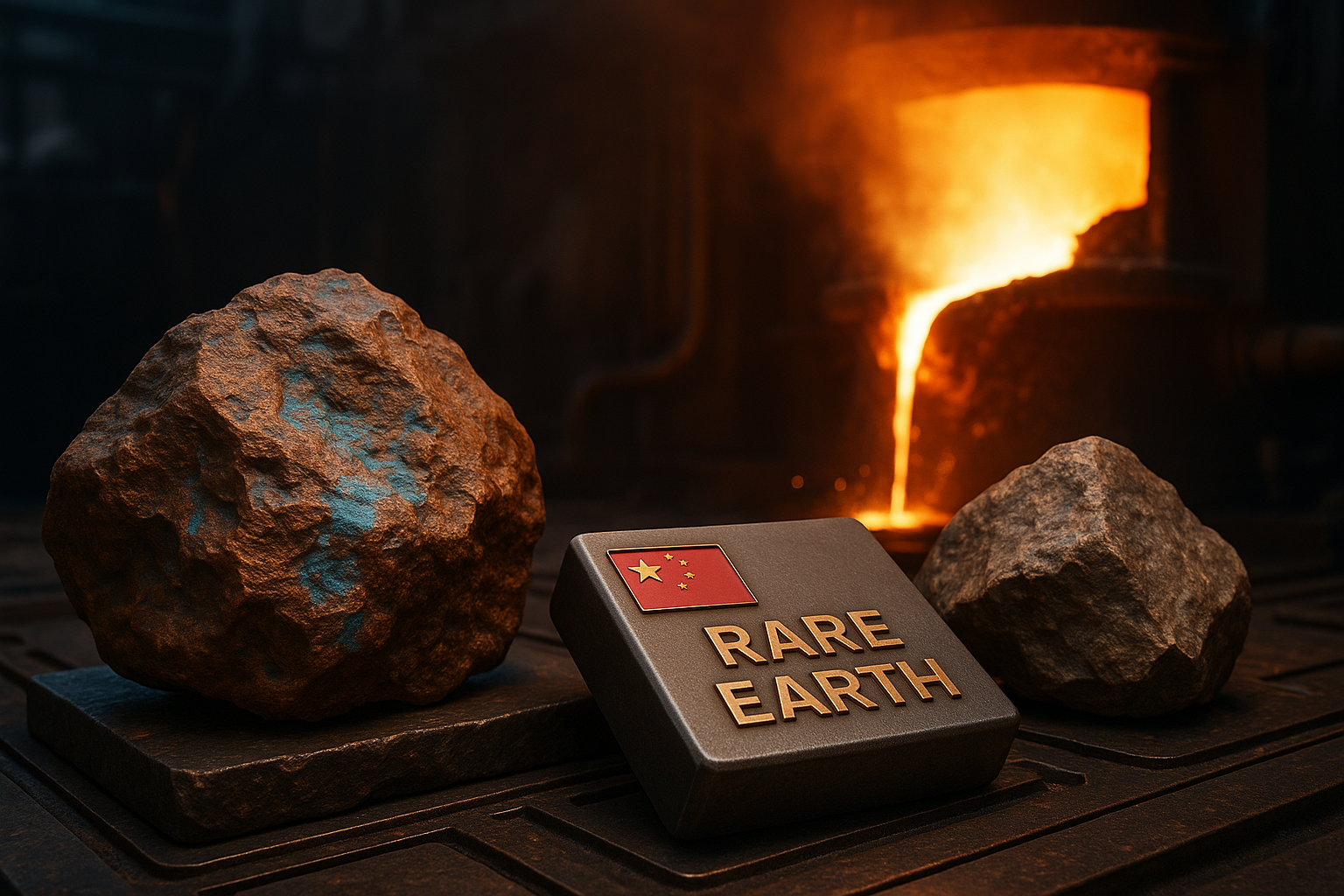
While copper tensions dominate industry headlines, investors are also revisiting the rare-earths sector — a critical but often overlooked corner of the commodities market. Yahoo Finance highlights that China maintains overwhelming dominance across mining, processing, separation, and magnet production, controlling:
- 60–70% of global rare-earth mining,
- Nearly 90% of processing capacity, and
- A commanding lead in rare-earth permanent magnet manufacturing, essential for EV motors, wind turbines, robotics, and advanced weapons systems.
Despite ongoing efforts from the U.S., Australia, and Canada to develop alternative supply chains, China’s decades of investment, state direction, and industrial clustering give it a competitive edge that rivals are unlikely to match soon.
A series of new global initiatives — including U.S. Defense Department funding for domestic magnet production and EU-backed miner partnerships — show momentum, but meaningful diversification remains years away.
The combination of copper tightness and rare-earth concentration presents a powerful narrative for investors: critical minerals are becoming more political, more valuable, and more strategically important than at any time in modern history.
Why This Matters for Investors
1. Supply Tightness Could Support Prices
China’s refusal to allow zero or negative copper processing fees signals that smelters are attempting to enforce margins. This may limit oversupply and help sustain higher copper prices, supporting miners and refiners with stable concentrate access.
2. Rare-Earths Remain a Long-Term Strategic Bet
With global manufacturing shifting toward electrification and autonomous systems, demand for rare-earth magnets continues to outpace alternative technologies. China’s dominance ensures continued geopolitical risk premiums — and potential investment upside — across the sector.
3. Geopolitical Tensions Could Influence Commodity Flows
Any policy shift — from export controls to environmental crackdowns or sanctions — could reshape market access and cost structures. Investors with exposure to global miners should be prepared for increased volatility driven by policy rather than pure fundamentals.
Future Trends to Watch
Declining Copper Ore Grades
Major producers are reporting lower grades, increasing operational costs and raising long-term supply risks. Investors should monitor companies with strong reserve pipelines or technologically advanced extraction methods.
Expansion of Non-China Rare-Earth Projects
Projects in Australia, Canada, and the U.S. may see increased funding and government support. Watch for permitting updates, offtake agreements, and joint ventures as key indicators of viability.
China’s Commodity Price Policies
Beijing has a history of using strategic reserves and export policies to influence global prices. Future moves could create both risks and opportunities depending on timing.
Key Investment Insight
For investors looking to benefit from tightening metals markets, selective exposure to copper miners, smelters with strong concentrate supply contracts, or companies involved in rare-earth separation and magnet production could offer compelling upside. However, given China’s influence across both markets, geopolitical and regulatory developments must be monitored closely, as they may materially impact export flows, processing margins, or project viability.
Stay informed and ahead of the global commodities landscape with MoneyNews.Today — your trusted source for data-driven insights shaping the future of critical materials, energy transition metals, and global supply chains.